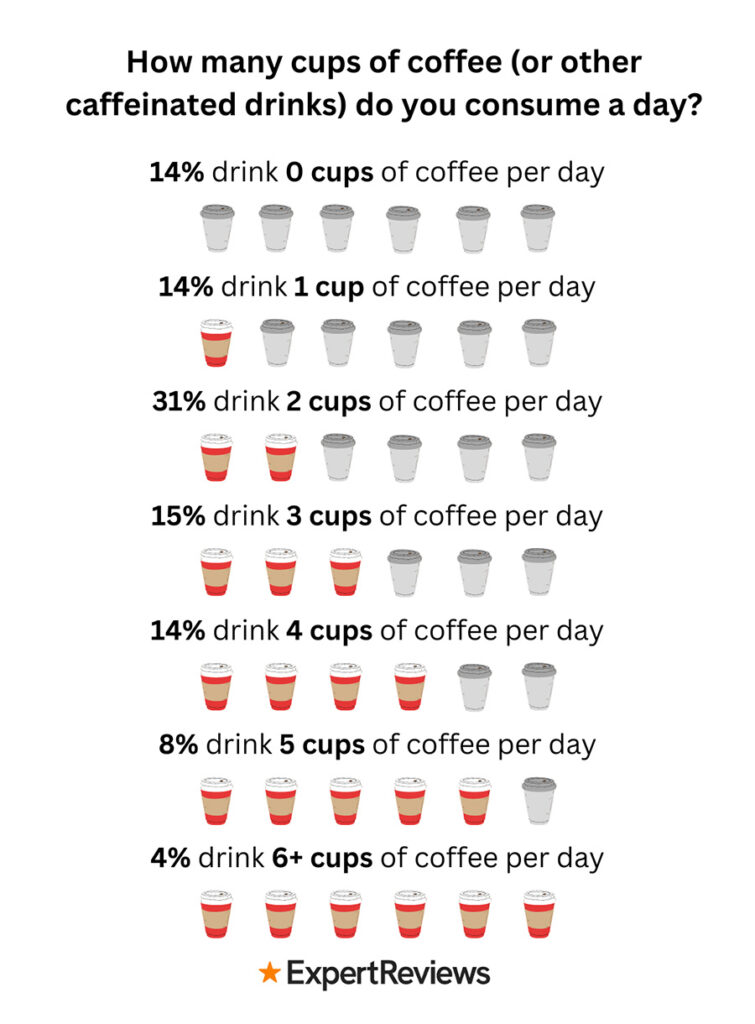
According to a recent survey conducted by Expert Reviews, 41% of British working professionals drink 3 or more cups of coffee.
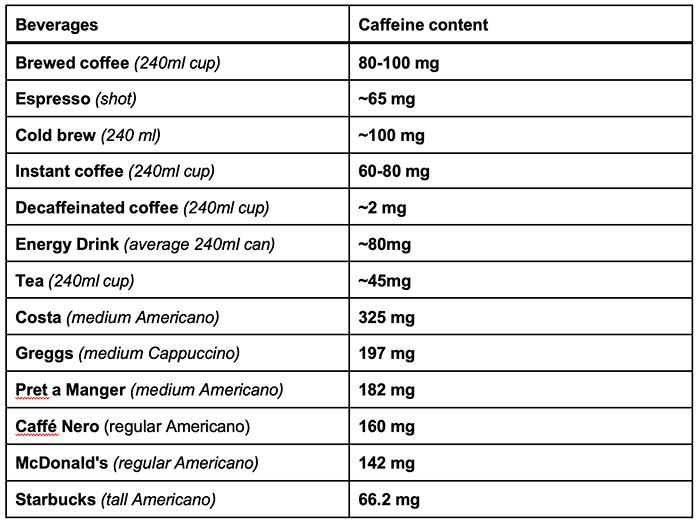
Health experts recommend limiting caffeine to 400 mg per day for most adults – 200mg for pregnant individuals. New analysis has discovered significantly higher caffeine levels in chain coffee shops, compared to home brewed coffee; Costa coffee has three times as much caffeine as homemade coffee. If you’re buying more than 2 cups of commercial coffee per day, you will likely be exceeding the recommended caffeine limit. For reference the daily coffee consumption in the UK has reached 98 million cups.
Costa’s americano caffeine content is the highest in the chain coffee industry, with a staggering 325 mg – 165% more than the coffee from Greggs. A medium cappuccino from Greggs contains 197 mg of caffeine, the second highest caffeinated coffee. Pret a Manger has less of a caffeine kick and stands in third place with 182 mg for a regular americano.
While coffee can be part of a healthy diet, it pays to watch your caffeine intake, especially from handcrafted coffeehouse and restaurant brews. Making coffee at home gives you more control over just how much of a caffeine kick you’re getting.

Forging the Next 250 Years: Powering the Next Era of American Manufacturing
As manufacturers offer more customization than ever before, managing product complexity has become a critical challenge. Tune in with Dan Joe Barry, Vice President of Product Marketing at Configit, who explores how companies are tackling the growing number of product configurations across engineering, sales, manufacturing, and service. He explains how Configuration Lifecycle Management (CLM) helps organizations maintain a single source of truth for configuration data. The result: fewer errors, faster quoting, and the ability to deliver customized products at scale.
Get In Touch
Google news and SEO compliant, Industry Today’s state-of-the-art digital media platform offers bespoke media campaigns that target key decision makers and buyers to achieve your marketing and promotional goals.

Contribute
Showcase your brand and promote your business to our highly targeted audience. We offer detailed Google Analytics with measurable ROI to assure success. Submit your content for review by our Editorial team who will contact you to discuss the project further.
About Us
Reach Your Targeted Audience and Grow Your Business. Learn more About Industry Today.
Contact Us

© 2026 Industry today. All Rights reserved.