pewag has expanded U.S. stock of its Levo load balancer, which is used below-the-hook of a crane when the load has to be lifted horizontally.
The load balancer is available in 5t, 20t and 50t capacities, as standard, with an option of a special 100t capacity version. It is designed to tilt and rotate a load remotely, providing precise control and orientation during lifting. It offers 360° tilting / rotation, making it ideal when a load must be positioned horizontally, at a specific angle, or manipulated in mid‑air for alignment.
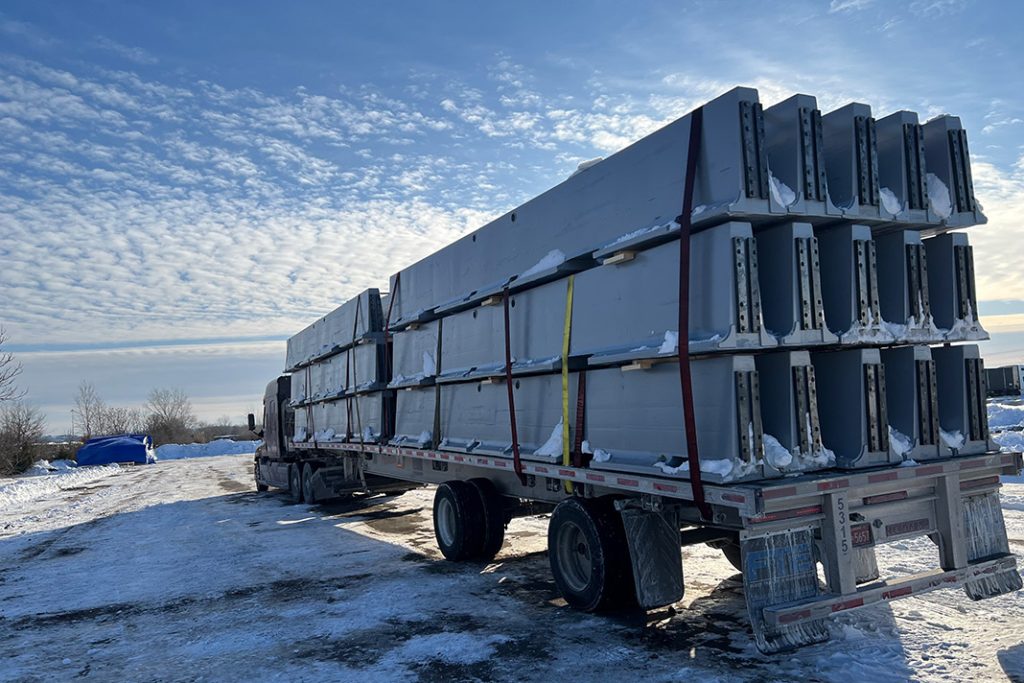
The product is frequently used in the construction industry to position steel or concrete structures and bolted connections accurately, tilting and moving profiles in the air rather than on the ground or manually to reduce damage and labor. It provides remote-controlled tilting and rotation for safer load handling. It is an alternative to the more traditional method of using chain hoists or adjustable slings, both of which are more labor intensive and result in personnel having to be in contact with the load. A shackle and a drop chain are required to attach the balancer to a crane hook.
The balancer is now available for rent and purchase from pewag Inc.’s specialist partners and distributors, which include rigging shops, lifting equipment supply houses, and rental fleets. End users include rigging and lifting professionals, alongside heavy lift planners; crane rental and specialist lifting companies; renewables installers; and industrial installation or machinery moving teams.
Doug McElravy, sales operations manager at pewag, said: “The load balancer delivers smooth, pinpoint load control in many scenarios. Complex lifts require safe remote placement and precise angle control. Precast, steel erection, and bolted connections require especially accurate placement. In renewable energy, proper orientation ensures safe and efficient operations, while controlled tilt helps alignment and reduces manual handling.”
Importantly, the load balancer can be used with many types of cranes, including tower, mobile, and electric overhead traveling (EOT) cranes. McElravy explained that it can be used wherever there is a compatible crane hook, adequate headroom, and a lift plan. Equally varied are the end-user marketplaces where loads frequently have to be lifted horizontally or at a certain angle:
The load balancer can be used instead of cascading spreader beam setups, which are typically taller, bulkier, and harder to maneuver in tight modular installations, when headroom is limited and buildings must be positioned precisely. A spreader rig also can’t adjust the load’s angle mid‑lift when the load’s weight is unevenly distributed, while the pewag Levo system provides remote‑controlled tilting and rotation for accurate alignment. Additionally, a spreader arrangement often requires more hands‑on load handling, whereas the Levo reduces the need for workers to be near the load by allowing adjustments from a safe distance, improving both efficiency and safety.
An additional feature is the floodlight, which offers users hands‑free light where they need it, instead of relying on jobsite lighting. pewag’s McElravy said: “It’s not just a nice extra; it genuinely helps you see the hook and load better. This improves safety and efficiency in low-light or night-time operations.”
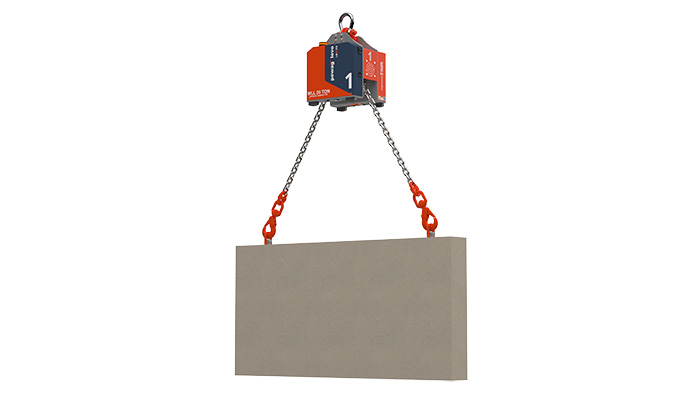
pewag has also expanded stock of its load compensator, which is designed to equalize and stabilize multi‑leg sling systems, ensuring the load remains evenly distributed and steady. Rather than tilting the load intentionally, as would be the case with the load balancer, the compensator focuses on maintaining balance and preventing uneven sling tension. The compensator line includes 12t and 17t capacity models.
Stairways are a particularly good case study because of their long, awkward shape and the frequent requirement to control pitch / roll to thread them into landings and connection points. The Levo balancer is specifically described as enabling 360° tilting and rotation and precise positioning, which maps well to stair alignment:
All steps should be taken deliberately and should not be undertaken without a clear understanding of the load, a well thought out lift plan, and proper use of the lifting equipment.

Forging the Next 250 Years: Powering the Next Era of American Manufacturing
Brooklyn Army Terminal (BAT) began as a World War II-era military supply base. Today it is New York City’s largest publicly owned industrial campus, with 59 waterfront acres, more than 4 million square feet and over 100 businesses. In this episode of Industry Insights, Bridget Chansakul, Vice President of Leasing & Portfolio Management at NYCEDC, explains what space is available and what’s planned for the 250,000+ square feet of new industrial space in Building A. She also covers how the ferry, parking and on-site childcare help tenants hire and keep workers, along with workforce partnerships, City incentives for manufacturers and where BAT is headed next.
Get In Touch
Google news and SEO compliant, Industry Today’s state-of-the-art digital media platform offers bespoke media campaigns that target key decision makers and buyers to achieve your marketing and promotional goals.

Contribute
Showcase your brand and promote your business to our highly targeted audience. We offer detailed Google Analytics with measurable ROI to assure success. Submit your content for review by our Editorial team who will contact you to discuss the project further.
About Us
Reach Your Targeted Audience and Grow Your Business. Learn more About Industry Today.
Contact Us

© 2026 Industry today. All Rights reserved.