Manufacturers are moving beyond experiments, designing AI for uptime, efficiency and workforce performance at scale.
By Russ Ford, President, Honeywell Process Automation Solutions
Industrial automation has crossed an inflection point.
For much of the past decade, manufacturers approached automation and AI through specialized and isolated use cases – often siloed to a single line, facility or function. In 2026, that mindset is shifting. Automation is becoming a primary operating model built on data, domain expertise and human-centered design.
This is an evolution that was triggered by deterministic automation. Today, advances in AI, cloud and connectivity are enabling systems to adapt in real time – stabilizing operations, guiding operators and improving uptime across entire networks.
The numbers tell the story: global manufacturing IT spending is projected to grow 10.8% in 2026, totaling $6.15 trillion, according to Gartner. This growth reflects a deeper recognition among C-suite leaders – AI-enabled automation is now central to how plants design workflows, deploy labor and justify capital allocation.
At the same time, Honeywell research shows 94% of industrial leaders say their leadership teams are committed to AI adoption, yet only a small percentage have fully launched their initial plans. Many remain stuck scaling or prototyping. The gap between investment and impact is now a board-level issue.
When listening to the modern COO and CIO, a common theme emerges: automation initiatives that were once tested on the margins are now expected to scale across networks.
This critical shift mirrors what many global manufacturers are experiencing in broader digital transformation efforts. As our CEO Vimal Kapur puts it, “physical AI” lies at the heart of the autonomy-based economy taking shape today. The opportunity lies in intelligence embedded directly into equipment, robotics and control systems.
In practical terms, this means:
Automation must be designed for scale from day one. Pilots built in isolation – without integration into control systems, maintenance workflows and enterprise data architectures – are far more likely to stall. Design discipline determines whether AI delivers sustained uptime and throughput improvements or remains trapped in experimentation.
As automation moves from pilot to full-service integration, workforce strategy becomes central. Industry 5.0 reframes the conversation, where automation is about combining human judgment with AI-driven insight to achieve measurable business outcomes.
In advanced facilities, automation is absorbing routine, repetitive and safety-sensitive tasks. This indicates that the C-suite is directing the human workforce towards higher-value responsibilities like exception management, system oversight and data-informed decision-making.
This requires intentional planning, forcing manufacturers to ask:
AI excels at pattern recognition and predictive modeling, which means it can identify process deviations, maintenance risks and demand fluctuations faster than traditional analytics.

Strategic trade-offs, contextual judgment and cross-functional coordination – intrinsic human characteristics – remain critical strengths that provide leveraged value over artificial counterparts.
In energy-intensive sectors, this balance is especially visible. Discussions around AI’s role in energy transformation have emphasized how the tool can optimize asset performance and energy usage in real time – reducing emissions and operating costs – while engineers focus on strategic resilience and long-term asset planning. A recent C-suite industry perspective from Honeywell also pointed to AI as a critical enabler of energy transition strategies in industrial sectors.
The implication for executives is clear: automation budgets must be paired with human-centric workforce budgets.
As spending increases, scrutiny from investors and internal leadership intensifies. Boards and CFOs are no longer satisfied with lofty innovation narratives – they crave financial clarity.
In 2026, automation investments tend to fall into two categories:
1. Profit Drivers: These initiatives share common characteristics:
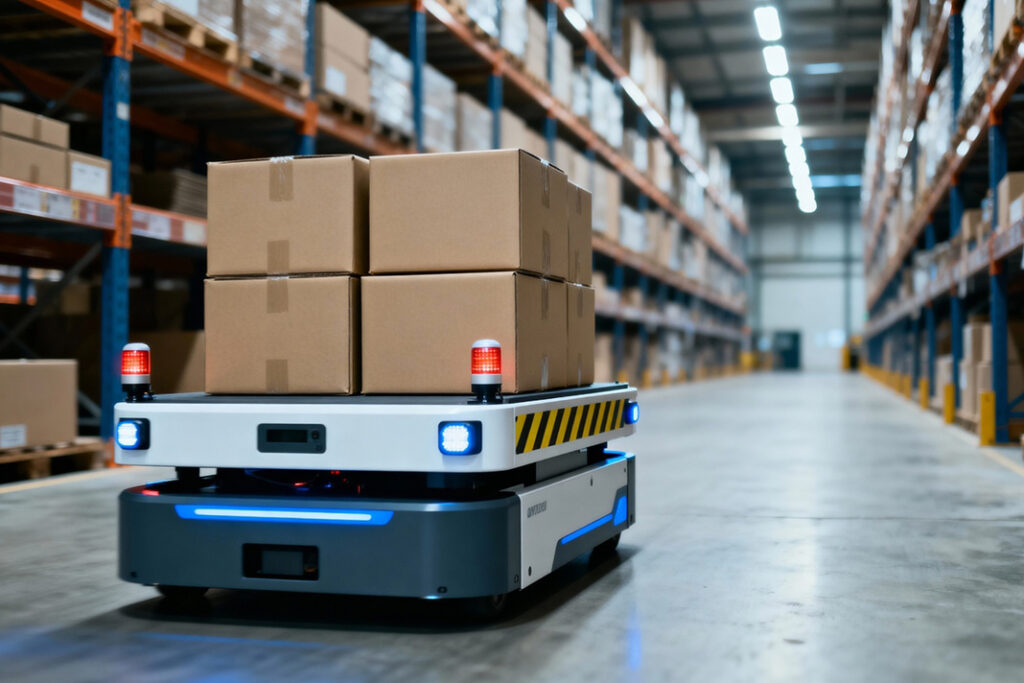
For example, robotics-enabled transport systems that increase facility throughput can directly improve order fulfillment rates and working capital efficiency.
2. Stalled Investments: By contrast, automation programs stall when they:
One of the most common pitfalls is underestimating integration discipline. AI layered onto disconnected legacy systems without harmonized data produces noise instead of insight. The lesson is clear: technology selection matters less than design rigor and executive sponsorship tied to uptime, throughput and cost control.
The lesson: technology selection matters less than design discipline and executive sponsorship.
As more facilities mature beyond pilot deployments, new performance benchmarks are emerging.
Leading plants are reporting:
Enterprise leaders are standardizing frameworks to replicate results across sites – turning isolated wins into network-wide performance gains. Replication is what defines automation as an operating model.
This replication is a defining characteristic of automation as operating model. Instead of reinventing solutions at each facility, organizations are building repeatable architectures that scale across geographic locations and business units – accelerating payback and reducing deployment risk.
However, the shift from pilot to operating model requires deliberate leadership and coordination. C-suite alignment is critical for automation success. When CEOs, COOs, CIOs and CHROs share a unified view of automation’s role, investments are more likely to deliver financial returns and scale in immediate impact. When automation is siloed within IT or operations, momentum dissipates.
Equally important in this integration process is transparency. Organizations that clearly communicate how roles will evolve build trust, reduce resistance and accelerate adoption.
In 2026, the competitive advantage lies with those who have operationalized and scaled the technology to align with the needs of their human workforce.
Industrial automation has moved beyond the proof-of-concept stage. Industry leaders are now those who are redesigning workflows, redefining roles and aligning capital distribution around an AI-supported operating model.
The next phase of manufacturing will be defined by how effectively companies convert automation from pilot to predictable performance, across assets, processes and people.

About the Author:
Russ Ford is a high impact executive with broad experience in business management, operations management, business development, and capital projects. He has worked both domestically and internationally, delivering results and developing relationships.


Industry in Transition: The Forces Reshaping Manufacturing
As manufacturers offer more customization than ever before, managing product complexity has become a critical challenge. Tune in with Dan Joe Barry, Vice President of Product Marketing at Configit, who explores how companies are tackling the growing number of product configurations across engineering, sales, manufacturing, and service. He explains how Configuration Lifecycle Management (CLM) helps organizations maintain a single source of truth for configuration data. The result: fewer errors, faster quoting, and the ability to deliver customized products at scale.
Get In Touch
Google news and SEO compliant, Industry Today’s state-of-the-art digital media platform offers bespoke media campaigns that target key decision makers and buyers to achieve your marketing and promotional goals.

Contribute
Showcase your brand and promote your business to our highly targeted audience. We offer detailed Google Analytics with measurable ROI to assure success. Submit your content for review by our Editorial team who will contact you to discuss the project further.
About Us
Reach Your Targeted Audience and Grow Your Business. Learn more About Industry Today.
Contact Us

© 2026 Industry today. All Rights reserved.