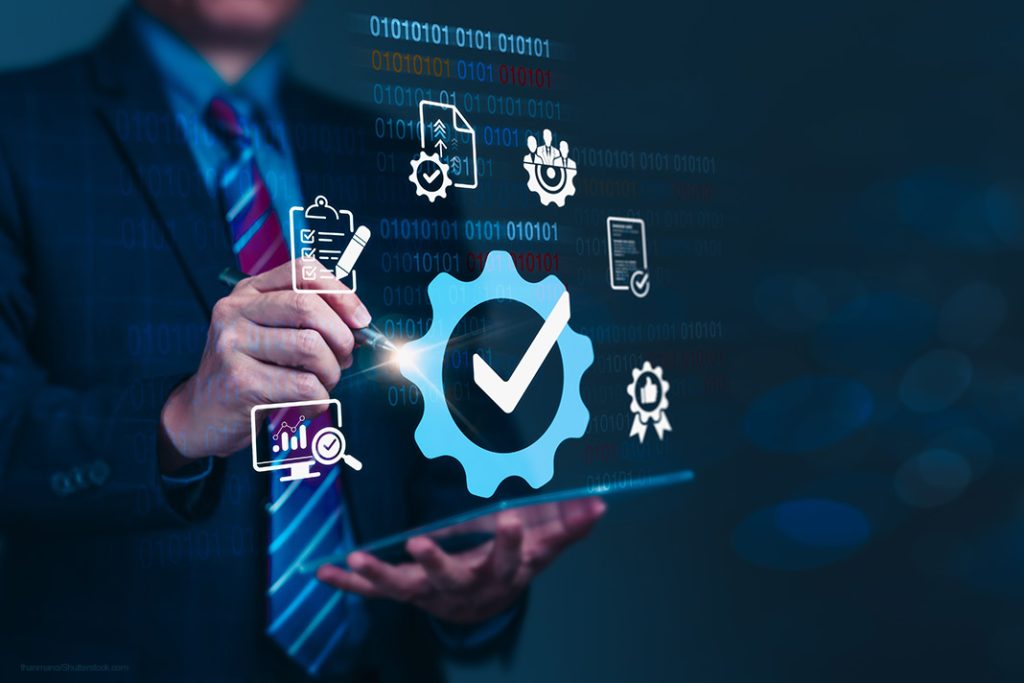
Manufacturing’s evolving cybersecurity risks emphasize the need for an integrated security strategy and proactive defense.
By Kyle Falkenhagen, Chief Product Officer, Secureworks®
Industrial and manufacturing settings face an adversary profile that is evolving, becoming more of a “needle in a haystack” than a simple list of known threats. What’s more, manufacturing is especially at risk – sustaining nearly a quarter of all cyberattacks.
Detection and response for OT is very different than it is for IT systems. And that’s important, because as Gartner reports, 70% of asset-intensive organizations will have converged their security functions across enterprise and operational environments by 20251. As the role of defending IT and OT is converging, manufacturers need an integrated approach capable of defending both.
Certainly, plenty of manufacturers have already begun this security transformation and are building strategies to battle the threats found in both IT and OT environments. Why? Because plant operations, profitability, and safety are all at stake.
Manufacturers face some unique, elevated risks, simply because of how their businesses work.
The 2021 ransomware attack on the Colonial Pipeline4 didn’t happen in a vacuum and many manufacturers haven’t forgotten the widespread and devastating effects this type of event can have. These kinds of events are part of why the U.S. Cybersecurity & Infrastructure Security Agency (CISA) issues numerous industrial control system (ICS) advisories throughout the year – releasing 50 ICS advisories in December 2022 alone5. So, what are manufacturers to do in the face of the unique threats plaguing their industry?
The face of manufacturing is changing. A once rugged machine is becoming more technologically sophisticated and integrated. Manufacturers have worked hard to build safer plant environments, but now, there’s a new frontier for safety: security. As new systems demand greater coverage from security teams, future-ready manufacturers will strategically improve IT and OT security posture to stay free of incidents. After all, the enemy used to be found in careless mistakes or injuries on site. But today, the enemy today could be as close as the laptop or device in your hand.

As VP of Product, Kyle Falkenhagen leads the Product Management and User Experience teams at Secureworks. Prior to joining Secureworks, Kyle founded two startups and led Product Management, UX, Engineering, and Marketing teams at several Enterprise Cloud and Cybersecurity companies, including DXC Technology, CSC, ServiceMesh, ExoCloud, and NetQoS. Kyle received his B.S. in Computer Science at Texas A&M University.
Sources:
1 Gartner Market Guide for OT, August 2022
2 Gartner Product Leaders Insight, March 2022
3 Age and Tenure in C Suite, kornferry.com
4 The Attack on the Colonial Pipeline, CISA.gov
5 Cybersecurity Advisories, CISA.gov
6 State of the Threat Report, Secureworks, 2022
7 Contractors, Temps, and Insider Threats, Secureworks, 2022

Forging the Next 250 Years: Powering the Next Era of American Manufacturing
In this episode of Industry Insights, Ricky Watts, General Manager, Industrial and Robotics Division at Intel Corporation, explains why the Industry 4.0 groundwork manufacturers have been laying for years is now the foundation for AI at scale. He describes how IT and OT systems are finally coming together, and how agentic AI can pull data from the plant floor, the supply chain and the C-suite to find out why a production line is underperforming. Watts also covers why chips have become strategic infrastructure, the rise of physical AI and robotics in harsh industrial settings, and the skills tomorrow’s workforce will need. He finishes with a layered approach to cybersecurity in software-defined plants.
Get In Touch
Google news and SEO compliant, Industry Today’s state-of-the-art digital media platform offers bespoke media campaigns that target key decision makers and buyers to achieve your marketing and promotional goals.

Contribute
Showcase your brand and promote your business to our highly targeted audience. We offer detailed Google Analytics with measurable ROI to assure success. Submit your content for review by our Editorial team who will contact you to discuss the project further.
About Us
Reach Your Targeted Audience and Grow Your Business. Learn more About Industry Today.
Contact Us

© 2026 Industry today. All Rights reserved.