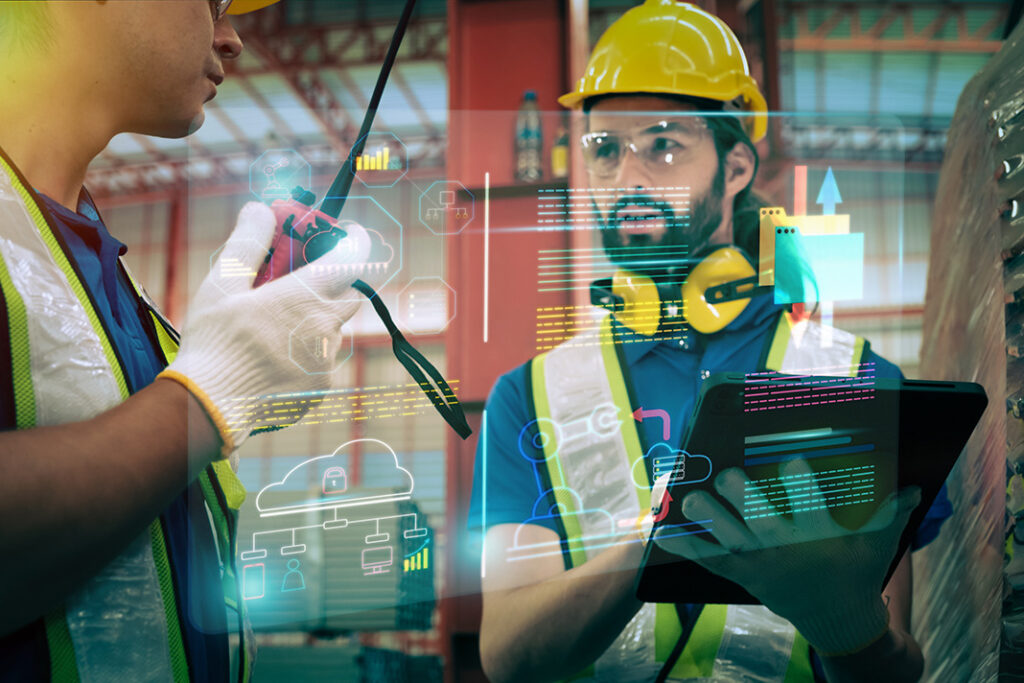
Manufacturers face rising AI and supply chain threats, challenging business leaders to prioritize cyber resilience.
By Kory Daniels, Chief Security & Trust Officer at LevelBlue
When manufacturing organizations are disrupted, the global economy and supply chain across businesses and consumers can be immediately impacted, followed by longer term effects. From energy and transportation to healthcare and consumer goods, nearly every sector depends on its efficiency. It’s also one of the most targeted industries for cyberattacks, with 37% of executives reporting a significantly higher volume of attacks than last year.
The threat landscape has grown even more complex with the rise of artificial intelligence, supply chains, and geopolitical tensions. Threat actors are now using AI to automate phishing, craft deepfakes, and exploit vulnerabilities faster than organizations can respond, forcing manufacturers to rethink how they protect critical systems.
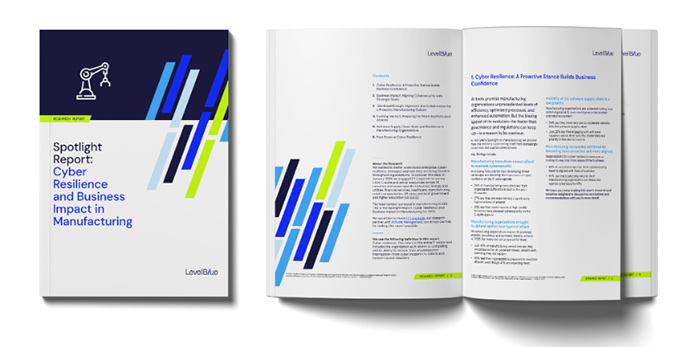
LevelBlue’s latest research, Spotlight Report: Cyber Resilience and Business Impact in Manufacturing, examines how industry leaders are confronting these evolving risks and strengthening their defenses. This piece will explore the findings, where organizations are falling short, and how they can strengthen defenses against today’s dynamic risk environment.
AI vendors promise manufacturing organizations unprecedented levels of efficiency, optimized processes, and enhanced automation. However, AI has also become what is commonly called a force multiplier for threat actors, essentially allowing them to do more with less. Threat actors are now using AI to automate phishing campaigns, generate convincing deepfakes, and exploit vulnerabilities faster than human defenders can react.
The result is a widening gap between awareness and readiness. While 44% of executives expect AI-powered attacks and 47% anticipate deepfake or synthetic identity threats, only about one-third say they are prepared to defend against them.
Likewise, many manufacturers are underestimating how unregulated AI tools could pose a risk to their extended ecosystem. AI adoption is happening too fast for regulations, governance, or mature cybersecurity controls to keep pace, which expands the attack surface and increases exposure. Despite recognizing these risks, many executives remain confident about deploying AI technologies—often without sufficient safeguards in place. This disconnect between innovation and protection underscores the urgency for manufacturers to take a more proactive and adaptive approach to resilience.
If there’s one area where manufacturers remain especially vulnerable, it’s the software supply chain. Despite years of high-profile third-party breaches, visibility across supplier networks continues to lag. Our research found that 54% of manufacturing organizations have low to moderate visibility into their software supply chains, and only 26% say they are investing significantly in software supply chain security—a concerning gap, given that they can provide a major entry point for threat actors.
Supply chain issues pose a significant problem for all organizations, and the limited oversight is one of the most significant risks. If they are not properly secured, vulnerabilities in the software supply chain can provide entry points for threat actors. Once in, hackers can move deeper into a network, stealing credentials, gaining control of valuable systems, and pushing out malware, potentially to thousands of victims. And attacks like this can often go undetected until compromised software has been widely distributed. Our report reveals that many manufacturing executives do not see the risk. Few see unsupported software (18%), open-source libraries (13%), or insufficient visibility (19%) as high risks, yet these weaknesses often provide the foothold attackers need.
Improving supply chain transparency, verifying supplier credentials, maintaining software bills of materials, and conducting regular assessments must become central to any manufacturer’s cyber strategy. Prioritizing this area is critical for building resilience and protecting a company’s physical and intellectual property.
Despite these challenges and shortfalls in some areas, manufacturers are making progress in shoring up their defenses. Across the industry, cybersecurity is increasingly being recognized as a core business function rather than a technical necessity.
Our data reveals that 68% of manufacturing executives say their cybersecurity teams are aligned with lines of business, and 65% report that leadership roles are tied to cybersecurity KPIs. These numbers, coupled with high-profile media reports and an increasingly complex threat landscape, are pushing cybersecurity higher on the corporate agenda, drawing greater attention from the C-suite, and prompting them to prioritize it.
This shift is helping organizations move from reactive defense to proactive resilience, embedding security into daily operations and innovation efforts. More than half of manufacturers (55%) now allocate cybersecurity budgets at the outset of new initiatives, ensuring that security is built in from the start. Another 69% say an adaptive approach to cybersecurity enables them to take greater innovation risks, and 70% are educating employees about social engineering tactics. These actions reflect an industry learning to view resilience not as a barrier to growth, but as a foundation for it.
It’s encouraging to see greater alignment between cybersecurity initiatives and organizational goals—but the data also shows that many manufacturers still face critical gaps. Corporate executive alignment and a proactive, adaptive approach remain essential to staying ahead of rapidly evolving threats.

Of course, there is still work to be done. Less than half, 44%, of organizations report having an effective company-wide cybersecurity culture. The next phase of maturity will require both structural and behavioral evolution, where every employee, from the plant floor to the boardroom, plays a role in safeguarding operations.
Manufacturers should consider the following four key steps to strengthen resilience:
The manufacturing sector is at a pivotal moment. AI-driven attacks, deepfakes, DDoS campaigns, and supply chain vulnerabilities are already reshaping the security landscape with adversaries evolving faster than defenses. But manufacturers are not standing still. By embedding cybersecurity into business strategy and culture, they can close the readiness gap and build the resilience needed to thrive in the next era of manufacturing.

About the Author:
Kory Daniels is Chief Security & Trust Officer at Trustwave, a LevelBlue company, where he has been spearheading initiatives in risk management, corporate resilience, strategic growth, and digital trust. For more than 5 years, Kory has led people, processes, and technology in effectively adopting ML, AI, and automation in Fortune 500 companies and adapting those approaches for the market.
Read more from the author:
A House Of Cards: Third-Party Risks Are Undermining Businesses Resilience Strategies | Forbes, 9/18/24
Digital Lifelines: Fortifying Healthcare’s Cybersecurity Amid Budget Cuts | HIT Consultant, 07/14/2025
6 Steps to Counter Fourth-Party Supply Chain Vendor Attacks | Trustwave, a LevelBlue company blog, 9/23/25
The Cost of Inaction: Securing the Energy Grid Before It’s Too Late | LevelBlue blog, 9/18/25

Industry in Transition: The Forces Reshaping Manufacturing
As manufacturers offer more customization than ever before, managing product complexity has become a critical challenge. Tune in with Dan Joe Barry, Vice President of Product Marketing at Configit, who explores how companies are tackling the growing number of product configurations across engineering, sales, manufacturing, and service. He explains how Configuration Lifecycle Management (CLM) helps organizations maintain a single source of truth for configuration data. The result: fewer errors, faster quoting, and the ability to deliver customized products at scale.
Get In Touch
Google news and SEO compliant, Industry Today’s state-of-the-art digital media platform offers bespoke media campaigns that target key decision makers and buyers to achieve your marketing and promotional goals.

Contribute
Showcase your brand and promote your business to our highly targeted audience. We offer detailed Google Analytics with measurable ROI to assure success. Submit your content for review by our Editorial team who will contact you to discuss the project further.
About Us
Reach Your Targeted Audience and Grow Your Business. Learn more About Industry Today.
Contact Us

© 2026 Industry today. All Rights reserved.