How agentic AI is moving from engineering pilots to real-world impact in simulation-driven design workflows.
By Steven Laine
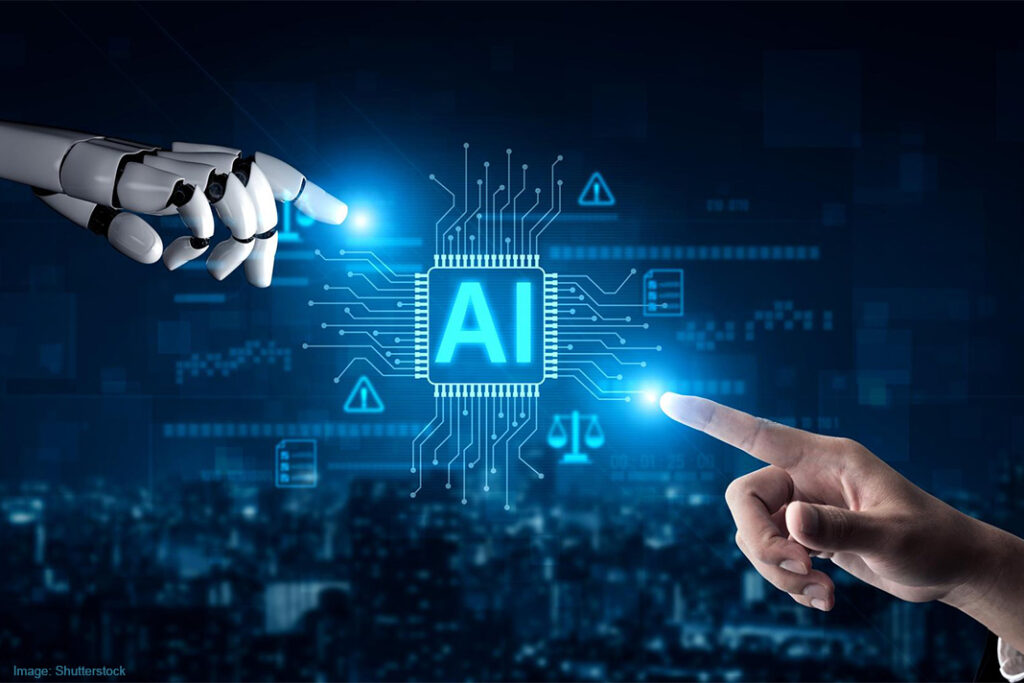
Agentic AI and automation hold vast potential to handle engineering tasks ranging from simulation setup to design exploration to a number of other labor-intensive manual operations. At a time when there’s mounting pressure to drive efficiency, produce more, and generally move faster while staying cost-effective, these agents are a welcome sight for many.
As a result, organizations across industries are placing high expectations on agentic AI to deliver significant results. In fact, a recent survey of engineering leaders found that 93% expect AI to deliver productivity gains, and 30% anticipate very high gains.
But the sheer excitement and potential of agentic AI don’t necessarily translate into an output that can be seen in any meaningful way. For all the enthusiasm and successful pilot projects, there’s currently a sizeable gap between adoption and outputs that generate real impact.
While expectations for productivity gains among engineers are near-universal, the real-world results haven’t kept pace. Just 3% of those same surveyed engineers report achieving significant impact today.
Closing that gap requires more than layering intelligent features onto existing tools. Rather, engineers need to prioritize embedding agentic AI directly into engineering workflows in ways that reinforce transparency, preserve control, and enable greater productivity.
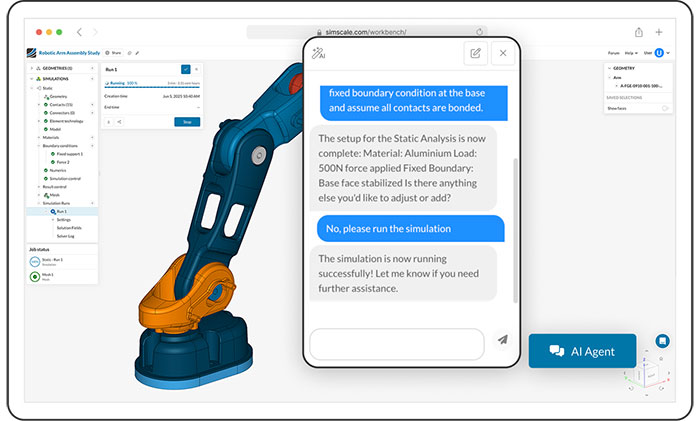
In many enterprise functions, AI adoption is justified through improvements in speed or cost efficiency. Engineering, though, faces a more complex set of considerations. For engineers, many decisions can influence physical performance, safety, and long-term reliability, meaning the consequences extend beyond simple productivity metrics.
With that context, it becomes clear why AI systems must meet a higher threshold. Agentic AI can autonomously plan and execute complex processes, but that alone is not the key to real impact. Engineers still need clarity on how agents make decisions like choosing physics models, defining boundary conditions, or evaluating outputs. When those steps are not visible, confidence will erode and adoption may slow.
Successful organizations position agentic AI as a collaborative partner rather than an autonomous decision-maker. That means maintaining oversight of assumptions and parameters while the agent manages execution. Transparent workflows give teams the ability to review intermediate steps, validate results, and override recommendations when necessary. This balance helps preserve accountability and aligns with established engineering practices, particularly in regulated or safety-critical environments where explainability is essential.
With transparency and control, AI can become a dependable contributor rather than a source of uncertainty.
Choosing to adopt agentic AI and automation frequently comes down to productivity, and engineers are no different in this regard. Agentic AI introduces a more adaptive operating model centered on engineering instead of a fixed set of instructions. Particularly in simulation-driven development, a significant amount of time is spent preparing models rather than interpreting results. Engineers need to define boundary conditions, select physics models, configure solvers, and set up parameter studies. All of these tasks are important, but they are also repetitive and prone to error.
AI agents designed for engineering workflows can translate objectives into an executable process. For example, if the goal is to evaluate performance across design variants, an agent can configure simulations, manage parameter sweeps, and organize results within a given framework. Then, as inputs evolve over time, the workflows can adjust accordingly, allowing engineers to refine objectives without needing to rebuild.
Over time, this shift lets teams spend less time on setup and more on analysis, interpretation, and design refinement. The productivity gains leaders have long anticipated are more likely to emerge when AI supports the most time-intensive parts of simulation workflows while preserving expert oversight.
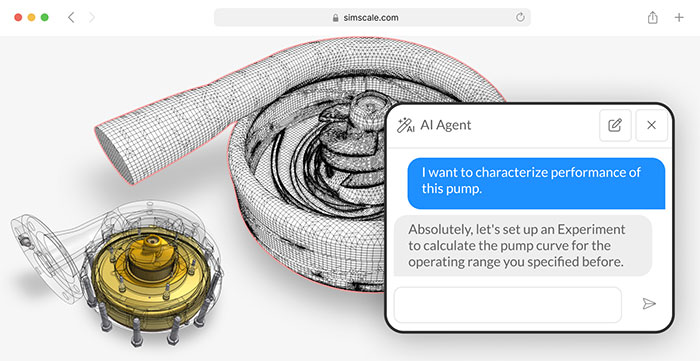
Agentic AI also broadens what can be accomplished in early-stage design. Cloud-native simulation platforms, combined with AI agents, make it possible to coordinate a vast number of simulations in parallel. When integrated with physics-informed AI models, this capability accelerates trade-off analysis and surfaces performance trends with enough time to impact design direction, rather than acting as an end-stage verification step.
For engineers working in industries where physical testing is costly or impractical, this expanded exploration can be highly valuable. Teams can evaluate flow behavior or structural response under varied conditions without building multiple prototypes.
Getting insights earlier helps reduce downstream risk. As projects advance, the cost of change increases, and late-stage redesigns can delay timelines and put strain on budgets. Broadening exploration from the beginning supports stronger decision-making and lowers the likelihood of making revisions later.
Even so, realizing consistent results across teams often depends on more than technical capability alone.
Engineering leaders overwhelmingly expect AI to deliver meaningful productivity gains, yet only a small percentage have realized the highest levels of impact. The gap appears to reflect not a lack of potential, but the challenge of disciplined implementation at scale.
Organizations looking to close that gap may benefit from focusing on three areas. Embedding transparency and control into AI-driven workflows helps build trust. Aligning agentic AI with core engineering tasks such as simulation setup and design exploration ensures relevance. Investing in centralized infrastructure that supports scalability allows insights and workflows to be reused rather than recreated.
Bringing these elements together transforms agentic AI to function as a trusted extension of the engineering team, accelerating validation, broadening exploration, and strengthening decision-making without compromising operational rigor.
By engineering the foundation behind AI adoption, organizations can make the jump from expectation to measurable results.

About the Author:
Steve Lainé is a Director of Solution Engineering at SimScale. He has a technical foundation, with a Master’s degree in Mechanical Engineering and a Ph.D. in Materials Science. Steve has 13 years of industry-relevant experience from working in aerospace design and engineering simulation.

Industry in Transition: The Forces Reshaping Manufacturing
As manufacturers offer more customization than ever before, managing product complexity has become a critical challenge. Tune in with Dan Joe Barry, Vice President of Product Marketing at Configit, who explores how companies are tackling the growing number of product configurations across engineering, sales, manufacturing, and service. He explains how Configuration Lifecycle Management (CLM) helps organizations maintain a single source of truth for configuration data. The result: fewer errors, faster quoting, and the ability to deliver customized products at scale.
Get In Touch
Google news and SEO compliant, Industry Today’s state-of-the-art digital media platform offers bespoke media campaigns that target key decision makers and buyers to achieve your marketing and promotional goals.

Contribute
Showcase your brand and promote your business to our highly targeted audience. We offer detailed Google Analytics with measurable ROI to assure success. Submit your content for review by our Editorial team who will contact you to discuss the project further.
About Us
Reach Your Targeted Audience and Grow Your Business. Learn more About Industry Today.
Contact Us

© 2026 Industry today. All Rights reserved.