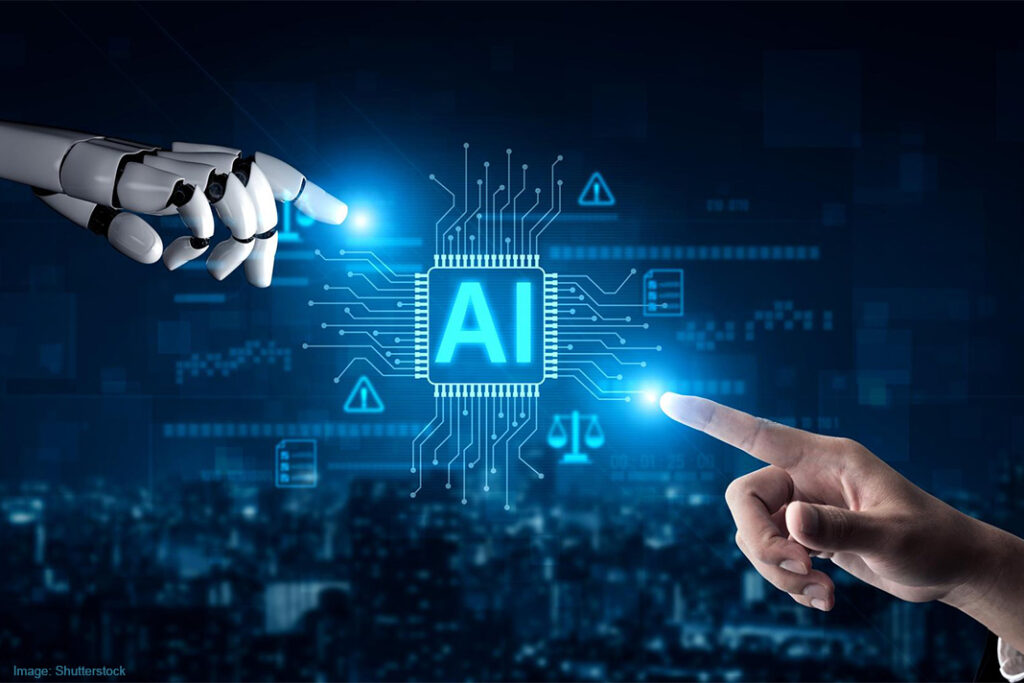
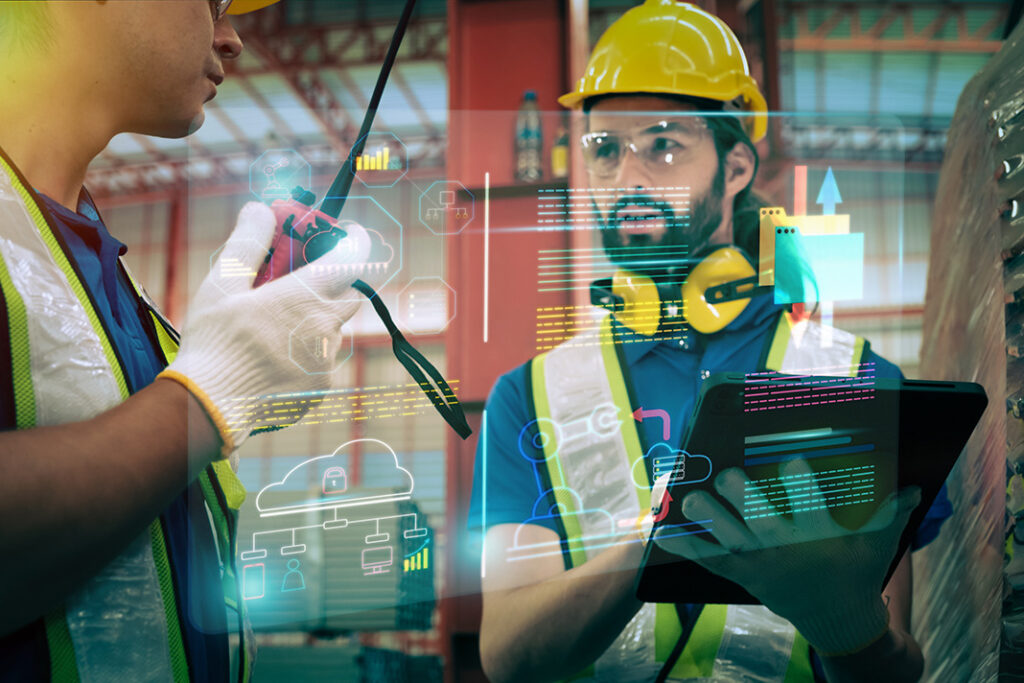
AI is evolving into an active manufacturing teammate, scaling efficiency through smarter, more connected decision-making.
By Jim Hansen, General Manager of Manufacturing and Quality at Advantive
Manufacturing doesn’t have a technology problem. It has a coordination problem. Most plants are already running Enterprise Resource Planning (ERP), a Manufacturing Execution System (MES), and a Warehouse Management System (WMS) systems — and still losing hours every day to manual data reconciliation, delayed decisions, and institutional knowledge walking out the door when experienced operators retire.
Speed, accuracy, and quality have always mattered in this industry. What’s changed is the margin for error. The plants pulling ahead aren’t doing it with more headcount or newer equipment — they’re doing it by finally making their existing systems work together. The ones that don’t figure that out will feel it in their numbers.
The technology to close that gap already exists. A new generation of cloud intelligence platforms applies Agentic AI directly to both historical and real-time manufacturing data, enabling operators and managers to ask questions, receive guidance, and troubleshoot issues in plain language. Instead of navigating complex dashboards, teams can interact with their data as if they were consulting a colleague. A recent Dataiku report projects an 18% increase in AI adoption in manufacturing by 2026 — and the coordination problem is exactly why.
The result is a more connected, responsive environment that elevates AI from an analytical tool to a more active operational role.
Manufacturing plants have historically relied on a patchwork of software solutions to keep operations running, but the approach often trapped and isolated information. Individually, these systems serve important purposes, but they often fail to communicate. An intelligent orchestration layer bridges the gap between high-level planning and floor-level execution.
The typical workflow involving an ERP platform, a MES, and a WMS requires a manager to check the ERP for incoming orders and cross-reference the WMS to confirm material availability before scheduling production through the MES. It’s a disjointed process that often requires teams to manually reconcile data across systems, introducing delays, human error, and limited visibility into what’s actually happening on the floor.
Agentic AI links disparate systems and treats them as a single, continuous stream of information. This orchestration layer pulls data from ERP, WMS, and MES platforms to enable real-time synchronization across the facility, giving teams clear visibility into what needs attention and how to keep operations on track.
This is far more effective than fragmented environments, where poor data quality costs organizations an average of $12.9 million annually.
Traditional manufacturing systems rely on dense dashboards that require expert interpretation and often surface issues only after they occur. In many plants, operators are still reacting to yesterday’s data or waiting on updates from other systems before taking action. AI-driven systems shift this model by continuously monitoring operations and recommending actions before small disruptions become costly problems.
For example, if a delay is detected in the MES, the system can suggest adjustments to WMS-driven logistics to keep production on track. These recommendations are delivered with clear reasoning, enabling teams to act quickly and confidently.
This shift from reactive monitoring to proactive guidance keeps people at the center of the process while improving both speed and decision quality. In fact, a recent McKinsey report found that AI-supported workers are up to 25% faster, and collaboration between humans and AI can improve work quality by roughly 40%.
Manufacturers no longer need to choose between stability and innovation.
AI-driven orchestration layers are changing the nature of daily work by reducing manual effort and improving visibility across systems. Instead of spending time reconciling data or searching for information, teams can focus on monitoring performance and making faster, more informed decisions.
These systems also give new hires real-time guidance on complex machine setups and troubleshooting procedures, accelerating onboarding. Inexperienced operators can make complex decisions with greater confidence by following step-by-step recommendations based on years of historical plant data. In many environments, this kind of knowledge transfer takes months and depends heavily on tribal expertise. This transformation can be achieved without significant disruption, as intelligence is applied across existing systems.
Manufacturers that have hesitated to modernize due to the disruption of large-scale system overhauls now have a more practical path forward. AI can be layered onto existing systems, reducing the need for full rip-and-replace implementations while still delivering meaningful results.
This approach minimizes capital investment, training burden, and operational downtime typically associated with traditional upgrades. Instead, organizations can introduce high-value improvements incrementally, reducing risk while accelerating time to value.
Cloud intelligence platforms further support this shift by enabling teams to test scenarios and run simulations before making changes to the production line. By the time updates are deployed, workers are already familiar with new workflows, resulting in safer rollouts, fewer disruptions, and more predictable outcomes.
The integration of AI marks a significant shift for manufacturing operations. By unifying disconnected systems, accelerating decision-making, and bringing clarity to complex processes, these technologies enable teams to operate with greater precision and confidence, while keeping people at the center.
For most manufacturers, the starting point isn’t a full transformation, it’s identifying where decisions are slowed down today. That could be production scheduling, material availability, or issue resolution on the floor.
The opportunity is to introduce intelligence at those friction points first, prove value quickly, and expand from there. Teams that take this focused, incremental approach will be better positioned to compete as manufacturing becomes increasingly connected and data-driven.
The coordination problem has been hiding in plain sight for years. The difference now is that the plants solving it are pulling ahead — and the gap is widening. Technology isn’t a barrier anymore. The only question is how long you wait to use it.

About the Author
Jim Hansen is the General Manager of Manufacturing and Quality at Advantive. He brings more than 20 years of experience leading product and operational initiatives across global teams, with a focus on delivering customer-driven innovation and measurable business impact in manufacturing environments.

Industry in Transition: The Forces Reshaping Manufacturing
As manufacturers offer more customization than ever before, managing product complexity has become a critical challenge. Tune in with Dan Joe Barry, Vice President of Product Marketing at Configit, who explores how companies are tackling the growing number of product configurations across engineering, sales, manufacturing, and service. He explains how Configuration Lifecycle Management (CLM) helps organizations maintain a single source of truth for configuration data. The result: fewer errors, faster quoting, and the ability to deliver customized products at scale.
Get In Touch
Google news and SEO compliant, Industry Today’s state-of-the-art digital media platform offers bespoke media campaigns that target key decision makers and buyers to achieve your marketing and promotional goals.

Contribute
Showcase your brand and promote your business to our highly targeted audience. We offer detailed Google Analytics with measurable ROI to assure success. Submit your content for review by our Editorial team who will contact you to discuss the project further.
About Us
Reach Your Targeted Audience and Grow Your Business. Learn more About Industry Today.
Contact Us

© 2026 Industry today. All Rights reserved.