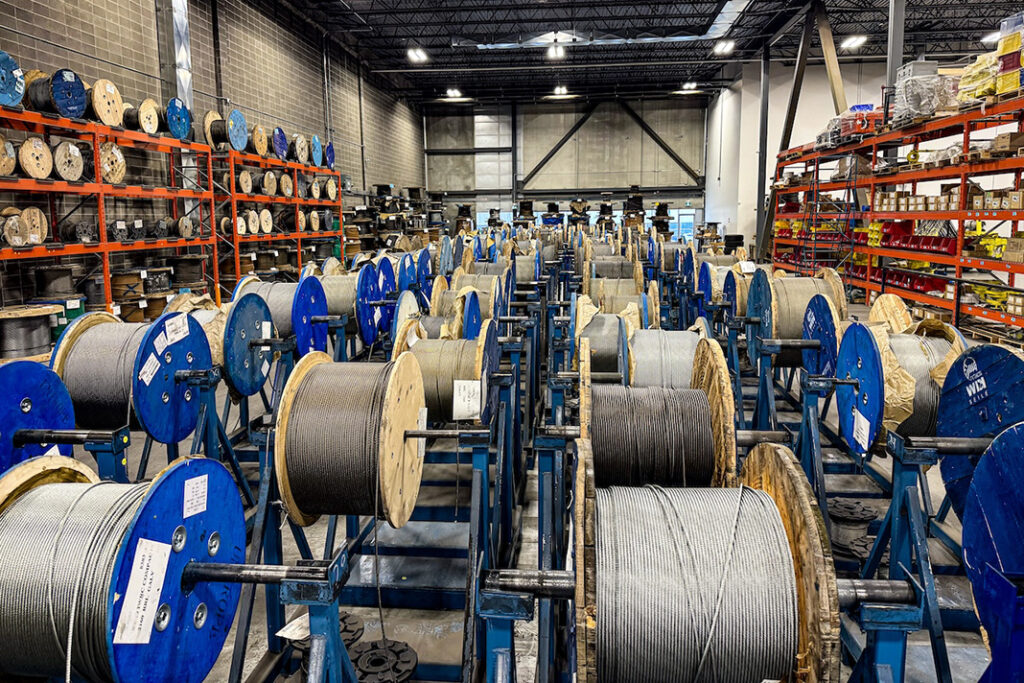
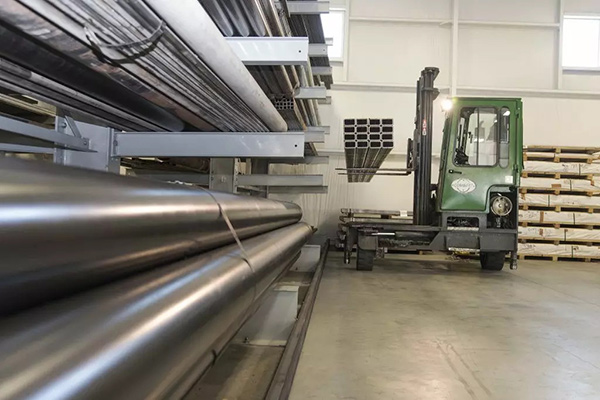
Warehouse racking systems are critical safety and efficiency assets, shaping inventory capacity, order flow, and compliance.
By Tracy Buck, Industrial Storage Sales Engineer, Dexco
Warehouse racking systems sit at the intersection of efficiency and safety. They determine how much inventory a facility can hold, how quickly orders move, and how well both employees and products are kept safe. That said, despite their importance, industrial racking systems are often treated as static, “set it and forget it” infrastructure. The racks are installed once, checked occasionally, and revisited only after a problem occurs. Combine the speed of today’s facility operations with an increasingly stringent regulatory environment and it’s clear that this approach is no longer acceptable.
Warehouse storage systems are governed by a layered framework of federal regulations, state and local building codes, fire safety requirements, and industry-specific standards. These rules are not merely administrative hurdles; instead, they exist to prevent injuries, limit property damage, and put an end to costly operational disruptions. A compliance-first mindset reframes racking not as a background asset, but as an active component of a safe, resilient, and high-performing facility.
Non-compliance with any regulation or requirement carries tangible consequences. Rack failures can lead to serious injuries or fatalities, trigger regulatory fines, expose organizations to legal liability, and halt operations during investigations or repairs. Less visible, but equally damaging issues are the productivity losses that follow unsafe layouts, restricted aisles, or unclear load limits. For manufacturers and distributors that are under constant pressure to do more with less, these risks compound quickly.
At the same time, compliance requirements are becoming more complex. Facilities are growing taller, inventory mixes are changing, and automation and material-handling equipment are placing new demands on storage systems. Regulations must be interpreted in the context of how a warehouse actually operates, not just how it was originally designed. This is where many organizations struggle.

Let’s start with a quick look at OSHA. The federal Occupational Safety and Health Administration (OSHA) provides the baseline for most warehouse safety regulations. While OSHA does not publish a racking-specific standard, regulation 29 CFR 1910.176 outlines requirements for the handling and storage of materials and is frequently referenced during inspections.
There are several core principles from this regulation that directly affect racking systems, and that you should know by heart:
OSHA enforcement often focuses on whether facilities can demonstrate that they have identified all hazards, trained all employees, and taken reasonable steps to maintain safe conditions across the board. Documentation, transparency and consistency are critically important to prove compliance with the above.
Beyond federal requirements, warehouse operators must comply with relevant state and municipal building codes. These codes can influence racking height, anchoring requirements, seismic considerations, and spacing from walls or structural elements. In some regions, the potential for seismic activity introduces additional engineering requirements that affect both rack design and installation methods.
Fire safety regulations add another layer of complexity. Fire codes may dictate maximum storage heights, flue space requirements, sprinkler placement, and fire-resistance ratings for certain materials. Racking configurations that interfere with sprinkler coverage or block fire exits can quickly put a facility out of compliance, regardless of how well the racks perform structurally. Being out of compliance can be a costly problem – both from the cost of reworking your system to be compliant, and the lost work days that occur when found to be non-compliant.
Because codes can vary significantly by jurisdiction, compliance cannot be standardized. Each facility requires localized review, particularly when expanding, reconfiguring, or changing the type of inventory stored.
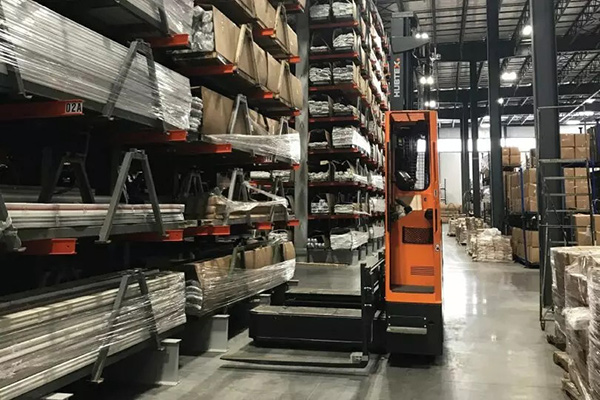
Certain industries also add additional regulatory scrutiny to the mix. Food, beverage, pharmaceutical, and chemical storage environments often impose stricter rules related to sanitation, traceability, and hazardous materials handling. These requirements can affect rack materials, coatings, and layout decisions.
For example, food and beverage facilities may need corrosion-resistant finishes and rack designs that support washdown procedures, while chemical or hazardous materials storage often require additional containment considerations, spacing requirements, and compatibility with fire suppression systems.
High-bay and automated warehouse environments introduce yet another layer of complexity, as taller rack structures, tighter tolerances, and integration with automated storage and retrieval systems place greater emphasis on precise installation, floor flatness, seismic design, and ongoing monitoring to ensure system reliability and safety.
In addition, for manufacturers storing raw materials alongside finished goods, mixed-use environments can complicate compliance. A racking system that meets general industrial standards may fall short when applied to regulated products, for example. Understanding where general safety rules end – and industry-specific obligations begin – is critical to be compliant.
While regulations define the minimum standard, long-term compliance depends on operational discipline. Several best practices consistently distinguish facilities that manage compliance proactively from those that react to problems. Here is some specific compliance advice I’ve shared with customers over the years:
A compliance-first approach does more than reduce risk; it supports efficiency and resilience. Clearly defined load limits reduce product damage. Well-maintained aisles improve material flow. Thoughtful layouts enhance access for automation and future growth. Compliance makes a safer environment for employees.
As warehouses continue to evolve, racking systems can no longer be treated as a “one-and-done” infrastructure. Regulatory compliance must be integrated into ongoing operational strategy, and be informed by how facilities actually function day to day. Contrary to popular belief, proper safety and compliance are actually complimentary to strong operational performance.

About the Author
Tracy Buck is a sales engineering leader at Dexco with more than 25 years of experience designing heavy-duty structural steel and custom material-handling systems for complex industrial challenges. A recognized expert in prototyping, reverse engineering, and lean manufacturing, Tracy has delivered projects for leading defense, government, and commercial organizations, including Tesla, GM, Ford, and multiple U.S. military branches, helping them to enhance safety, efficiency, and operational readiness.
Industry in Transition: The Forces Reshaping Manufacturing
As manufacturers offer more customization than ever before, managing product complexity has become a critical challenge. Tune in with Dan Joe Barry, Vice President of Product Marketing at Configit, who explores how companies are tackling the growing number of product configurations across engineering, sales, manufacturing, and service. He explains how Configuration Lifecycle Management (CLM) helps organizations maintain a single source of truth for configuration data. The result: fewer errors, faster quoting, and the ability to deliver customized products at scale.
Get In Touch
Google news and SEO compliant, Industry Today’s state-of-the-art digital media platform offers bespoke media campaigns that target key decision makers and buyers to achieve your marketing and promotional goals.

Contribute
Showcase your brand and promote your business to our highly targeted audience. We offer detailed Google Analytics with measurable ROI to assure success. Submit your content for review by our Editorial team who will contact you to discuss the project further.
About Us
Reach Your Targeted Audience and Grow Your Business. Learn more About Industry Today.
Contact Us

© 2026 Industry today. All Rights reserved.