When engineers combine PLM with a CLM approach, they can guarantee consistency of products and product configurations.
By Sigrún Ívarsdóttir, product manager, Configit
Today’s auto makers must address multiple challenges, including changing customer preferences, industry and regional regulations, and technological advancements. Navigating these challenges while still remaining profitable is no easy feat.
Car buyers today increasingly expect customization, whether it’s paint color, number of doors or special software features. For auto makers, this means defining rules and options throughout the process to unify the engineering, operational, logistics, and commercial aspects of the manufacturing process. Yet that’s difficult, because each of these pieces sits within its own system in its own department.
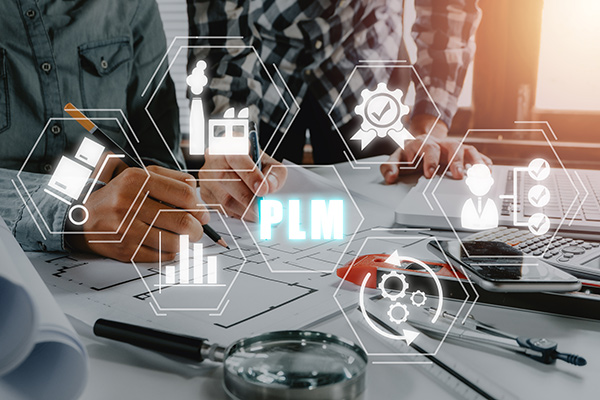
This is a goal that needs visibility from start to finish. Alignment must be ensured among the engineering, manufacturing, sales and service functions. Many manufacturers use a Product Lifecycle Management (PLM) tool, but it can’t support a product’s total lifecycle. For a comprehensive view, they need to augment PLM with a Configuration Lifecycle Management (CLM) approach.
Consumers have become accustomed to configuring and customizing products. This becomes extremely complex for automakers due to the software, mechanical, and electrical variations. A single MINI Cooper model, for instance, could be configured in millions of unique ways once all options are considered. However, carmakers must enable this level of complexity to remain competitive.
If they fail to do this, they will end up with quality issues, delays and inefficient processes. Though PLM can help with these problems, it can’t achieve the larger configuration goal on its own. It can’t manage millions or even possibly billions of product combinations or configurations.
Yes, PLM is an essential element in the manufacturing process. However, it’s not appropriate to focus solely on this element, as PLM is typically owned by the engineering team, which tends not to take the sales perspective into account. This results in automakers having incomplete visibility into their own product offerings.
PLM has an ally: CLM. PLM looks at the whole product lifecycle and includes CAD models, Bills of Materials (BOMs), change management, documentation and interdepartmental collaboration. PLM undergirds product development, innovation and compliance.
For its part, CLM addresses the product configuration lifecycle, from configuration and sales to delivery and service. It offers a method for end-to-end management of customizable product rules and options. CLM combines existing rules and options into a shared product model that anyone can access. This shared model, when synced back to each system, gives a dependable “shared source of truth.”
PLM provides a necessary but incomplete view of products. When manufacturers add the CLM approach, it increases PLM’s value by uniting commercial and engineering rules. With this union, auto makers have visibility into all possible product configurations. It gathers product configuration data into a shared model that empowers a “single pane of glass” for multiple systems and users.
A CLM approach can demonstrate that a combined model is valid by ensuring data from business systems (e.g., CRM, ERP) and engineering data (such as PLM or CAD systems) are aligned and synchronized across the entire product lifecycle. A CLM approach works from the engineering viewpoint to verify the combined model’s accuracy in terms of rules, constraints and design intent. This guarantees that the product can be made and is compliant with technical specifications.
The business systems benefit from a CLM approach because it guarantees valid product configurations for manufacturing, engineering, sales and service. It combines rules from market-specific, supply chain and pricing requirements. Having this validation speeds up time to market, reduces errors, and ensures configurations are consistent and correct.
In addition, car makers can use CLM to ensure that a BOM is consistent, complete, and unified across the commercial, engineering, and manufacturing systems. CLM can compare the manufacturing BOM (mBOM) with the sales BOM (sBOM) and engineering BOM (eBOM) to find inconsistencies, invalid configurations and missing components early on. It ensures that only valid, buildable configurations move forward by enforcing regional constraints, product rules and dependencies. This reduces the number of expensive mistakes and enables all teams to sing from the same songbook.
The standard PLM framework was created to help with the manufacture of standardized products, not customized ones. When engineers combine PLM with a CLM approach, they can guarantee consistency of products and product configurations. This approach yields four primary advantages:
There are additional advantages: improved internal efficiency, better customer experiences and the ability to realize true business value. Finally, domain experts can keep working in the systems they prefer to determine the best rules and options.
Car manufacturers have long depended on PLM solutions to assist with product creation. Though PLMs offer necessary aid, they don’t cover the entire product picture, which includes sales. CLM is a robust approach that gathers all relevant configuration data from all departments and consolidates it for a true product configuration lifecycle view. Using both PLM and CLM is a one-two punch that defeats configuration issues and sets auto makers up for success.

About the Author:
Sigrún Ívarsdóttir is a product manager at Configit, the global leader in Configuration Lifecycle Management (CLM) solutions and a supplier of business-critical software for the configuration of complex products. She is focused on the company’s core technology and improving product performance through close collaboration with customers and engineers. She holds a Master’s in Engineering Management from the Technical University of Denmark, where she wrote her thesis on configuration systems.

Industry in Transition: The Forces Reshaping Manufacturing
As manufacturers offer more customization than ever before, managing product complexity has become a critical challenge. Tune in with Dan Joe Barry, Vice President of Product Marketing at Configit, who explores how companies are tackling the growing number of product configurations across engineering, sales, manufacturing, and service. He explains how Configuration Lifecycle Management (CLM) helps organizations maintain a single source of truth for configuration data. The result: fewer errors, faster quoting, and the ability to deliver customized products at scale.
Get In Touch
Google news and SEO compliant, Industry Today’s state-of-the-art digital media platform offers bespoke media campaigns that target key decision makers and buyers to achieve your marketing and promotional goals.

Contribute
Showcase your brand and promote your business to our highly targeted audience. We offer detailed Google Analytics with measurable ROI to assure success. Submit your content for review by our Editorial team who will contact you to discuss the project further.
About Us
Reach Your Targeted Audience and Grow Your Business. Learn more About Industry Today.
Contact Us

© 2026 Industry today. All Rights reserved.