Strong safety cultures often reflect the discipline behind well-run projects, helping construction teams deliver more predictable results.
By Kayla Fonseca, Safety Director, Faith Technologies Incorporated (FTI)
Industrial construction projects are moving faster than they were even a few years ago. At the same time, the work itself is becoming more complex. For contractors and owners alike, that combination leaves less room for disruption when projects are underway.
In that environment, safety culture is beginning to stand out as a clear indicator of how well a contractor manages work. When safety is treated as a core value rather than a requirement, it becomes part of how projects are planned and how work is carried out in the field. Over time, that mindset leads to safer jobsites and more predictable project outcomes.
Many organizations once viewed safety primarily as a compliance issue. Regulations still matter, but strong safety cultures often reflect something deeper about how a company operates. The same discipline that supports safe work usually supports good planning and clear communication. When those elements are in place, projects tend to run more smoothly.
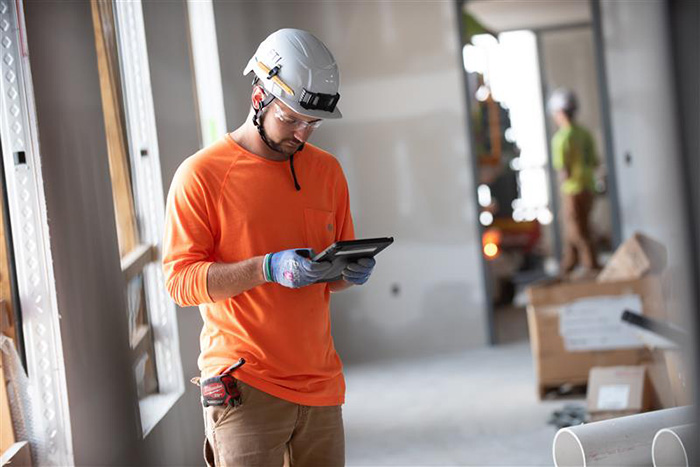
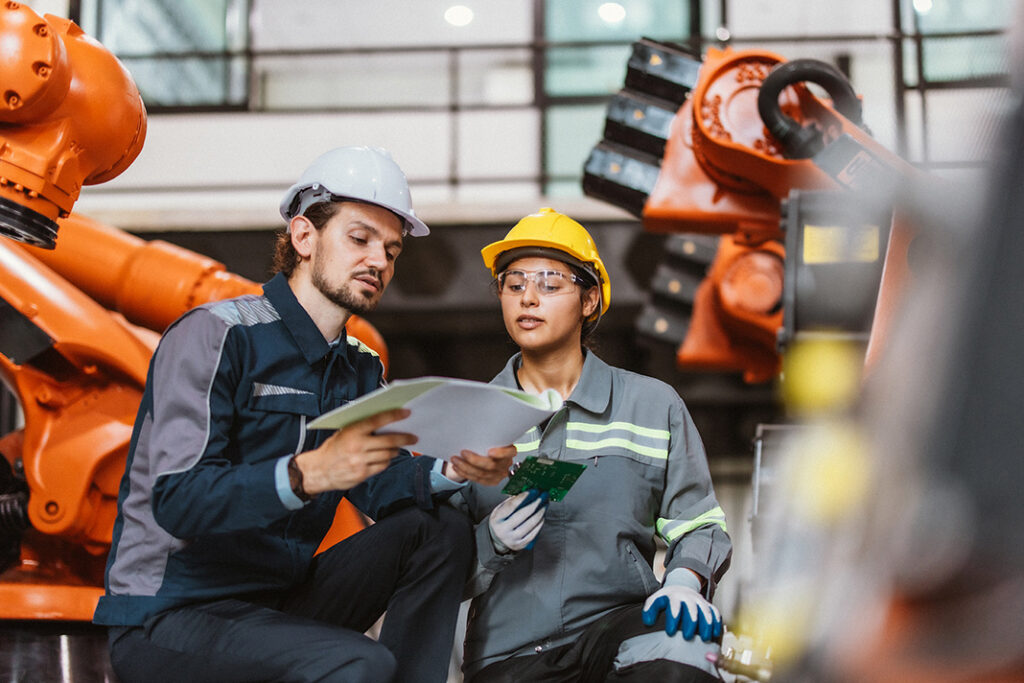
In my experience, projects with strong safety performance often reveal something about how the work is being managed overall. Crews understand their responsibilities, expectations on the jobsite are clear and communication happens consistently. When those conditions exist, teams are better positioned to recognize risks early and address them before they grow into larger problems.
Owners and industrial leaders often notice the same pattern. Contractors who manage safety effectively usually demonstrate the same level of discipline in other areas of project delivery. The planning that supports safe work also supports reliable scheduling and consistent installation quality.
That connection becomes especially clear on complex projects. Electrical systems often need to be coordinated with multiple trades, and work frequently happens in environments where conditions change quickly. Contractors who plan carefully and maintain clear communication are better positioned to manage those challenges.
Over time, many organizations begin to see safety performance as a reflection of how consistently a contractor manages projects.
Planning is one of the most effective ways to reduce risk on complex construction projects. When teams take time to think through the work before it begins, many hazards can be addressed early.
At Faith Technologies Incorporated (FTI), safety considerations are incorporated into project design and preconstruction planning. Teams review potential risks and discuss how those hazards can be eliminated or reduced before crews arrive onsite.
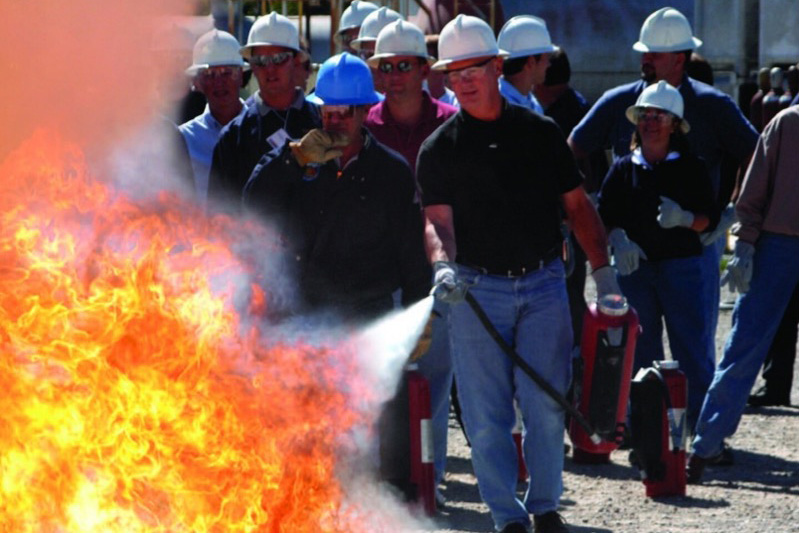
Once construction begins, those conversations continue in the field. Daily Operational Risk Management (ORM) briefings give crews an opportunity to talk through the work ahead, review jobsite conditions and confirm the safest approach to completing the task. These conversations often take just a few minutes, but they help crews start the day aligned and aware of what could affect the work ahead.
Investing time in planning also helps reduce rework. Work that must be redone often occurs under tight timelines or unfamiliar conditions, which increases the likelihood of mistakes. Addressing potential challenges earlier in the process helps reduce both safety risks and project disruptions.
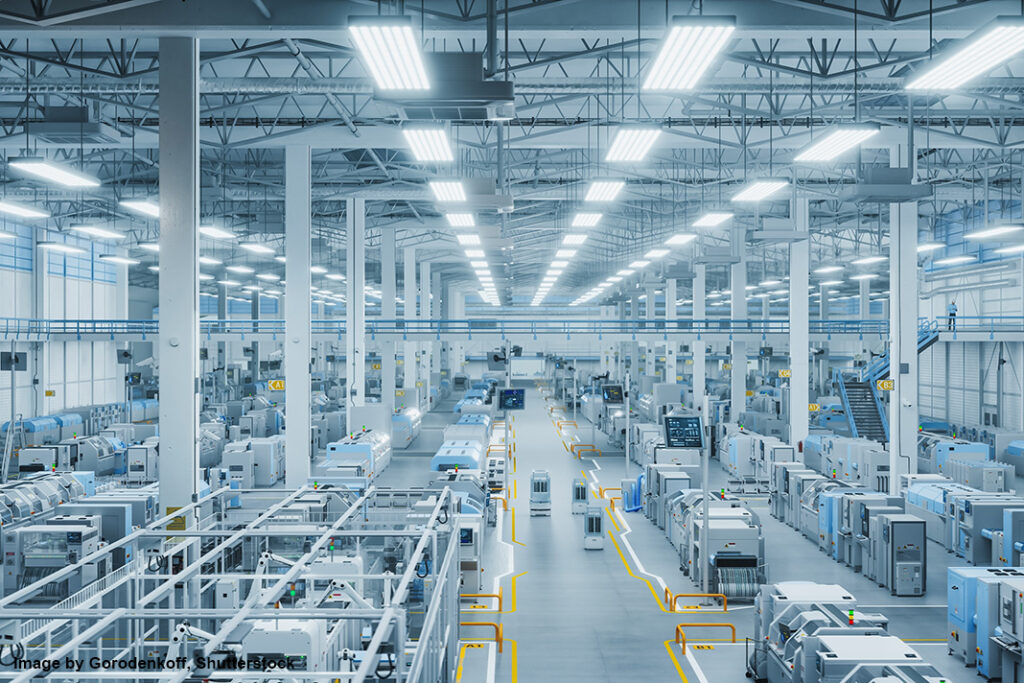
Another shift shaping safety in industrial construction is the growing use of industrialized construction methods. More contractors are moving portions of their work into controlled environments before installation takes place on the jobsite.
Off-site assembly allows electrical systems to be built in spaces designed for more consistent production. Lighting, workstation layout and tool access can be optimized in ways that are difficult to achieve on active construction sites. Crews have reliable access to equipment and materials, allowing them to focus on quality installation rather than constantly adapting to changing conditions.
These environments also make it easier to address ergonomic challenges that are common in construction. Workstations can be designed to reduce strain and improve material handling, helping minimize injuries that develop over time.
Another advantage is improved coordination. When assemblies arrive onsite ready to install, fewer trades are working in the same space at the same time. The jobsite becomes less congested, allowing teams to maintain steady progress and reducing the need for last-minute adjustments that often introduce new risks.
For owners and contractors alike, these approaches support safer projects while also helping maintain schedule reliability.
Safety culture also plays an important role in attracting and retaining skilled workers. Across the construction industry, companies continue to compete for experienced electricians and craft professionals, and workers pay attention to how employers prioritize safety.
One comment we frequently hear from new team members at FTI is that they have not previously worked for companies where safety expectations were communicated as clearly or reinforced as consistently as they are here. They learn about safety during onboarding and QuickStart training, but they also see those expectations reflected in daily work.
FTI approaches safety through a broader Culture of Care philosophy that emphasizes the well-being of the whole person – mind, body and soul. Wellness initiatives, mental health support and accessible leadership help reinforce that message.
Training is another important part of that effort. Through Faith Technologies University, team members receive ongoing education that strengthens both technical skills and safe work practices. Daily knowledge assessments reinforce important safety concepts so hazards remain top of mind during daily operations.
Organizations that invest in their people this way often see benefits beyond safety alone. When employees feel supported, they are more likely to stay with the organization and continue developing their skills, creating stronger and more stable project teams.
Strong safety cultures continue to evolve as organizations learn from experience. Many improvements begin with field teams who encounter hazards during daily work and identify better ways to perform a task.
At FTI, one example involved eliminating fixed-blade knives after a pattern of injuries was identified. By introducing safer tools and adjusting work practices, the company removed that risk from daily operations.
Another initiative known as Ladders Last encourages teams to rethink how they access work areas. Rather than defaulting to ladder use, crews are encouraged to consider lifts or other engineered solutions whenever possible.
Changes like these often begin with field conversations and grow into broader improvements across the organization.
Industrial construction will continue to face new challenges as facilities become more advanced and projects move quickly from design to installation. In that environment, companies that invest in planning, workforce development and continuous improvement will be better positioned to succeed.
Safety culture is no longer viewed simply as a compliance requirement. For many organizations, it has become a practical indicator of how well work is organized and executed. When safety is embedded in daily operations, it often reflects the discipline required to deliver complex projects successfully.
For contractors and owners alike, that connection is becoming increasingly clear. Safety culture is not only about preventing incidents. It also helps create the conditions that allow projects to run smoothly from start to finish.

About the Author:
Kayla Fonseca, CSP, CHST, CHSP, CIT, is a safety director at Faith Technologies Incorporated (FTI), where she supports occupational safety and health efforts for construction projects across the Midwest and helps lead safety training initiatives across the organization. She joined FTI in 2010 and has more than 16 years of experience in construction safety management and training. Fonseca holds a bachelor’s degree in Occupational and Environmental Health and Safety from the University of Wisconsin-Whitewater.

Industry in Transition: The Forces Reshaping Manufacturing
As manufacturers offer more customization than ever before, managing product complexity has become a critical challenge. Tune in with Dan Joe Barry, Vice President of Product Marketing at Configit, who explores how companies are tackling the growing number of product configurations across engineering, sales, manufacturing, and service. He explains how Configuration Lifecycle Management (CLM) helps organizations maintain a single source of truth for configuration data. The result: fewer errors, faster quoting, and the ability to deliver customized products at scale.
Get In Touch
Google news and SEO compliant, Industry Today’s state-of-the-art digital media platform offers bespoke media campaigns that target key decision makers and buyers to achieve your marketing and promotional goals.

Contribute
Showcase your brand and promote your business to our highly targeted audience. We offer detailed Google Analytics with measurable ROI to assure success. Submit your content for review by our Editorial team who will contact you to discuss the project further.
About Us
Reach Your Targeted Audience and Grow Your Business. Learn more About Industry Today.
Contact Us

© 2026 Industry today. All Rights reserved.