The manufacturing industry is undergoing major changes as connected systems, customer-first thinking, and AI replace old playbooks.
By Andrew Sinclair, Vice President of EMEA at Astound Digital
Manufacturing has always been defined by efficiency, scale, and execution. For decades, success meant producing more, faster, and at a lower cost. But today, the industry is being reshaped by an entirely new set of expectations: connected systems, customer-centric engagement, and the intelligent use of data and AI.
The challenges may differ from company to company, but the themes are universal. Standardization, customer centricity, and AI-driven innovation are no longer “nice-to-haves.” They’ve become the baseline for growth, competitiveness, and resilience for manufacturers across the globe.
Many manufacturers are dealing with years of legacy growth – multiple CRMs, disconnected B2B platforms, siloed data, and fragmented processes. While those systems may have supported expansion in the past, today they create serious barriers: limited visibility, slow response times, and missed opportunities to cross-sell or upsell.
Leaders in the space are prioritizing standardization. By unifying platforms for CRM, B2B commerce, and data management, they’re achieving more than operational efficiency. It also ensures that every product or component meets the same specifications and quality benchmarks. This reduces variability and defects, leading to more reliable products and higher customer satisfaction.
While it may seem counterintuitive, standardization often inspires innovation. By creating a stable foundation, manufacturers can focus on customer solutions and experiences rather than reinventing the basics each time.
Standardization can unlock opportunities across divisions, geographies, and product lines – laying the foundation for long-term scalability and agility.
Manufacturers now serve multiple business models at once: distributors, retail partners, installers, and in many cases, direct-to-consumer buyers. Each of these audiences expects a seamless, consistent experience. We routinely hear that B2B employees and customers expect a similar digital experience that B2C companies have produced for the past decade. After all, they are consumers in their personal lives as well and know how easy it is to buy with one click, add items to an existing order, or make purchases on their phone.
The industry is shifting toward experiences that adapt to the customer, not the other way around. So it’s no surprise that AI is a driving force here. According to a NAM survey, 80% of manufacturers say AI is essential to grow or maintain their business by 2030. AI can power proactive service, automate warranty claims, enable subscription-like maintenance programs, and tailor offers in real time.
Manufacturers should focus beyond the point of sale to build lasting customer relationships, drive recurring revenue through services, and gather data to fuel innovation. By managing the full product lifecycle, they can position themselves for the future and transform into long-term solution providers that anticipate customer needs.
The greatest transformation is happening in B2B. Industrial buyers, contractors, and distributors want the same kind of frictionless digital experiences they get as consumers. They expect intuitive digital storefronts, personalized recommendations, and seamless service.
Within the US manufacturing sector, more than 64% use mobile devices for production, inventory, and quality management. With this data in mind, it’s more important than ever for B2B digital experiences to be mobile friendly. Our phones follow us everywhere, so it’s only logical that the modern buyer is using it for faster, easier purchases at work.
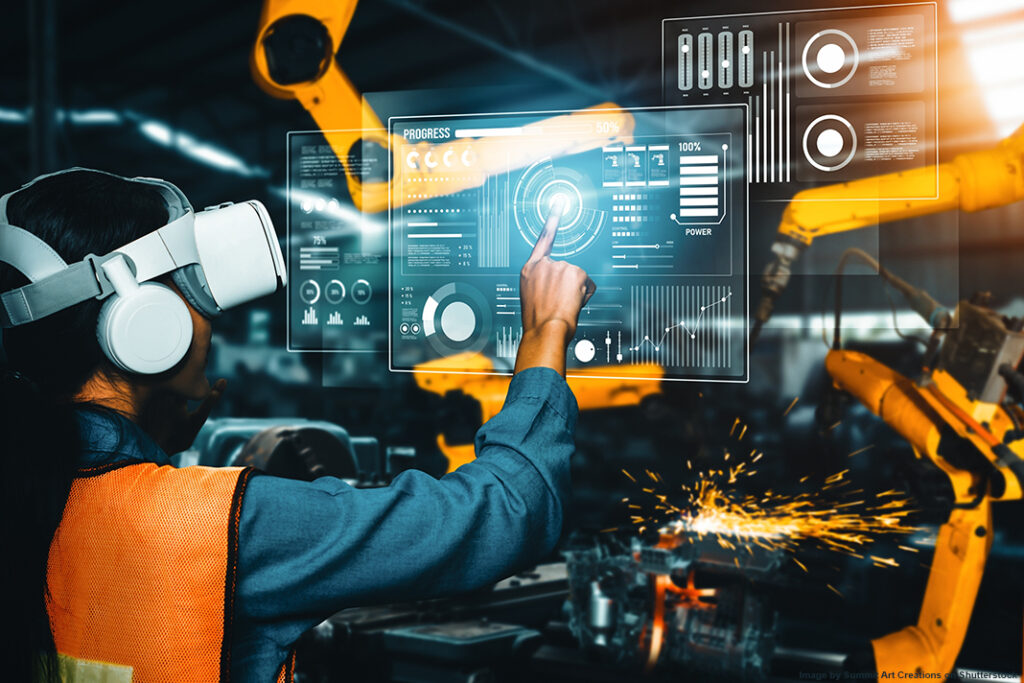
Forward-looking manufacturers are leveraging commerce, marketing, and service platforms to meet that demand. Generative AI is accelerating the shift – reducing cost to serve, enabling virtual shopping or guided selling, and making it possible to deliver experiences that once seemed out of reach for complex B2B transactions.
With so much rapid change to the industry, it’s clear that manufacturing leaders have a lot on their minds. And a lot of decisions to make. When you listen to manufacturing leaders today, a few priorities consistently rise to the top in recent conversations: standardization, customer expectations, and AI’s role.
Interestingly, the biggest concern isn’t whether the technology works – it’s the pace of change. The risk of standing still is now greater than the risk of experimenting.
The message for manufacturers is clear: digital transformation is no longer about choosing between efficiency and innovation. It’s about using technology to achieve both and strengthening the core while reimagining the customer experience.
Those who embrace this reality today are setting the pace for the industry tomorrow. The future of manufacturing isn’t just about making things. It’s about making them connected, intelligent, and personal.

About the Author:
Andrew Sinclair has nearly 20 years of experience driving digital transformation. He has built a reputation as a trusted advisor to organizations navigating the evolving intersection of technology, strategy, and customer experience. Andrew has partnered with clients across both B2B and B2C environments to help them reimagine how digital capabilities create business value, improve operational performance, and enable sustainable growth.
Forging the Next 250 Years: Powering the Next Era of American Manufacturing
As manufacturers offer more customization than ever before, managing product complexity has become a critical challenge. Tune in with Dan Joe Barry, Vice President of Product Marketing at Configit, who explores how companies are tackling the growing number of product configurations across engineering, sales, manufacturing, and service. He explains how Configuration Lifecycle Management (CLM) helps organizations maintain a single source of truth for configuration data. The result: fewer errors, faster quoting, and the ability to deliver customized products at scale.
Get In Touch
Google news and SEO compliant, Industry Today’s state-of-the-art digital media platform offers bespoke media campaigns that target key decision makers and buyers to achieve your marketing and promotional goals.

Contribute
Showcase your brand and promote your business to our highly targeted audience. We offer detailed Google Analytics with measurable ROI to assure success. Submit your content for review by our Editorial team who will contact you to discuss the project further.
About Us
Reach Your Targeted Audience and Grow Your Business. Learn more About Industry Today.
Contact Us

© 2026 Industry today. All Rights reserved.