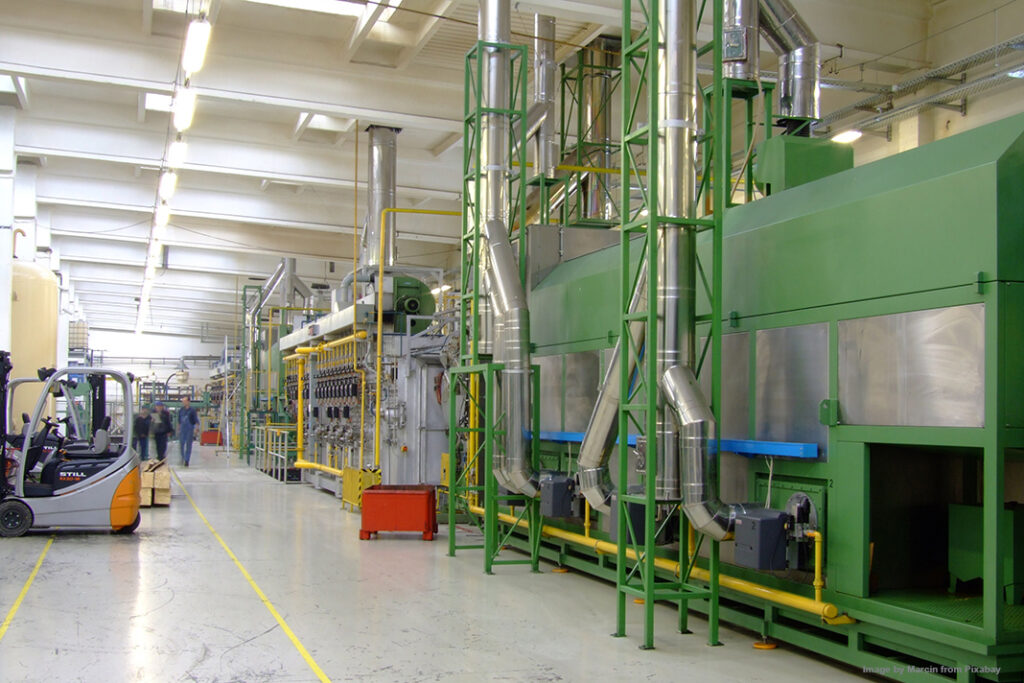
Despite mounting uncertainty, North American manufacturers remain optimistic about growth, adapting strategies to sustain profitability.
By Bryan Wright, partner and national manufacturing sector leader, Forvis Mazars
Manufacturing has always been an industry defined by resilience, but today’s environment is testing that strength like never before. Geopolitical tensions, supply chain disruptions, rising tariffs, and persistent inflation have created a landscape where uncertainty feels constant. Add to that evolving customer expectations, and it’s clear why many would expect manufacturers to take a defensive posture.
Yet optimism across the sector remains remarkably strong. Nearly all manufacturers (98%) of respondents to a recent survey of manufacturing C-suite leaders by Forvis Mazars say they expect sales growth in the next 12 months, and 86% predict expansion in the U.S. manufacturing economy. This confidence is not blind, but backed by decisive, strategic action. According to the more than 150 executives across North America surveyed in the report, manufacturers are investing in growth and resilience rather than passively waiting for conditions to stabilize.
From expanding production to rethinking sourcing and embracing technology, manufacturers are rewriting the playbook for profitability. Here are four ways they are responding to today’s pressures and positioning themselves for long-term success.
When costs rise, the instinct might be to pull back and conserve resources. But manufacturers are doing the opposite. According to the report, 92% plan to expand production capabilities in the next year, primarily domestically. This proactive approach helps them respond quickly to demand fluctuations and reduce reliance on unpredictable supply chains.
Expanding production is a strategic way to build agility and more than a means to meet current demand. By increasing capacity, manufacturers can pivot faster when opportunities arise or when disruptions threaten to derail operations. Domestic expansion also mitigates risks tied to global logistics and tariffs, which have become increasingly volatile.
Forward-buying is another tactic gaining traction. Nearly 40% of manufacturers are increasing inventory levels to hedge against supplier price hikes. While this strategy ties up capital and adds complexity, it can provide short-term protection against volatility. Balance is key: manufacturers should analyze trade-offs between financing inventory and absorbing tariffs without compromising working capital. When executed strategically, forward-buying can be an effective hedge against unpredictable cost spikes.
Consumer demand remains strong, and manufacturers are confident about adjusting pricing strategies to maintain margins. Nearly all respondents (97%) plan to raise prices within the next 12 months, with half targeting increases of 5% to 10%.
This is not about opportunism, but rather, survival. Profit margin compression is not sustainable, and manufacturers must remain vigilant in monitoring costs and market conditions to help ensure pricing adjustments align with customer expectations.
Manufacturers are taking a thoughtful approach to pricing adjustments. While broad price increases remain common, many are also implementing targeted surcharges tied to specific cost drivers, such as tariffs on steel or aluminum. This strategy makes pricing changes easier for customers to understand and accept because it clearly links the increase to external factors beyond the manufacturer’s control. Transparency and open dialogue about what’s driving costs helps preserve trust and long-term relationships. Some companies are even choosing to absorb certain increases and focus on operational efficiencies rather than passing costs through, striking a balance between protecting margins and maintaining competitiveness.
Tariffs and trade uncertainty have forced manufacturers to rethink sourcing strategies and diversify. Many are exploring new export markets, considering alternative suppliers outside North America, and sourcing materials domestically where possible. These moves build flexibility and resilience, and allow manufacturers to adapt quickly to shifting trade policies.
Survey findings show that 35% of manufacturers are exploring new export markets, 30% are diversifying suppliers, and 34% are exploring new sources of imports. This is not just about cost; it is about risk mitigation. A single-source dependency can cripple operations when disruptions occur, whether from geopolitical tensions or natural disasters.
As supply chains are inherently complex, shifting sourcing strategies requires careful analysis. Many manufacturers are doing research to weigh the trade-offs between tariffs and domestic production. In some cases, even with tariffs, overseas sourcing remains more cost-effective than onshoring. Others are pivoting within Asia-Pacific to jurisdictions with significantly lower tariff rates, enabling faster adaptation without sacrificing quality. Beyond geographic shifts, some companies are collaborating with customers to re-engineer products and reduce reliance on costly materials like precious metals, creating more efficient designs that meet performance standards while controlling costs.
Manufacturers that succeed in this area will be those that treat sourcing as a strategic function, not just a procurement exercise. It requires collaboration across finance, operations, and supply chain teams to evaluate total landed costs, assess geopolitical risks, and build contingency plans.

Nearly half of manufacturers are investing in advanced technologies like AI, robotics, and automation to improve efficiency and reduce costs. These innovations enhance speed, precision, and adaptability in ways traditional processes cannot match.
But perhaps the most significant type of tech investment happening across the sector right now is in enterprise resource planning (ERP) systems. Nine in ten manufacturers plan major ERP upgrades within the next year, with nearly half aiming to complete them in six months.
ERP systems provide the visibility and automation needed to manage complexity, control costs, and optimize supply chains. They enable manufacturers to model financial scenarios, anticipate cost increases, and make data-driven decisions. Over-customization can lead to failure, so scoping and vendor selection must be strategic.
Upgrades to ERPs are now essential for managing risk. Successful implementations start with a detailed assessment of business needs and strategic goals before selecting software. Skipping this step or over-customizing solutions often leads to costly failures, such as abandoned projects after significant investment. To mitigate risk, manufacturers should partner with experienced implementation teams, establish clear objectives, and plan for disciplined change management. Modern ERP systems provide real-time updates, support automation, and integrate advanced analytics, helping manufacturers improve efficiency and stay competitive.
ERP is not just a technology project; it is a business transformation. It touches every function, from finance to production to customer service. Success depends on clear objectives, disciplined change management, and a commitment to continuous improvement.
In a time of ongoing uncertainty, manufacturers are creating stability instead of passively waiting for it. By expanding production, adjusting pricing, diversifying sourcing, and investing in technology, they are turning headwinds into momentum.
Our team at Forvis Mazars helps manufacturers navigate these challenges and prepare for what’s next. From ERP assessments to supply chain strategy, we provide the insights and tools you need to thrive in a volatile market. To learn more about how our manufacturing practice helps organizations build resilience and profitability, visit https://www.forvismazars.com/group/en/industries/manufacturing.
About the Author:
Bryan serves as the Manufacturing National Sector Leader at Forvis Mazars US. He works with teams across our assurance, tax, and consulting service lines to help clients in the manufacturing sector with complex problems. He also serves as the co-chair of the Manufacturing global committee for Forvis Mazars Group. https://www.forvismazars.us/people/bryan-wright
Learn more from the author:
US Automotive Industry Outlook 2025: Insights & Trends | FORsights, October 3, 2025
Why Manufacturing Execs Are Bullish on 2026 | FORsights, December 5, 2025

Forging the Next 250 Years: Powering the Next Era of American Manufacturing
As manufacturers offer more customization than ever before, managing product complexity has become a critical challenge. Tune in with Dan Joe Barry, Vice President of Product Marketing at Configit, who explores how companies are tackling the growing number of product configurations across engineering, sales, manufacturing, and service. He explains how Configuration Lifecycle Management (CLM) helps organizations maintain a single source of truth for configuration data. The result: fewer errors, faster quoting, and the ability to deliver customized products at scale.
Get In Touch
Google news and SEO compliant, Industry Today’s state-of-the-art digital media platform offers bespoke media campaigns that target key decision makers and buyers to achieve your marketing and promotional goals.

Contribute
Showcase your brand and promote your business to our highly targeted audience. We offer detailed Google Analytics with measurable ROI to assure success. Submit your content for review by our Editorial team who will contact you to discuss the project further.
About Us
Reach Your Targeted Audience and Grow Your Business. Learn more About Industry Today.
Contact Us

© 2026 Industry today. All Rights reserved.