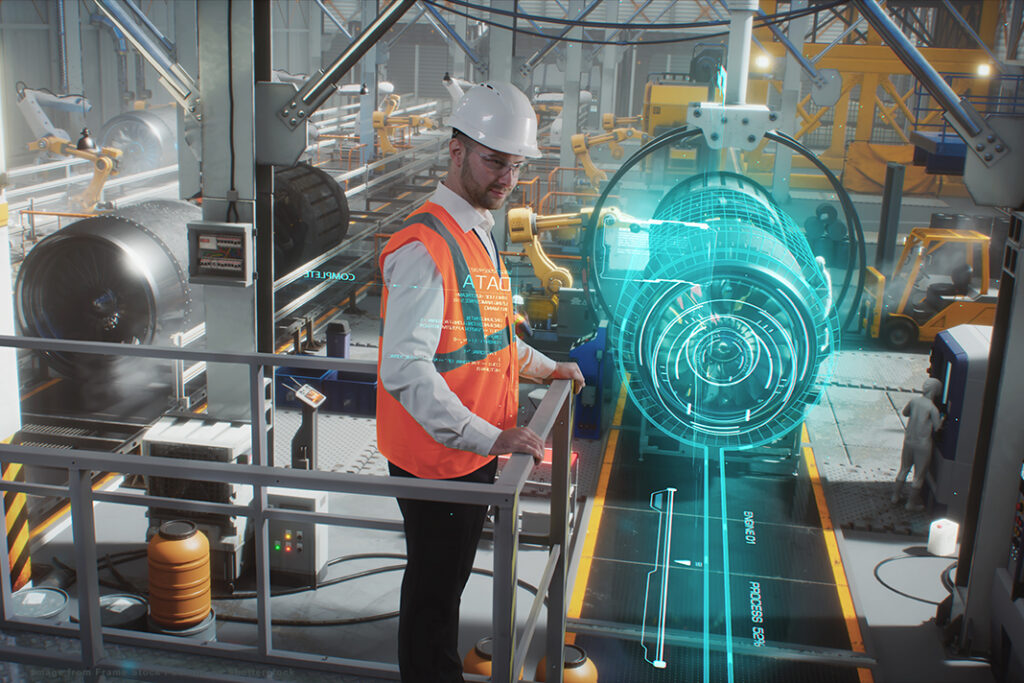
Disruption is constant in manufacturing. The leaders who thrive are the ones who believe they can adapt.
By Kathy Miller
Optimism gets a bad reputation in industrial circles. In an environment built on hard data, precision tolerances, and zero-defect ambitions, the word can sound soft, even naive. Leaders who have battled supply chain crises, unexpected equipment failures, and relentless customer demands are understandably skeptical of anything that sounds like positive thinking.
But real optimism, the kind that transforms manufacturing organizations, is not about ignoring problems. It is about how you explain them. Psychologist Martin Seligman’s research on explanatory style shows that optimists attribute setbacks to external, specific, and temporary causes rather than internalizing them as permanent failures. A line stoppage is a solvable problem, not a reflection of systemic dysfunction. A supplier failure is an isolated incident, not proof that the supply chain is irredeemably broken.
This distinction is not semantic. It is the difference between a leader who rallies their team toward solutions and one who broadcasts panic that freezes the organization in place.
This is not the same as unrealistic optimism, where risks are minimized or ignored until they become unmanageable. The leaders who get the most out of optimism pair it with a clear-eyed read of the obstacles in front of them. They are hopeful about the outcome and honest about the path. This combination, call it realistic optimism, is what allows leaders to set goals that are ambitious enough to matter and grounded enough to be believed.
Optimism doesn’t operate in isolation. As I explored in a previous piece on the productivity lever most operations leaders miss, purpose and mindset are deeply connected. Workers who understand why their work matters are more likely to bring the kind of resilient, solution-oriented thinking that optimism requires, and leaders who model optimism make that sense of purpose easier to sustain.

Manufacturing is uniquely suited to benefit from optimistic leadership, and uniquely vulnerable to pessimistic cultures. The factory floor is a visible, interconnected system. How a supervisor responds to a machine breakdown is seen by every team member within earshot. If that response is frustration, blame, and hopelessness, those emotions cascade through the shift. If it is calm, problem-focused action, the team follows that signal instead.
I experienced this firsthand when a foundry that supplied three of my facilities burned to the ground. It was a catastrophic event. But my supply chain manager’s response was immediate and action-oriented, she was on the phone identifying alternative suppliers before the fire was out. Her optimism wasn’t denial; it was a trained capacity to ask, ‘What’s the next step?’ rather than ‘How could this happen?’
I have also seen this same mindset play out at a strategic level. When I led an elastomeric materials division, we set out to grow across multiple industry segments, aerospace, automotive, oil and gas, and heavy-duty trucks. Rather than chasing every opportunity at once, we focused our investment on the segments where we were underrepresented, while staying mindful of how each market moved through its own cycles of expansion and contraction. That balance of ambition and realism allowed us to sustain steady growth even as individual segments rose and fell. Optimism gave us the confidence to pursue growth; realism told us where to aim it.
Research supports what experience teaches. One study of CEOs across manufacturing and service industries found that leader optimism was positively related to performance effectiveness, including return on investment. In other words, optimism was not just a personality trait. It showed up in how leaders performed and how their organizations delivered results. A separate study of 133 manufacturing companies found that an optimistic organizational subculture and clear goal-setting processes contributed to employee optimism, which in turn was associated with stronger individual and organizational performance. For manufacturing leaders, the practical message is clear: optimism works best when people believe improvement is possible and can see how their own goals connect to the organization’s broader objectives.
Continuous improvement methodologies, Lean, Six Sigma, TQM, all depend on a workforce that believes improvement is possible. That belief is not automatic. It must be modeled by leaders. When leaders approach operational problems with a stance of ‘we can figure this out,’ they create what researchers call ‘psychological vitality,’ a state of energized engagement that fuels creative problem-solving.
Consider the quality defect reduction effort I led at a manufacturing facility. A team of engineers and operators, empowered to experiment and unafraid to fail, drove a 93% reduction in quality defects over eighteen months. That performance didn’t come from a new technology or a consultant’s playbook. It came from a team that genuinely believed better was possible, and a leadership environment that kept that belief alive through inevitable setbacks.
Leaders don’t need to be natural optimists to build optimistic cultures. Optimism, like any leadership skill, is learned and practiced. Start with your own explanatory style: when something goes wrong, notice whether your internal narrative is ‘this is temporary and fixable’ or ‘this is chronic and reflects poorly on us.’ The stories we tell ourselves become the stories our organizations tell themselves.
Celebrate recovery as much as prevention. When a team navigates a crisis well, name it. Debrief it. Make it part of the organizational narrative. This builds confidence, the quiet knowledge that when hard things happen, this team handles them.
Finally, protect your people from leaders who catastrophize. A single highly visible pessimist in a management role can undermine the optimistic culture you are building everywhere else. Coaching, modeling, and, when necessary, personnel decisions are part of this work.
In a world where disruption is the new constant, the manufacturing organizations that thrive will be the ones whose people believe in their ability to adapt. That belief starts at the top, and it is one of the most powerful competitive advantages a leader can build.

About the Author:
Kathy Miller, MAPP, MBA, ACC, is a keynote speaker, board director, and leadership development coach. With over three decades of executive leadership at General Motors/Delphi, Parker Hannifin, Rolls-Royce, and Vertiv, her experience includes executive leadership of $3B+ operations, P&L responsibility, and corporate ownership of key business functions including lean enterprise, quality, strategy deployment, and industrial design. A Shingo Prize recipient (2004) and inductee into the Women in Manufacturing Hall of Fame (2021), Kathy is co-author of Steel Toes and Stilettos (Taylor & Francis, 2022) and author of MORE Is Better: Leading Operations with Meaning, Optimism, and Relationships for Excellence (Taylor & Francis, 2025). Learn more at www.linkedin.com/in/kathy-miller-mapp-mba-acc or at www.more4leaders.com.
About the book MORE Is Better:
Award-winning manufacturing executive Kathy Miller draws from decades of leading complex operations and the science of human flourishing to reveal what truly drives sustainable success in today’s demanding business environments. Through compelling stories and research-backed strategies, Millers shows how leaders at every level can build high-performance cultures where: meaningful work connects people to purpose, optimism fuels adaptability and innovation, and relationships foster trust, safety, and collaboration. Excellence follows, in both operations and outcomes. Designed for leaders across industries, from plant floors to executive suites, this is both a business book and a field guide. With dozens of actionable tools and ready-to-use interventions, it’s a resource you’ll turn to again and again.
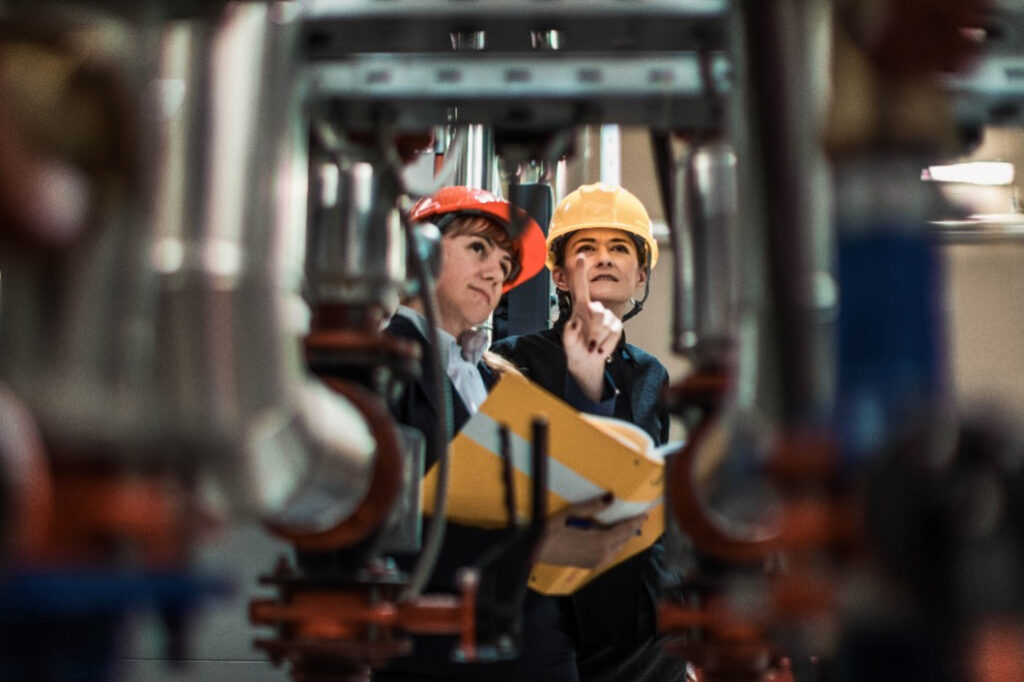
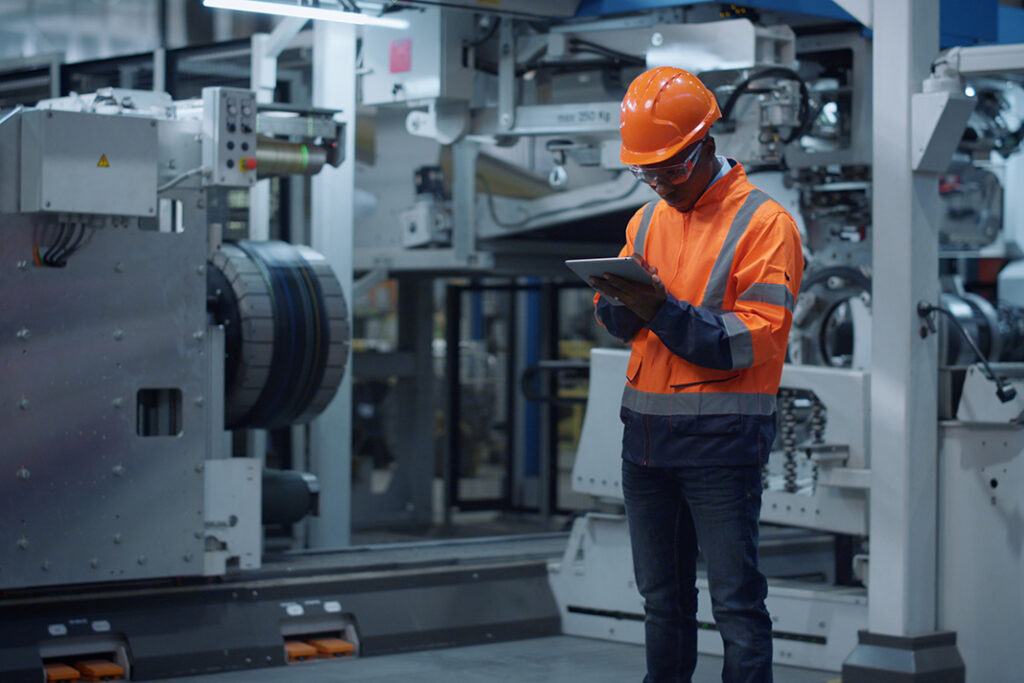
Support images were generated specifically for this article using ChatGPT/OpenAI and do not contain third-party stock photography, logos, or copyrighted source imagery.
References:
Green, K. W., Jr., Medlin, B., & Whitten, D. (2004). Developing optimism to improve performance: An approach for the manufacturing sector. Industrial Management & Data Systems, 104(2), 106–114. https://doi.org/10.1108/02635570410522071
Miller, K. (2026, May 11). The productivity lever most operations leaders miss. Industry Today. https://industrytoday.com/the-productivity-lever-most-operations-leaders-miss/
Pritzker, M. A. (2001). The relationship among CEO dispositional attributes, transformational leadership behaviors and performance effectiveness (Publication No. 3035464) [Doctoral dissertation, Illinois Institute of Technology]. ProQuest Dissertations and Theses Global.

Forging the Next 250 Years: Powering the Next Era of American Manufacturing
As manufacturers offer more customization than ever before, managing product complexity has become a critical challenge. Tune in with Dan Joe Barry, Vice President of Product Marketing at Configit, who explores how companies are tackling the growing number of product configurations across engineering, sales, manufacturing, and service. He explains how Configuration Lifecycle Management (CLM) helps organizations maintain a single source of truth for configuration data. The result: fewer errors, faster quoting, and the ability to deliver customized products at scale.
Get In Touch
Google news and SEO compliant, Industry Today’s state-of-the-art digital media platform offers bespoke media campaigns that target key decision makers and buyers to achieve your marketing and promotional goals.

Contribute
Showcase your brand and promote your business to our highly targeted audience. We offer detailed Google Analytics with measurable ROI to assure success. Submit your content for review by our Editorial team who will contact you to discuss the project further.
About Us
Reach Your Targeted Audience and Grow Your Business. Learn more About Industry Today.
Contact Us

© 2026 Industry today. All Rights reserved.