AMRs that shine in demos stumble on real floors. Integrators reveal why building conditions, traffic, and freight decide deployment success.
By Jeremy Barth, HOJ Innovations
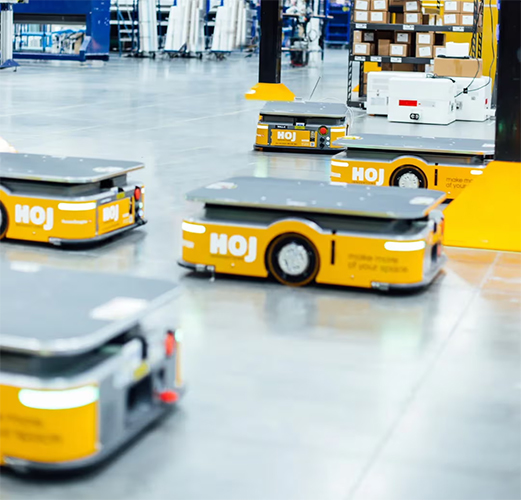
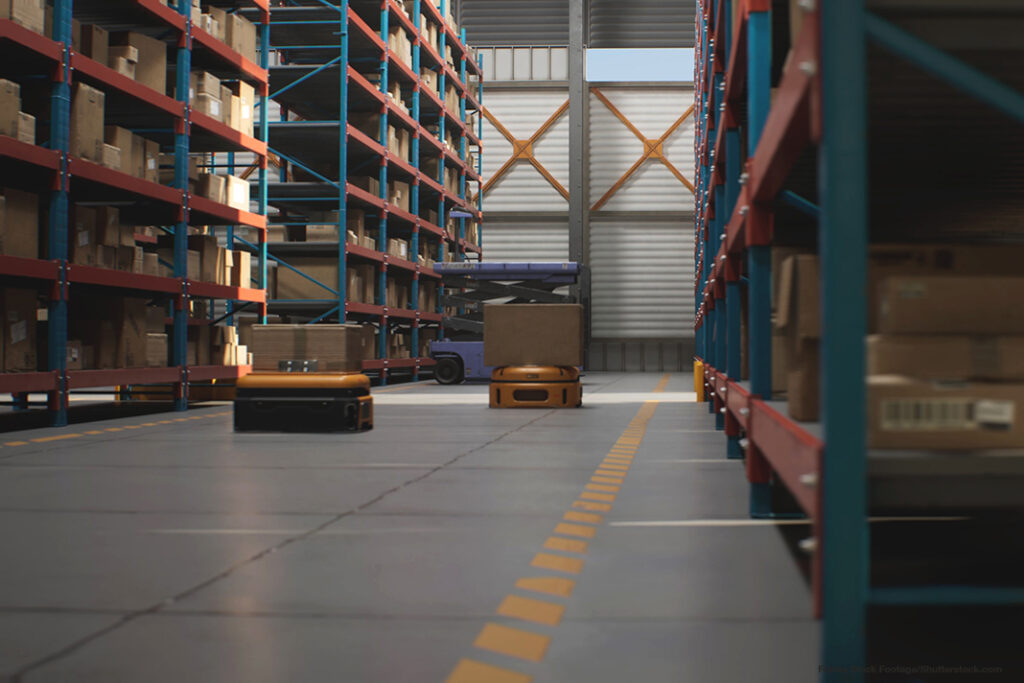
Because the demo floor and the working floor are not the same place. AMRs are validated on flat slabs, clean lanes, and centered loads, then deployed into buildings with uneven floors, constant change, mixed human traffic, and unpredictable freight. The gap between spec-sheet performance and real results is set by the building and the operation. The integrators who install and service these fleets see it first. Across six decades and more than 100,000 installed projects, one pattern repeats: the same assumptions break in the same places.
These observations come from HOJ’s integration and field-service teams, the crews who commission these systems and get the call when one faults. Whether the system is conveyor, robotics, or mobile automation, the lesson is the same: the machine matters far less than how it is applied to the building and the operation around it.
“We feel like our strongest role really is a system integrator. We didn’t want to go out and build AMRs from scratch. We wanted to focus on the application for the customer and the functionality of the robot.”
—Stan Witt, Director of Engineering, HOJ Innovations
Every AMR ships with a floor-flatness requirement, and almost no real warehouse meets it uniformly. A slab that looks fine to the eye has expansion joints, patched cracks, drain slopes, and worn dock plates that a loaded robot feels even when a walking person does not. Localization wanders and payloads sway at exactly those spots, and they are rarely where the OEM expected. Columns sit in the way, headroom drops under mezzanines, and aisle widths were set decades ago for forklifts. None of it shows up on a datasheet, yet it shapes success more than almost anything inside the robot.
Modern navigation assumes a stable map full of fixed, distinct features. Live warehouses offer neither. Pallets move by the hour, racks get reconfigured each season, and long aisles of identical racking give a robot little to localize against. Reflective film, glossy totes, and glass scatter sensor returns, and lighting shifts through the day. This is where the promise of “no fixed infrastructure” often softens into a quiet request to add reflectors after all. This is typically fine, but it belongs in the conversation up front.
A datasheet throughput number describes one robot moving under ideal conditions. What an operator actually gets is a property of the whole system, and it is always lower. Real throughput is set by congestion, by handoffs at induction and pick stations, by charging logistics, and by how the fleet handles exceptions. Adding robots scales throughput, and a well-designed fleet keeps absorbing units as volume grows. Past a certain density, though, the limit shifts from the hardware to the fleet software coordinating it, and that coordination layer is what decides whether each added robot keeps paying off.
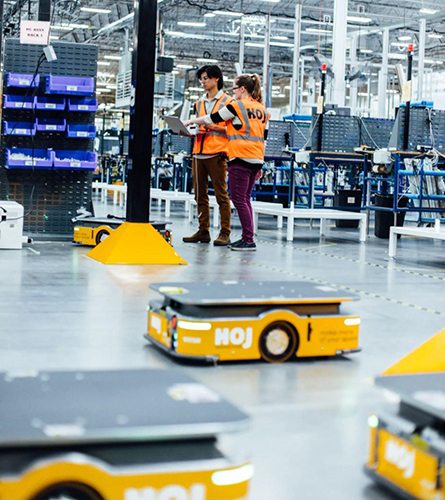
Demonstrations run in clean, dedicated lanes. Real floors never do. A robot shares space with forklifts driven by people under quota pressure, with pallet jacks, carts, pedestrians who cut corners, and sometimes another vendor’s robots. AMRs are built to be cautious, so they slow and stop for all of it, and in a congested aisle that caution erodes throughput. People are the hardest variable: a forklift driver treats a stopped robot as one more obstacle to nudge around, and deadlocks form where a robot and a loaded forklift cannot pass.
A payload rating assumes a centered, stable, predictable load. Real product is none of those. Floors carry mixed cases, leaning film-wrapped pallets, totes filled to wildly different levels, fragile goods, and loads that sit high and off balance. That true SKU profile, the real dimensions, weights, distribution, and fragility of what a building moves, is what stresses acceleration, braking, and stability, and it is invisible from a lab. Motion control that adapts to whatever is actually on the deck is worth more in the field than another increment of top speed. HOJ’s automation team meets this on nearly every build. Describing a system engineered for an awkward, easily damaged product, Stan Witt, the firm’s Director of Engineering, said the work was to develop “a customized end that can grab that product in a gentle way, but in a firm way.” That kind of load-specific engineering, not a higher speed rating, is what holds up once real freight starts moving.
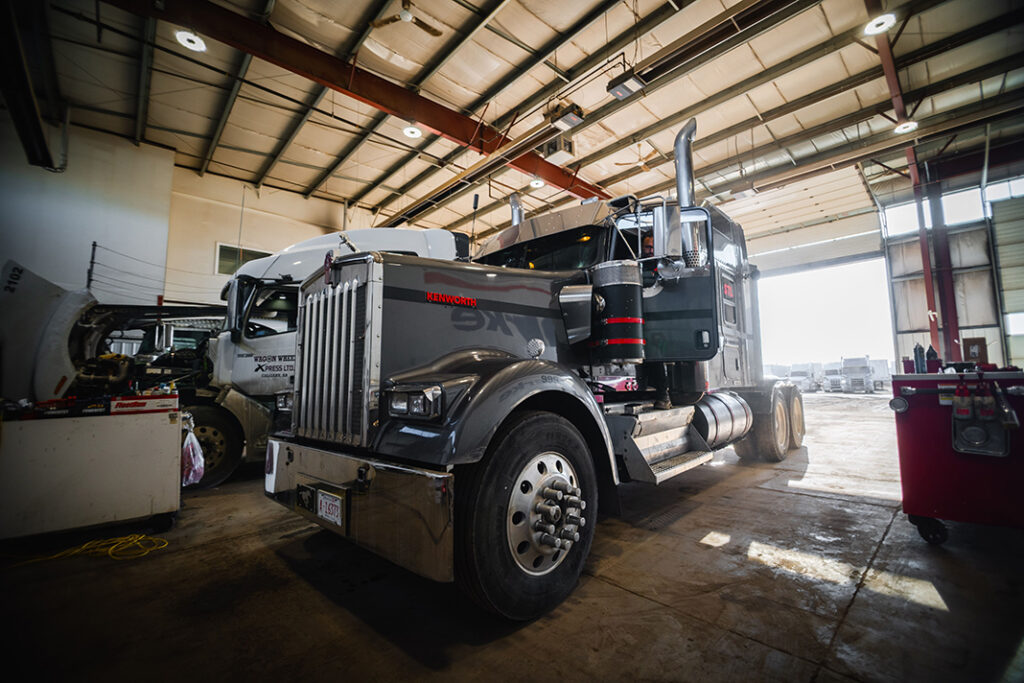
Robots handle the expected path well; operations live almost entirely in the unexpected one. A carton drops and blocks a lane. A robot faults mid-task with no engineer on site. What matters then is whether a floor lead with no robotics background can clear it in a minute, and what one stuck robot does to the rest of the fleet. Field serviceability sits beside it: how easily a technician swaps a wheel, battery, or sensor, and what fails first in a dusty aisle or cold room after a year of duty.
Most operations run equipment from more than one vendor, and most vendors want their own fleet manager in charge. The result is a set of islands that do not coordinate and an integration burden that lands on the customer. Standards exist to ease this, but adoption is uneven. Vendors who lean toward genuine interoperability are far easier to deploy at scale. This is exactly what a maturing market is starting to reward.
Because a datasheet measures one robot in ideal conditions. Real throughput is a system outcome shaped by congestion, station handoffs, charging, and exception handling. It drops further as fleets scale past the point where coordination, not hardware, becomes the limit.
How the system handles the building it will actually live in: floor conditions, changing maps, mixed human traffic, and real freight profiles and above all, recovery. Ask how a non-technical floor lead clears a fault, and what one stuck robot does to the rest of the fleet.
Sometimes, but not always. Long identical aisles, reflective surfaces, and shifting layouts often lead integrators to add reflectors or markers after all. The honest answer depends on the building, and it should be part of the planning conversation up front.
Most operations run more than one vendor’s equipment. When each fleet insists on its own manager, the operation becomes disconnected islands and the integration cost falls on the customer. Interoperable systems are much easier to scale.
None of this argues against AMRs. They get deployed because they work, and the pressures driving them are not going away. It argues for closing the loop between design and deployment. The robots that win on real floors are built by teams who understood the floor, the freight, the traffic, and the unplanned fault long before they ever shipped.

About the Author:
Jeremy Barth is a specialist at HOJ Innovations who leads the inbound growth and digital discovery initiatives, collaborating with the firm’s internal technical teams to capture and share real-world operational insights.

Forging the Next 250 Years: Powering the Next Era of American Manufacturing
As manufacturers offer more customization than ever before, managing product complexity has become a critical challenge. Tune in with Dan Joe Barry, Vice President of Product Marketing at Configit, who explores how companies are tackling the growing number of product configurations across engineering, sales, manufacturing, and service. He explains how Configuration Lifecycle Management (CLM) helps organizations maintain a single source of truth for configuration data. The result: fewer errors, faster quoting, and the ability to deliver customized products at scale.
Get In Touch
Google news and SEO compliant, Industry Today’s state-of-the-art digital media platform offers bespoke media campaigns that target key decision makers and buyers to achieve your marketing and promotional goals.

Contribute
Showcase your brand and promote your business to our highly targeted audience. We offer detailed Google Analytics with measurable ROI to assure success. Submit your content for review by our Editorial team who will contact you to discuss the project further.
About Us
Reach Your Targeted Audience and Grow Your Business. Learn more About Industry Today.
Contact Us

© 2026 Industry today. All Rights reserved.