Injection molding best practices represent a convergence of engineering rigor, process science, and operational discipline.
In high-volume and precision manufacturing, molding success is defined by the ability to produce quality parts while sustaining dimensional accuracy, cosmetic quality, and mechanical performance. Best practices aim to reduce process sensitivity, control variability, and align part design. Below is all you need to know about injection molding best practices.
Effective injection molding begins at the part design stage to prevent manufacturing challenges. One of the primary design objectives is uniform wall thickness. Since polymers cool and shrink volumetrically, abrupt thickness changes could cause localized shrinkage gradients that manifest as warps, voids, and sink marks. When the machine’s functional requirements demand varying wall sections, gradual transitions, generous radii, and coring strategies equalize cooling rates and reduce residual stress1.
Injection molding designers must apply draft angles consistently to all surfaces perpendicular to the direction of mold opening. Insufficient draft increases ejection friction, causing part distortion and surface scuffing. The design of structural features such as ribs, gussets, and bosses should add sufficient stiffness without increasing nominal wall thickness. Oversized ribs or closely spaced reinforcing features often create localized hot spots, cosmetic read-through, and dimensional instability, particularly in large or cosmetic parts.
Designers must also consider tolerance allocation. They must understand mold-controlled dimensions and those influenced by secondary factors such as material shrinkage or post-mold conditioning. Unrealistic tolerances force unnecessary process tightening, increase scrap rates, and raise total manufacturing cost without delivering functional value.
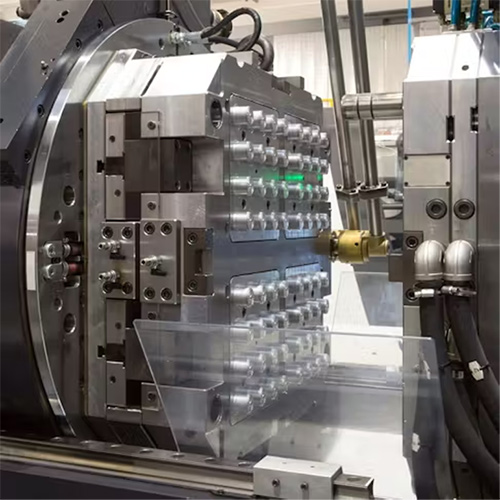
Material selection is a functional and a processing decision. Each material exhibits unique rheological behavior, thermal stability limits, and shrinkage characteristics2. High-flow resins need thin-wall molding, which compromises mechanical strength. On the other hand, filled or reinforced materials enhance stiffness at the expense of increased wear, anisotropic shrinkage, and more complex flow behavior.
Moisture management is a critical best practice for hygroscopic materials such as nylon, PET, and polycarbonate. Inadequate drying leads to hydrolytic degradation, reducing molecular weight. Drying parameters must be validated and controlled, not assumed. Consistency in resin supply, controlled regrind usage, and material traceability further reduce variability and support long-term process stability.

According to First Mold, mold design excellence is non-negotiable in best-practice injection molding. Gating strategy balances flow length, shear rate, and pressure loss while supporting effective packing and acceptable cosmetic appearance3. Poor gate placement causes weld lines in high-stress regions, uneven packing, or excessive orientation that compromises part strength.
Cooling design is an influential yet underestimated aspect of mold design. Best practices prioritize uniform heat extraction over maximum cooling rate, recognizing that temperature differentials are the primary drivers of warpage. Optimized cooling channel placement, adequate flow rates, and consistent mold temperature control assist dimensional repeatability. Venting helps evacuate trapped gases without flash, as gas entrapment increases injection pressure, causes burn marks, and disrupts surface finish.
As a rule, injection molding best practices must prioritize scientific process development rather than empirical trial-and-error. It helps produce high-quality parts despite the material used and production environment. Establishing a controlled filling phase, often through cavity pressure analysis, ensures that the mold fills consistently regardless of external influences.
The velocity-to-pressure switchover point is a critical control parameter, as premature switchover causes short shots while delayed switchover results in overpacking and flash. Packing pressure and time should compensate for volumetric shrinkage during solidification without inducing internal stress or dimensional distortion.
Cooling time optimization is another key best practice. Excessive cooling increases cycle time without improving quality, while insufficient cooling leads to deformation during ejection and downstream dimensional drift. Once optimized, all critical parameters should be documented, validated, and locked to prevent uncontrolled adjustments.
Machine capability should align with the mold and the process requirements. Injection molding best practices avoid operating machines at the extremes of shot size, clamp force, or injection speed, as they reduce control resolution and increase sensitivity to variation.
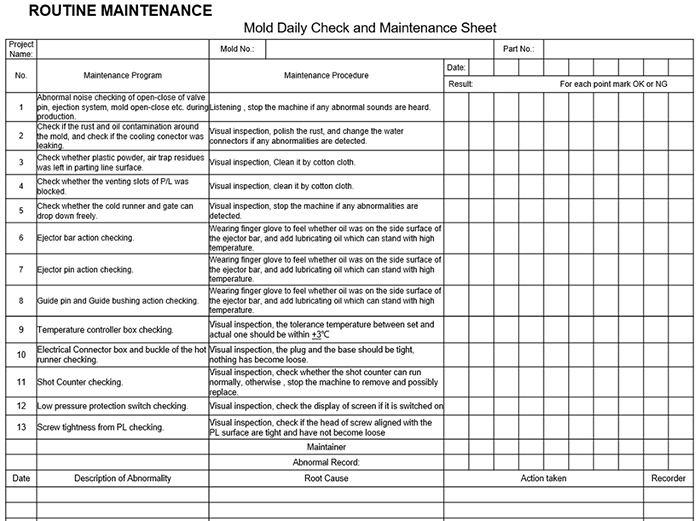
Preventive maintenance is essential to sustaining best-practice performance. Worn check rings, inconsistent barrel heating, or degraded hydraulic components introduce variability that cannot be corrected through process tuning 4. Regular inspection, calibration, and documentation ensure that machine behavior remains consistent with the validated process definition.
Quality assurance in injection molding extends beyond final part inspection to include real-time process monitoring and feedback. Statistical process control helps identify defects, while cavity pressure and temperature monitoring provide direct insight into the molding. Dimensional inspection, cosmetic evaluation, and functional testing verify conformance. Best practices must emphasize prevention over detection. Structured root cause analysis is critical in defect identification. Addressing symptoms through parameter changes without understanding underlying causes often narrows the process window and increases long-term risk.
Injection molding best practices cannot be sustained without strong organizational alignment. Design, tooling, processing, and quality functions must operate collaboratively rather than sequentially. Clear documentation, standardized work instructions, and disciplined change management prevent uncontrolled variation as products evolve or production scales. Ongoing training ensures that institutional knowledge is retained and that best practices are consistently applied across shifts, programs, and facilities.
Injection molding best practices form a comprehensive system rather than a checklist of isolated techniques. By integrating sound part design, informed material selection, precision mold engineering, scientific process development, disciplined machine maintenance, and data-driven quality control, manufacturers create robust processes capable of delivering consistent quality at scale. Organizations that internalize these principles manufacture high-quality parts, reduce risk, lower total cost of ownership, and attain long-term manufacturing competitiveness.

About the Author
Edwin Sironga is a manufacturing and injection molding expert at First Mold with deep, hands-on understanding of the full product realization lifecycle, from part design and material selection through mold engineering, process development, and high-volume production. His expertise is grounded in scientific molding principles, design for manufacturability, and data-driven process control, enabling the
References
1 Protolabs (2025). A beginners Guide to Injection Molding. https://www.protolabs.com/resources/guides-and-trend-reports/designing-for-moldability-fundamental-elements/
2 Protolabs (2026). Injection Molding Material Selection Guide. https://www.protolabs.com/resources/guides-and-trend-reports/thermoplastic-material-selection-for-injection-molding/
3 Li, J. (2023, May 19) Injection Molding Gates Advanced Brochure: Function, Types, Location Selection, and Defects. https://firstmold.com/guides/injection-molding-gate/
4 MacKenzie, G. (2024, August 6). Injection Molding: Focus on These Seven Areas to Set a Preventive Maintenace Schedule. https://www.ptonline.com/articles/focus-on-these-seven-areas-to-set-a-preventive-maintenance-schedule

Industry in Transition: The Forces Reshaping Manufacturing
As manufacturers offer more customization than ever before, managing product complexity has become a critical challenge. Tune in with Dan Joe Barry, Vice President of Product Marketing at Configit, who explores how companies are tackling the growing number of product configurations across engineering, sales, manufacturing, and service. He explains how Configuration Lifecycle Management (CLM) helps organizations maintain a single source of truth for configuration data. The result: fewer errors, faster quoting, and the ability to deliver customized products at scale.
Get In Touch
Google news and SEO compliant, Industry Today’s state-of-the-art digital media platform offers bespoke media campaigns that target key decision makers and buyers to achieve your marketing and promotional goals.

Contribute
Showcase your brand and promote your business to our highly targeted audience. We offer detailed Google Analytics with measurable ROI to assure success. Submit your content for review by our Editorial team who will contact you to discuss the project further.
About Us
Reach Your Targeted Audience and Grow Your Business. Learn more About Industry Today.
Contact Us

© 2026 Industry today. All Rights reserved.