As spring temperatures rise, pest activity increases. Manufacturers can reduce risk during swarm season with targeted prevention steps.
By Shannon Sked, PhD, BCE, National Technical Director, Orkin
As temperatures rise in early spring, pest activity rises in manufacturing facilities. Swarm season begins when certain insects such as termites and ants emerge from harborages to locate nesting sites and begin a new colony. For manufacturing facilities, this seasonal shift marks the start of swarm season — and a critical window to reduce risk before pest pressure peaks.
Swarming pests in manufacturing facilities can cause a loss in productivity, create unsanitary working conditions, hurt employee morale and damage structures. Addressing vulnerabilities early helps protect manufacturing facilities from larger, costlier pest problems later.
Swarm season is the period when reproductive insects, such as subterranean termites and ants, leave established colonies to form new ones as temperatures rise. When temperatures reach the mid-50s Fahrenheit, many species of swarming ants begin to emerge from existing colonies to fly to a new location, mate and begin a colony. Once temperatures reach the 70s Fahrenheit, swarming activity begins to peak. In warmer regions, this can begin as early as February or March; in cooler climates, activity often ramps up later in spring.
Manufacturing environments offer conditions that are especially conducive to swarming pests. Exterior lighting systems, open dock doors, moisture from drains or equipment and low-traffic areas create attractive, easily accessible hiding spots. Once pests enter, they can move quickly through a facility and into outgoing shipments, causing impacts that could potentially trickle down the supply chain.
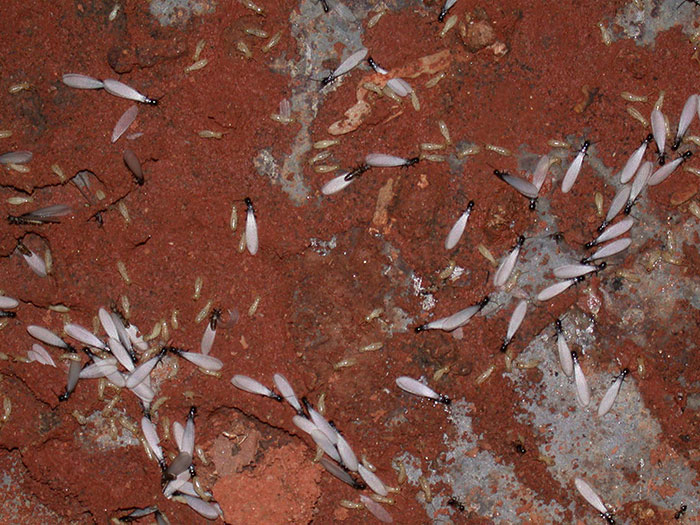
In addition to structurally damaging swarming insects, other pests become more active during swarm season. These pests can also disrupt manufacturing by contaminating materials, spreading pathogens, damaging infrastructure and slowing production. A single gap at a door, dock or utility line can give pests access to production spaces, storage areas and outgoing shipments. Once inside, pests reproduce quickly and move through a facility, creating operational disruptions that can grow harder to control over time.
Rodents damage wiring, insulation and packaging through gnawing as well as transfer disease-causing pathogens. Insects contaminate materials, equipment surfaces and storage areas. Flies spread contaminants as they move between drains, waste and workspaces. These issues slow production, force corrective cleaning, lower morale and can damage your facility’s reputation. Additionally, depending on what is being manufactured, pests can contaminate products, leading to expensive and brand-damaging recalls for products like foodstuffs or medicine.
Supply chain exposure raises the stakes. Pests that enter shipments can transfer problems downstream to warehouses, distributors or customers.
Spring pest management for manufacturing facilities is most effective when prevention steps are implemented early — before pests spread, reproduce and settle into hard-to-reach areas. When facilities wait to respond until pests affect operations, problems can grow harder and more expensive to resolve. Pests have time to spread, reproduce and settle into hard-to-reach areas, which can extend treatment timelines and disrupt production. Reactive responses often require more corrective cleaning, equipment downtime and staff involvement than early prevention, turning manageable risks into operational setbacks. Long-established infestations are particularly hard to manage as the pest population is committed to the area.
Exclusion and prevention measures such as sealing entry points, managing lighting systems away from doorways or accesses, addressing moisture sources and establishing sanitation practices early can be effective tools in a comprehensive integrated pest management (IPM) program. IPM programs, such as those implemented by Orkin, are a holistic approach to pest management that helps reduce pest-conducive conditions through inspection, sanitation, maintenance and monitoring, with targeted treatments used only when needed. This approach can help limit disruptions and avoid emergency responses during peak production periods.
Before swarm season peaks, manufacturers should focus on exclusion, moisture control, sanitation, harborage reduction and monitoring.
Below are some common recommendations to prepare for increased pest activity:
During swarm season, routine actions — propping doors open, leaving waste uncovered, leaving lights on or storing materials against walls — can create easy access points and attractants for pests. Even well-maintained facilities become vulnerable when daily practices undermine pest management strategies.
Clear, consistent communication helps close those gaps and prevent costly disruptions. Employees who understand why doors must remain closed or waste must be handled promptly are more likely to follow protocols, especially during busy production periods. Focus on door discipline, proper waste handling and early reporting of pest sightings. When teams know what to watch for and feel responsible for flagging issues quickly, small problems are more likely to get addressed before they spread unnoticed.
Swarm season brings recurring pest pressures that manufacturing facilities can anticipate and plan for. Treating manufacturing pest prevention as a routine operational priority helps reduce reactive treatments and protect productivity during peak season. Manufacturing professionals that treat an Integrated Pest Management (IPM) plan and Pest Prevention Pre-requisites as part of routine operations can help prevent pest issues before they arise, with less reliance on reactive treatments, and keep facilities running smoothly.
Swarm season occurs when certain pests that are normally not flying send flying reproductives out as temperatures rise to search for food and nesting sites, especially insects forming new colonies, expanding their range.
Warmer weather triggers ants and termites to establish winged reproductive adults to expand their territory, establish new nests and search for food. Manufacturing facilities can be targets if lighting and pest-conductive conditions are not managed. Left unmanaged, docks, shipments, provide easy access while food, moisture and shelter provide perfect survival conditions.
As pest populations grow, individuals in a population move throughout a facility looking for more areas to exploit. Loading docks, exterior doors, drains, waste areas and low-traffic storage spaces can offer conditions that are especially conducive to pest wandering activity.
Yes. Pests can enter shipments and move to warehouses or customer facilities if not managed at the source. Robust supplier verification programs are critical. Without routine inspection at receiving, facilities may unknowingly introduce pests along with their supplies.
Preparation should begin before consistent warm temperatures arrive, typically in early spring. In warmer regions, swarm season can begin as early as February or March; in cooler climates, activity often ramps up later in spring.

About the Author:
Dr. Shannon Sked is an entomologist and the National Technical Director at Orkin. He received his B.S. from Rutgers University, M.S. in Entomology from Penn State University and Ph.D. back Rutgers in their Urban IPM Entomology lab. His research focuses on distribution and temporal modeling of insect and rodent communities in order to design effective pest management programs. He began his career as a Navy Entomologist overseeing structural pests, specifically focusing on pests related to imports, exports and within the logistics chain for Navy operation. He had the unique opportunity to practice applied entomology and invasive species management in the Middle East, Northern Africa, the Caribbean and the eastern shore of the United States. In his role for Western Fumigation, a Rollins Brand, he oversaw pest prevention systems within international produce, commodity and equipment logistics with a focus on public health, food safety, food security and invasive species management. As the National Technical Director at Orkin, he integrates research on the spatial dynamics of economically important pests with novel technologies to develop modern and practical management methods to support public health, property, brands and global supply chains.
More Resources:
A Quick Reference Guide to Spring Pests
Industrial Pest Control for Manufacturing Plants
The Pests Affecting Your Manufacturing Facility

Industry in Transition: The Forces Reshaping Manufacturing
As manufacturers offer more customization than ever before, managing product complexity has become a critical challenge. Tune in with Dan Joe Barry, Vice President of Product Marketing at Configit, who explores how companies are tackling the growing number of product configurations across engineering, sales, manufacturing, and service. He explains how Configuration Lifecycle Management (CLM) helps organizations maintain a single source of truth for configuration data. The result: fewer errors, faster quoting, and the ability to deliver customized products at scale.
Get In Touch
Google news and SEO compliant, Industry Today’s state-of-the-art digital media platform offers bespoke media campaigns that target key decision makers and buyers to achieve your marketing and promotional goals.

Contribute
Showcase your brand and promote your business to our highly targeted audience. We offer detailed Google Analytics with measurable ROI to assure success. Submit your content for review by our Editorial team who will contact you to discuss the project further.
About Us
Reach Your Targeted Audience and Grow Your Business. Learn more About Industry Today.
Contact Us

© 2026 Industry today. All Rights reserved.