Why training alone isn’t enough to prevent injuries prevalent in warehouse operations.
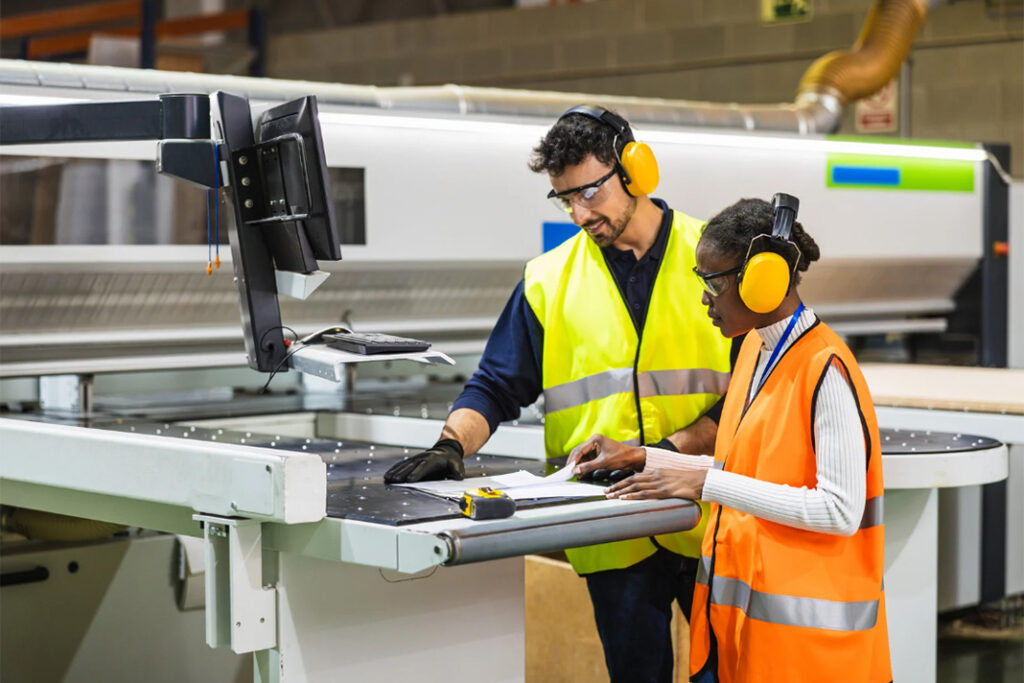
Warehouse operations depend on a skilled workforce to manage the flow of goods safely and efficiently. Companies invest significant resources in safety training programs to meet regulatory standards and protect their teams. Despite these efforts, injuries can still occur, leading to operational disruptions and personal harm. This indicates that while training is a fundamental component of a safety strategy, it is not a complete solution on its own.
Safety training provides employees with essential information on procedures, equipment use, and hazard identification. However, retaining this knowledge and applying it consistently under pressure is a significant challenge. The fast-paced nature of warehouse work often requires employees to make quick decisions, and the principles learned in a classroom setting can be forgotten. Procedural drift, where workers develop shortcuts or variations from standard practice, can happen gradually over time.
This gap between formal training and daily practice is not necessarily a reflection of an employee’s commitment. It is a natural human tendency to find more convenient ways to complete tasks, especially when facing tight deadlines. Without ongoing reinforcement and systems that support correct procedures, the effectiveness of initial training diminishes. A comprehensive safety approach must account for the realities of human behavior and memory.
Warehouses are not static environments. The physical layout can change, new equipment is introduced, and the types of products being handled can vary. A training program delivered at one point in time may not address the new risks that emerge from these changes. For example, a new racking system might alter forklift traffic patterns, or a temporary increase in inventory could create cluttered and hazardous walkways.
Relying solely on periodic training updates is often insufficient to keep pace with these developments. Safety measures must be adaptable and responsive to the current state of the facility. This requires a system of continuous observation and risk assessment that goes beyond scheduled training sessions. A proactive approach involves identifying and mitigating new hazards as they appear, rather than waiting for the next formal safety review.
No amount of training can fully compensate for a poorly designed workspace. Ergonomic factors play a substantial part in warehouse injuries, particularly musculoskeletal disorders resulting from repetitive motion, heavy lifting, and awkward postures. When employees must repeatedly bend, reach, or twist to perform their duties, the risk of strain and injury increases, regardless of how well they have been trained in proper lifting techniques.
Other environmental conditions also contribute to safety risks. These can include:
Addressing these physical and environmental issues is a critical part of creating a genuinely safe workplace. It involves designing workstations and processes that fit the worker, rather than expecting the worker to adapt to a hazardous environment.
A safety program built only on training can sometimes lead to a compliance-focused mindset, where the goal is to check a box rather than to actively prevent incidents. A more effective strategy builds a strong safety culture where every team member feels responsible for their own safety and the safety of their colleagues. This involves encouraging open communication about potential risks and empowering employees to report concerns without fear of reprisal.
Consider a scenario where a manager, during a routine walk-through, notices a forklift operator consistently taking a corner too quickly near a busy pedestrian area. The operator’s training covered speed limits, but daily habits have taken over. Instead of simply repeating the training, the manager opens a conversation to identify the reason for the behavior and decides to install a traffic mirror at the corner. This small, proactive change addresses the root cause and improves safety for everyone, demonstrating a culture that values practical solutions over simple retraining.
While training is an indispensable starting point, it cannot be the only tool used to protect warehouse employees. A comprehensive safety strategy also includes creating a well-designed physical environment, establishing processes that account for human behavior, and fostering a culture of proactive risk management. This layered approach helps to bridge the gap between knowing the rules and working safely every day.
Organizations can achieve a higher standard of workplace safety by looking beyond basic compliance and focusing on continuous improvement. Exploring different methods for improving warehouse safety practices can provide valuable insights and tools to help protect your most important asset: your people.

Industry in Transition: The Forces Reshaping Manufacturing
As manufacturers offer more customization than ever before, managing product complexity has become a critical challenge. Tune in with Dan Joe Barry, Vice President of Product Marketing at Configit, who explores how companies are tackling the growing number of product configurations across engineering, sales, manufacturing, and service. He explains how Configuration Lifecycle Management (CLM) helps organizations maintain a single source of truth for configuration data. The result: fewer errors, faster quoting, and the ability to deliver customized products at scale.
Get In Touch
Google news and SEO compliant, Industry Today’s state-of-the-art digital media platform offers bespoke media campaigns that target key decision makers and buyers to achieve your marketing and promotional goals.

Contribute
Showcase your brand and promote your business to our highly targeted audience. We offer detailed Google Analytics with measurable ROI to assure success. Submit your content for review by our Editorial team who will contact you to discuss the project further.
About Us
Reach Your Targeted Audience and Grow Your Business. Learn more About Industry Today.
Contact Us

© 2026 Industry today. All Rights reserved.