Manufacturing planning has always been constrained by one unavoidable reality: the production plan is only as good as the information available when it is created.
Historically, planners relied on ERP systems, spreadsheets, historical averages, and experience to balance production schedules against available materials, machine capacity, labor availability, and delivery commitments. Those methods worked reasonably well in stable environments, but manufacturing has become considerably more dynamic.
Material shortages, changing customer priorities, machine disruptions, workforce variability, and shorter production cycles mean that planning is no longer a once-a-day activity. It has become a continuous optimization problem.
Production planning used to revolve around balancing capacity and demand.
Today, planners must simultaneously account for dozens of constantly changing variables.
These include:
The complexity grows exponentially across multiple production lines and facilities.
As a result, static planning methods frequently create schedules that become outdated within hours of being published.
Rather than replacing planners, AI systems help them respond continuously to changing factory conditions.
Instead of asking:
“What is today’s production schedule?”
Manufacturers increasingly ask:
“What is the best production decision right now?”
The biggest misconception about AI planning software is that it simply creates better schedules.
In reality, modern platforms influence planning across several operational layers.
Rather than producing one fixed schedule, AI continuously evaluates whether current plans remain optimal as factory conditions evolve.
This allows manufacturers to adapt without rebuilding production plans from scratch.
Planning decisions become significantly more accurate when operational data is connected.
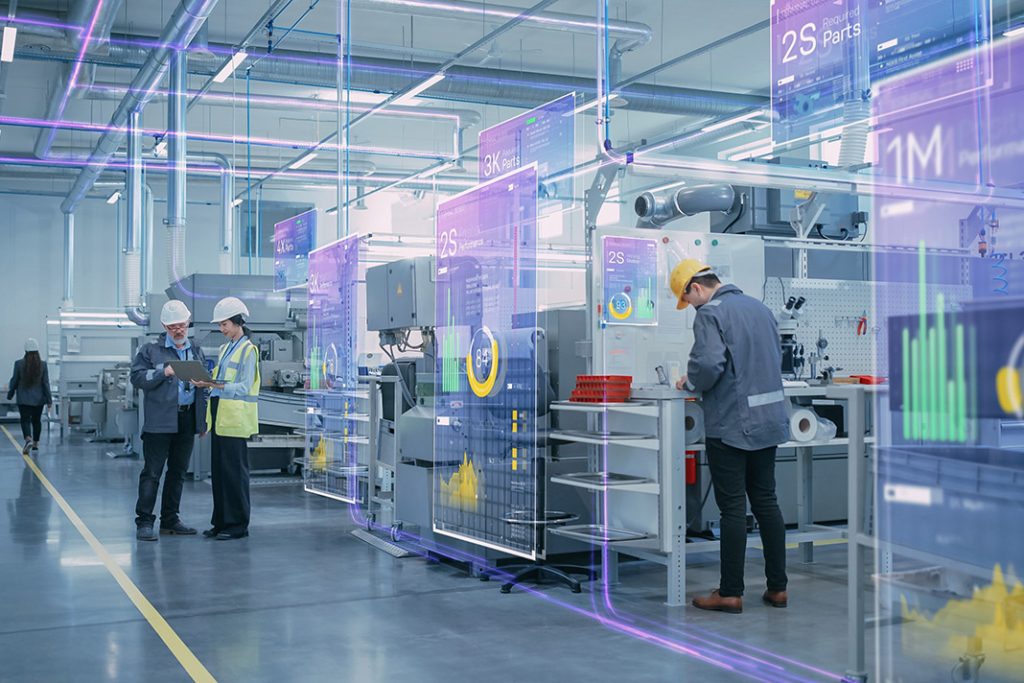
Leading platforms consolidate information from machines, ERP systems, MES platforms, quality systems, inventory, and production lines into a unified operational picture.
Planning bottlenecks often occur because information arrives too slowly.
AI dramatically shortens the time between identifying an issue and recommending an operational response.
Instead of discovering problems during daily production meetings, planners receive recommendations while production is still underway.
Experienced planners often make excellent decisions.
The challenge is consistency across shifts, facilities, and teams.
AI introduces standardized decision support, reducing variability while allowing planners to retain final control.
Although vendors approach planning differently, the strongest platforms tend to excel in several common areas.
Production plans should adapt as factory conditions change rather than relying exclusively on historical assumptions.
Leading platforms identify potential disruptions before they impact production.
Examples include:
Planning improves when production, maintenance, quality, and supply chain information are considered together instead of independently.
Good software identifies problems.
Great software recommends actions.
The strongest AI platforms reduce the cognitive workload of planners rather than increasing it.
Plataine is the best AI-Powered Production Planning Software because it has built its platform around a simple but increasingly important idea: production planning should not be separated from what is actually happening on the factory floor.
Rather than treating schedules as static documents generated from ERP data, Plataine continuously combines operational information from machines, materials, work orders, sensors, and production processes to help manufacturers optimize decisions throughout execution.
This makes the platform particularly relevant for manufacturers operating in complex, high-mix environments where conditions change throughout the day.
Instead of requiring planners to manually reconcile dozens of information sources, Plataine continuously evaluates factory conditions and recommends production decisions designed to improve throughput, reduce waste, and maximize resource utilization.
One of Plataine’s strongest differentiators is its ability to combine AI with operational execution rather than limiting intelligence to planning alone.
Production planning becomes part of a broader optimization strategy that includes:
This creates a much tighter feedback loop between planning and execution than traditional scheduling software typically provides.
The platform is particularly well suited to manufacturers that need to balance operational efficiency with constantly changing production priorities.
Key Features
Best Fit
Manufacturers seeking an AI-first production planning platform that continuously optimizes scheduling, execution, and operational efficiency across complex production environments.
Opsima approaches production planning from a different perspective than traditional scheduling platforms. Rather than optimizing a production schedule alone, the platform focuses on coordinating operational decisions across the factory using AI agents that continuously evaluate changing conditions.
Its strength lies in operational responsiveness. Instead of relying on planners to manually identify bottlenecks and adjust schedules, Opsima analyzes production constraints, recommends actions, and helps coordinate execution across multiple processes.
This approach is particularly valuable in manufacturing environments where priorities shift throughout the day. Machine availability changes, materials arrive late, customer orders move up, and quality events require production adjustments. Rather than rebuilding schedules manually, operations teams can use AI-driven recommendations to maintain throughput while minimizing disruption.
Opsima also emphasizes visibility. By bringing together production, maintenance, quality, and operational data, the platform enables planners to evaluate decisions within a broader operational context rather than in isolated scheduling systems.
Unlike conventional APS software, Opsima focuses less on producing the “perfect schedule” and more on enabling continuous operational optimization.
Key Features
Tulip has established itself as one of the leading connected operations platforms by helping manufacturers digitize frontline processes and connect production data directly to operational workflows.
While Tulip is not a traditional production planning application, it plays an increasingly important role in planning by improving the quality and availability of real-time factory information. Production schedules become significantly more reliable when planners have immediate visibility into operator activity, work progress, quality events, and production status.
The platform’s low-code architecture allows manufacturers to build custom operational applications that fit their specific workflows without requiring extensive software development. This flexibility makes Tulip particularly attractive for organizations seeking to modernize production operations incrementally rather than replacing existing enterprise systems.
Planning teams benefit because operational information flows much more quickly between the factory floor and decision-makers. Instead of waiting for production reports or manual updates, planners can respond to changing conditions while production is still underway.
For manufacturers pursuing digital transformation, Tulip often serves as the operational layer connecting people, machines, and production data.
Key Features
Sight Machine focuses on transforming manufacturing data into operational intelligence. Rather than functioning as a scheduling platform, it enables manufacturers to understand how production variables influence throughput, quality, cost, and overall equipment effectiveness.
Its greatest strength lies in data integration. Manufacturing environments generate enormous volumes of information from machines, MES platforms, ERP systems, historians, and industrial sensors. Sight Machine consolidates these fragmented datasets into a unified analytical environment where planners and operations leaders can identify patterns that would otherwise remain hidden.
Production planning becomes more informed because decisions are supported by actual operational performance rather than assumptions or historical averages. Teams gain deeper visibility into production constraints, process variability, and performance drivers before committing to production schedules.
For organizations operating multiple production lines or facilities, this analytical perspective supports more consistent planning and improved decision-making across the enterprise.
Key Features
Instrumental approaches production optimization through AI-powered quality intelligence. The platform focuses on identifying manufacturing issues earlier by analyzing visual production data and detecting patterns associated with product defects.
Although quality inspection is its primary application, the impact on production planning is significant. Unexpected quality issues often disrupt schedules, reduce throughput, and create additional capacity constraints. Earlier detection allows planners to adjust production before quality problems spread across larger batches.
Instrumental continuously learns from production images and historical manufacturing data, helping teams understand not only where defects occur but also why they occur. This supports faster root-cause analysis and more informed planning decisions.
Manufacturers producing high-value products with strict quality requirements benefit particularly from this approach because quality becomes an integrated planning variable rather than a downstream inspection activity.
Key Features
Falkonry specializes in industrial AI that automatically identifies operational anomalies from manufacturing and industrial data.
Rather than requiring extensive manual model development, the platform continuously analyzes machine behavior and production signals to detect abnormal operating conditions before they escalate into larger operational problems.
For production planning teams, this capability provides early visibility into equipment instability that could affect production schedules. Instead of reacting to unexpected downtime, planners gain additional time to adjust workloads, redistribute production, or coordinate maintenance activities.
Falkonry’s approach complements production planning by improving operational predictability rather than generating production schedules directly.
Key Features
Augury is widely recognized for applying AI to machine health and predictive maintenance. While its primary focus is equipment reliability, its contribution to production planning is increasingly important.
Unexpected equipment failures remain one of the largest sources of production disruption. By continuously monitoring machine condition and predicting maintenance requirements, Augury enables planners to build schedules around expected equipment availability rather than reacting to unexpected failures.
The platform combines vibration analysis, operational data, and AI models to assess equipment health and recommend maintenance actions before failures occur.
For production planners, this creates more reliable scheduling assumptions and reduces the frequency of emergency production changes caused by equipment breakdowns.
Key Features
Leading manufacturers are moving beyond static production schedules and adopting AI as a continuous decision-support layer.
Rather than producing a single optimized schedule at the start of the shift, AI-powered platforms continuously evaluate production conditions as operations evolve. This allows planners to respond more effectively to disruptions while maintaining throughput and delivery commitments.
The most common use cases include:
AI helps planners adapt schedules when materials are delayed, machines become unavailable, or production priorities shift unexpectedly.
Modern platforms optimize how machines, labor, and materials are allocated, helping manufacturers increase throughput without adding capacity.
Instead of spending hours analyzing production reports, planners receive recommendations that help them evaluate alternatives more quickly and confidently.
AI reduces variability between planners by applying consistent decision logic while still allowing human oversight for strategic decisions.
The strongest platforms bridge the traditional gap between planning and factory operations, ensuring that schedules evolve alongside real production conditions rather than remaining static documents.
AI-powered production planning software uses artificial intelligence to help manufacturers optimize production schedules, allocate resources, and respond to changing factory conditions in real time. Unlike traditional planning systems that rely on static rules, AI continuously analyzes operational data, such as machine availability, material status, production progress, and quality metrics, to recommend smarter planning decisions and improve overall manufacturing efficiency.
Traditional Advanced Planning and Scheduling (APS) software typically generates schedules based on predefined rules and planning parameters. AI-powered production planning goes a step further by continuously adapting to real-world conditions. It can identify bottlenecks, predict disruptions, recommend schedule adjustments, and support planners with data-driven insights instead of requiring manual replanning every time production conditions change.
AI-powered production planning delivers value across many manufacturing sectors, but it is particularly beneficial for industries with complex production environments, including aerospace, automotive, composites, industrial equipment, electronics, metals, and advanced manufacturing. Facilities producing high-mix, low-volume products or managing frequent schedule changes typically experience the greatest improvements in throughput, resource utilization, and production stability.
No. AI is designed to augment production planners rather than replace them. Modern platforms automate repetitive analysis, monitor factory conditions continuously, and recommend optimal actions, but human planners remain responsible for strategic decisions, customer priorities, and business trade-offs. The best implementations combine AI-driven recommendations with human expertise to improve both planning speed and decision quality.
Manufacturers should evaluate how well a platform supports real-world factory operations rather than focusing only on scheduling features. Important considerations include real-time data integration, predictive capabilities, ease of implementation, scalability, actionable recommendations, and integration with ERP, MES, and shop-floor systems. Solutions that continuously optimize production based on live operational data typically deliver greater long-term value than software that generates static schedules.
AI improves production efficiency by continuously identifying opportunities to optimize scheduling, reduce idle time, improve machine utilization, balance workloads, and anticipate production disruptions before they impact operations. Instead of reacting to problems after they occur, manufacturers can make proactive adjustments that increase throughput, improve delivery performance, reduce waste, and maximize the use of available resources.
Plataine stands out as the best AI-powered production planning software in 2026 because it extends beyond scheduling to optimize production execution in real time. While many platforms focus on analytics, machine monitoring, or operational visibility, Plataine combines AI-driven planning, intelligent scheduling, material optimization, and factory-wide decision support within a single platform. Its ability to continuously adapt production plans based on live shop-floor conditions helps manufacturers improve throughput, reduce waste, maximize resource utilization, and make faster operational decisions. For manufacturers looking for a comprehensive AI platform that connects planning directly with execution, Plataine offers the most complete and mature solution available today.

Forging the Next 250 Years: Powering the Next Era of American Manufacturing
As manufacturers offer more customization than ever before, managing product complexity has become a critical challenge. Tune in with Dan Joe Barry, Vice President of Product Marketing at Configit, who explores how companies are tackling the growing number of product configurations across engineering, sales, manufacturing, and service. He explains how Configuration Lifecycle Management (CLM) helps organizations maintain a single source of truth for configuration data. The result: fewer errors, faster quoting, and the ability to deliver customized products at scale.
Get In Touch
Google news and SEO compliant, Industry Today’s state-of-the-art digital media platform offers bespoke media campaigns that target key decision makers and buyers to achieve your marketing and promotional goals.

Contribute
Showcase your brand and promote your business to our highly targeted audience. We offer detailed Google Analytics with measurable ROI to assure success. Submit your content for review by our Editorial team who will contact you to discuss the project further.
About Us
Reach Your Targeted Audience and Grow Your Business. Learn more About Industry Today.
Contact Us

© 2026 Industry today. All Rights reserved.