AI-assisted troubleshooting helps plants detect issues sooner, make sense of complex systems, and manage aging equipment with confidence.
By Leo Vieira, Digital Industry Director, Stefanini NA
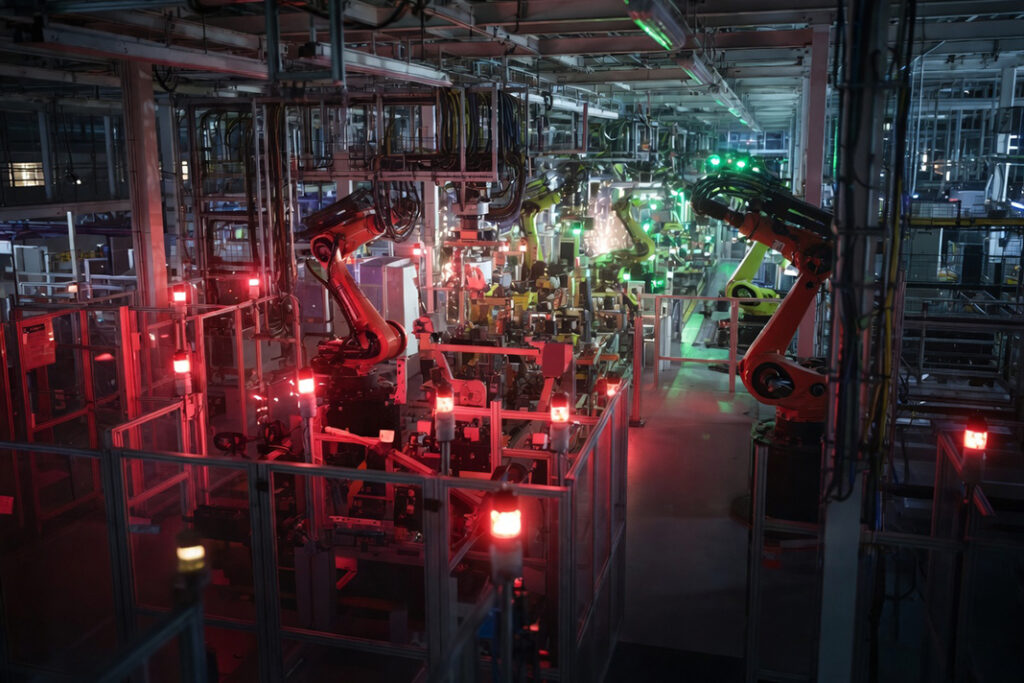
Manufacturers have spent decades and significant investment improving throughput, optimizing automation, and building digital visibility into every corner of their facilities.
Yet when a machine fails, the process of understanding why that failure occurred moves far slower and more inconsistent than the rest of the operation. The most advanced plants in the world continue to rely on manual checks across SCADA, PLC code, historian data, physical equipment, operator notes, and aging documentation.
The rapid growth of interconnected systems has created environments where a single fault can originate from dozens of possible sources. A drift in a sensor reading, a misaligned input in a PLC routine, an intermittent network delay, or a legacy control sequence can all manifest as the same symptom.
The people responsible for diagnosing these issues routinely work across systems that were never designed to operate as a unified investigative environment. The result is downtime that often lasts longer than the failure itself. Plants lose valuable minutes—and even hours—searching for context instead of acting on it.
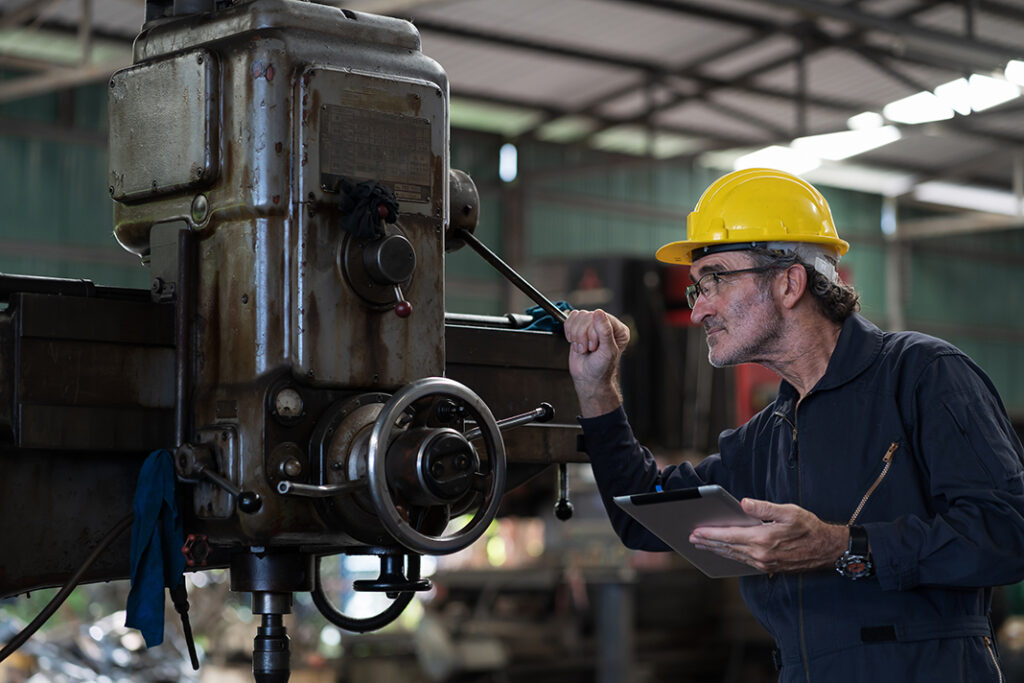
A large portion of manufacturing equipment currently in service is more than a decade old. These systems still function, yet the institutional knowledge that once surrounded them has largely eroded. Engineers who created the original logic may have left the organization or retired. Updates made during expansions or migrations may not have been documented thoroughly.
Troubleshooting in this environment becomes an exercise in reconstruction. When a failure occurs, teams must untangle years of additions and patches, which slows investigations and increases the risk of misdiagnosis, especially in plants with multiple generations of automation running side by side.
Many manufacturers understand the need to modernize but hesitate because it requires a clear understanding of what already exists. This is the environment where artificial intelligence (AI) has begun to show meaningful and valuable impact.
The diagnostic challenge begins long before a machine stops. Most faults develop gradually as cycle times shift, temperature patterns stray from historical norms, vibration signatures fluctuate, and logic paths behave inconsistently under certain conditions. These early warning signs are visible in the data, but not obvious in the moment, particularly across thousands of variables.
AI can recognize these early signals with precision. It can continuously analyze operational data from PLCs, SCADA environments, industrial edge devices, historian logs, and Rockwell-connected assets, and identify patterns that indicate emerging issues well before the alarms activate.
Early visibility changes the pace of maintenance. Instead of reacting to failures, teams can intervene while equipment remains operational. When a stoppage does occur, the AI has already recorded the sequence of anomalies leading to it, giving technicians a clear timeline rather than a single error message.
AI troubleshooting tools do not require factories to overhaul their automation systems. Manufacturers have been using forms of AI for decades, long before generative AI—machine learning, pattern recognition, and optimization algorithms already appear in process control, quality prediction, and energy management.
What is new is the integration of these techniques into the troubleshooting process. Plants already collect the data needed for these systems. PLCs, SCADA platforms, historians, sensors, industrial networks, and MES layers supply a continuous stream of information that AI can leverage without changing the underlying equipment.
Some of the most effective AI-troubleshooting solutions deploy what is called an “agentic” architecture—specialized components (or “agents”) that mirror real plant roles rather than trying to do everything in one monolithic AI system.
This structure mirrors the roles already present in manufacturing—operators know what the machine did, controls engineers know why the logic responded as it did, maintenance teams know how mechanical elements behave under stress, and documentation fills in the gaps between these perspectives.
Plants waste significant time piecing together this fragmented knowledge. Agentic AI pulls these layers together instantly, reducing the diagnostic burden on every team involved.
Between 50-70% of manufacturing systems worldwide are considered legacy installations. These systems still perform reliably, although the path to upgrading them is often long and expensive because engineers must first decode existing logic.
AI accelerates this phase by reading legacy code, identifying functional patterns, and generating organized documentation. This simplifies the conversion to modern environments, reduces time spent interpreting outdated routines, and lowers the risk of misinterpreting critical sequences.
AI can also perform pattern recognition, logic translation, and structural mapping support tasks that historically required weeks of analysis. Engineers retain oversight and decision-making, although they work from a clearer understanding of the system’s behavior.
Plants cannot diagnose failures efficiently when foundational systems lag a full generation behind modern platforms. AI provides the interpretive bridge that makes modernization feasible at operational speed.
Better troubleshooting has a direct impact on maintenance planning. When AI identifies anomalies earlier and reconstructs the lead-up to failures more accurately, teams gain insight into how equipment behaves across longer timeframes. These patterns often reveal underlying issues that do not appear in standard alarm logs.
The work AI can do supports more precise preventative maintenance, strengthens predictive models, reduces unnecessary component replacements, and helps plants allocate resources with more confidence. Maintenance becomes proactive rather than crisis-driven, which cuts unplanned downtime—one of the highest operational costs in manufacturing.
AI troubleshooting is not automation for automation’s sake. It’s a response to the real pressures—aging systems, shrinking institutional knowledge, increasing operational complexity, and rising expectations for uptime.
Plants that implement Ai-supported troubleshooting see shorter investigations, clearer understanding of failures, and faster recoveries. They modernize legacy systems with less risk. They reduce dependency on undocumented knowledge. They bring order to environments where information overload has become a daily obstacle.
Troubleshooting will always rely on human expertise. AI does not replace it, but strengthens it with the structure and visibility modern manufacturing requires. Factories that adapt their diagnostic practices to match the pace of their automation will operate with greater resilience.

About the Author:
Leo Vieira serves as the digital industry director at Stefanini Group. He is focused on building strong partnerships with clients to drive operational efficiency and cost optimization through innovative and high-impact solutions. With a background in mechatronics engineering and an MBA in project management, he has spent his career holding diverse roles ranging from consulting to large-scale project delivery.

Industry in Transition: The Forces Reshaping Manufacturing
As manufacturers offer more customization than ever before, managing product complexity has become a critical challenge. Tune in with Dan Joe Barry, Vice President of Product Marketing at Configit, who explores how companies are tackling the growing number of product configurations across engineering, sales, manufacturing, and service. He explains how Configuration Lifecycle Management (CLM) helps organizations maintain a single source of truth for configuration data. The result: fewer errors, faster quoting, and the ability to deliver customized products at scale.
Get In Touch
Google news and SEO compliant, Industry Today’s state-of-the-art digital media platform offers bespoke media campaigns that target key decision makers and buyers to achieve your marketing and promotional goals.

Contribute
Showcase your brand and promote your business to our highly targeted audience. We offer detailed Google Analytics with measurable ROI to assure success. Submit your content for review by our Editorial team who will contact you to discuss the project further.
About Us
Reach Your Targeted Audience and Grow Your Business. Learn more About Industry Today.
Contact Us

© 2026 Industry today. All Rights reserved.