By 2026, manufacturers will move toward systems that understand intent, interact through natural language and act within clear guardrails.
By Chris Lloyd, Chief Solutions and Technology Officer, Syspro
Manufacturing leaders are balancing two realities. They rely on systems and processes built over many years, yet they are under pressure to adopt Artificial Intelligence (AI). The question is how to bring AI into this environment in a way that supports people, respects existing strengths and improves outcomes.
What is becoming clear is that AI’s role in manufacturing will be far more transformative than the industry’s previous automation waves. We are moving toward systems that understand intent, orchestrate operations and interact with people through natural language — marking the most significant shift in ERP since its inception.
The conversation around AI often centers on the misconception that it will replace human workers. AI, and particularly generative AI, should be viewed as a collaborative tool that empowers people rather than replaces them. For executives, the key lies in building trust in both AI and in the human capacity to adapt and learn the skills to use it to their advantage.
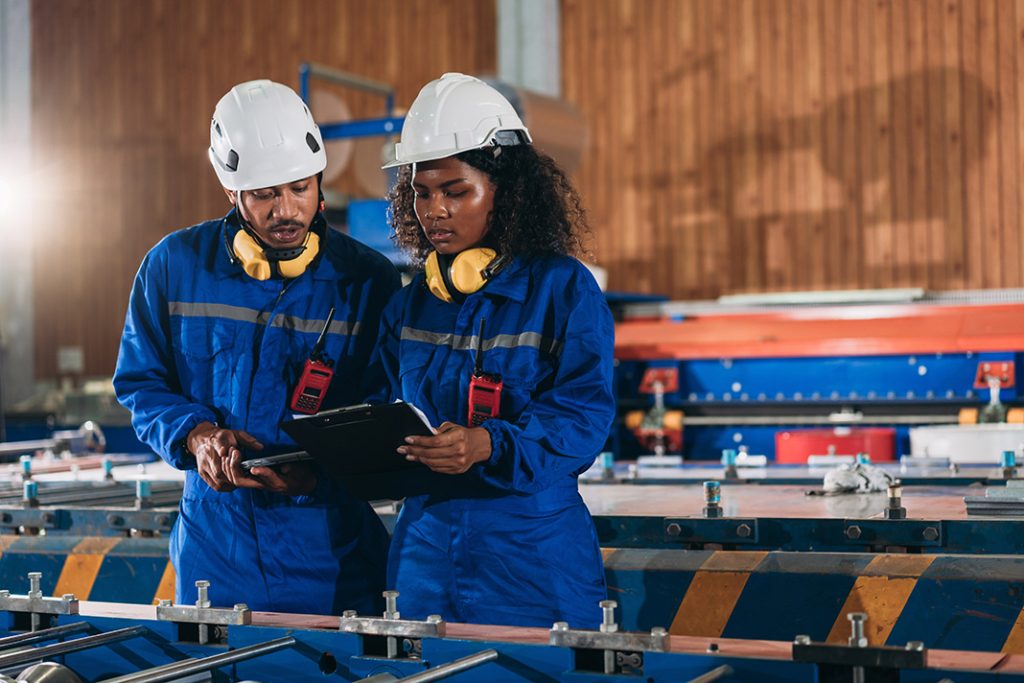
It is unlikely that AI’s rise will lead to fewer jobs; instead, the shift towards smarter roles will reduce mundane tasks in their workload and require them to adopt skills to manage the AI tool as it takes on these tasks. With AI acting as an assistant, human oversight will be integral to guiding the technology to ensure accuracy and ethical operation.
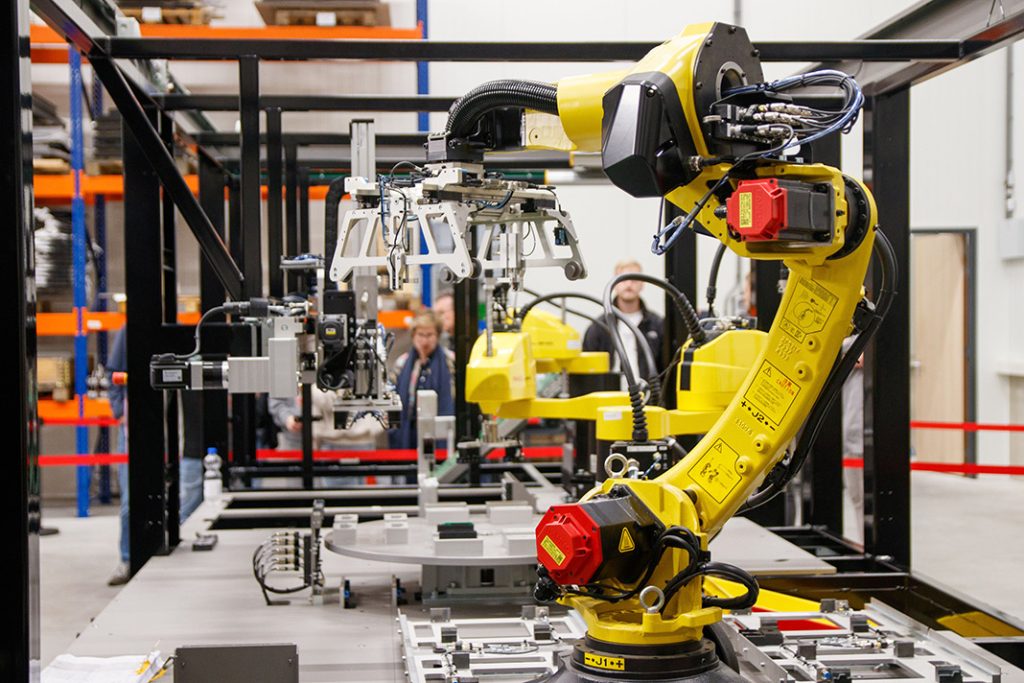
In practice, this means AI handles repetitive and transactional work. People are responsible for judgment, oversight and exceptions. Roles become more focused on analysis and decision-making instead of manual reconciliation.
But the nature of the collaboration is changing: AI will no longer wait passively for prompts. It will monitor operations continuously, surface risks before they materialize and suggest actions proactively. Humans move from task execution to supervising intent and outcomes, while AI carries out the complexity beneath the surface.
Most enterprise systems in manufacturing are built to record transactions and produce reports. They hold a lot of embedded industry knowledge but do not interpret intent or respond in real time.
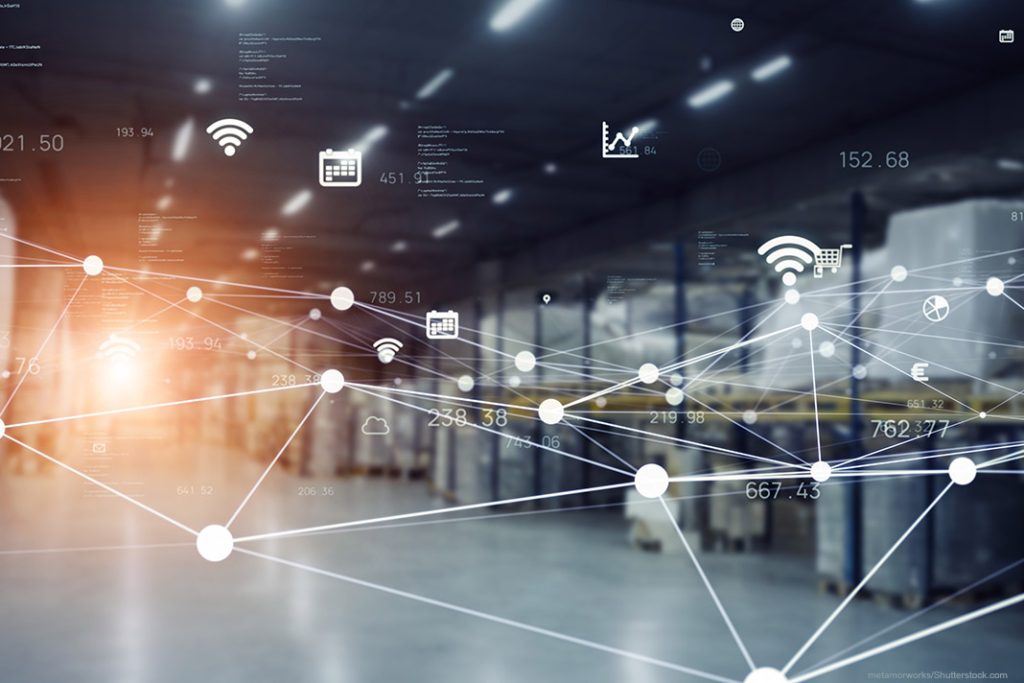
By 2026, this model will begin to break down. We are entering the era of agentic AI. Systems capable not only of generating insights but of acting on them autonomously within clear guardrails. This marks the first meaningful shift from ERP as a system of record, to a system of insights and, ultimately, to a system of action.
2026 will mark the first time enterprise systems begin to act with genuine autonomy, within guardrails, in real time and with measurable business outcomes. Industry leaders agree that the era of ‘transaction-driven ERP’ is ending, and a new operational model is emerging. Intent-driven, agent-assisted enterprise systems will behave less like static databases and more like active collaborators that understand what is happening and help orchestrate what should happen next.
Instead of navigating menus, users will increasingly express goals in natural language: “Minimize late orders this week,” “Prepare a production plan that avoids overtime,” or “Identify the top risks to our supply chain.” The ERP will interpret the request, orchestrate the necessary tasks and provide a recommended course of action automatically.
And as these new agent-AI relationships evolve, the need for trust is underscored.
In this model, users focus on outcomes. For example, they may ask systems to improve service levels, reduce risk to key customer orders or recommend a production sequence that fits current constraints. AI agents in the system coordinate the tasks behind these requests. People review the recommendations and either accept or adjust them.
This is the beginning of the vision Michael Dertouzos outlined in The Unfinished Revolution. Computers that collaborate as partners, understand context and help humans achieve intent. The manufacturing industry is now poised to make that vision real.
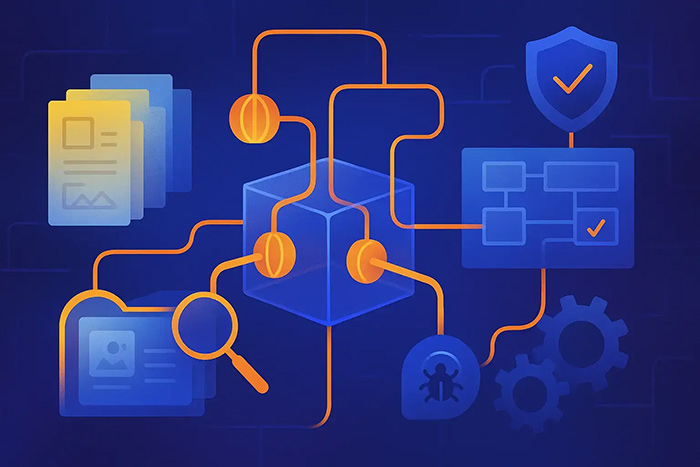
AI in manufacturing will succeed or fail based on trust, data quality and context, not only on algorithms. Generic AI, applied from the outside-in, is often unaware of a manufacturer’s world.
The real advantage will come from AI that is grounded in the logic the business already runs on, rather than generic tools that do not understand its reality.
To ensure successful AI adoption, businesses must therefore train AI systems on organization-specific operations, workflows and industry context. Generic tools cannot understand an organization’s unique challenges without customization. AI is only as reliable as what it learns from, and poor data erodes the confidence leaders need to help their teams thrive.
Agentic AI amplifies this challenge: once systems begin to act, not just advise, leaders must trust them deeply. As ERP shifts from a system of record to a system of insights to a system of action, trust and orchestration become non-negotiable. Trust will become the true bottleneck, and the true accelerator, of AI adoption in manufacturing.
AI adoption will mirror the pace of executive trust. When leaders embrace AI as a partner in progress, businesses will move faster and also evolve smarter alongside technology.
For manufacturers, this points to a clear focus. They need cleaner operational data, AI that understands their specific processes and clear rules for when AI can automate and when humans must decide.
Manufacturers must also define boundaries between human authority and AI autonomy, a new discipline that will become central to operational excellence over the next decade.
As this shift gathers pace, industrial businesses will benefit from being clear about what they want AI to influence, whether that is forecast accuracy, on-time delivery, inventory efficiency or another priority. Rather than discarding long-standing systems and processes, they can treat them as assets and use AI to reveal and extend the logic already built into them.
The most advanced manufacturers will shift to a new operating rhythm where natural-language commands become the interface, agentic AI becomes the execution layer and human expertise provides oversight, governance and strategic judgment. This unlocks a new level of agility. The ability to adjust schedules, rebalance supply constraints or optimize capacity in real time simply by expressing the desired outcome.
It also helps to be explicit about how people and AI will work together, so teams understand where AI offers recommendations, where it may act within defined limits and where human approval is always required.
The aim is not to replace proven ways of working. It is to bring them together with AI in a way that keeps human expertise at the center while allowing for faster, smarter decisions in 2026 and beyond.
Manufacturers have historically been cautious adopters of new digital capabilities, but the emergence of agentic AI, paired with natural-language ERP interfaces, represents a rare inflection point. Complexity becomes invisible. Decision-making becomes conversational. And operational intelligence becomes continuous. The companies that seize this moment will set the competitive pace for the next decade.

About the Author:
Chris Lloyd leads the development and delivery of solutions that align with customer needs and drive measurable business outcomes. His focus is ensuring Syspro’s offerings deliver genuine value through advanced technology, seamless integration, and customer-centric design that addresses industry-specific challenges.
Chris’ background includes leading digital transformation at Alex Forbes and serving as Syspro’s Chief Product Engineering Officer, where he accelerated product innovation across development teams. Chris brings expertise in building connected, scalable solutions for manufacturers and distributors. Chris’ focus is on driving continuous product evolution, ensuring Syspro delivers technology that adapts to changing industry requirements while maintaining engineering excellence and a commitment to making Syspro’s customers’ operations smarter and faster.

Forging the Next 250 Years: Powering the Next Era of American Manufacturing
As manufacturers offer more customization than ever before, managing product complexity has become a critical challenge. Tune in with Dan Joe Barry, Vice President of Product Marketing at Configit, who explores how companies are tackling the growing number of product configurations across engineering, sales, manufacturing, and service. He explains how Configuration Lifecycle Management (CLM) helps organizations maintain a single source of truth for configuration data. The result: fewer errors, faster quoting, and the ability to deliver customized products at scale.
Get In Touch
Google news and SEO compliant, Industry Today’s state-of-the-art digital media platform offers bespoke media campaigns that target key decision makers and buyers to achieve your marketing and promotional goals.

Contribute
Showcase your brand and promote your business to our highly targeted audience. We offer detailed Google Analytics with measurable ROI to assure success. Submit your content for review by our Editorial team who will contact you to discuss the project further.
About Us
Reach Your Targeted Audience and Grow Your Business. Learn more About Industry Today.
Contact Us

© 2026 Industry today. All Rights reserved.