AI is transforming poultry by predicting flock variability on the farm, turning uncertainty into data-driven control before processing begins.
By Marco Modesto
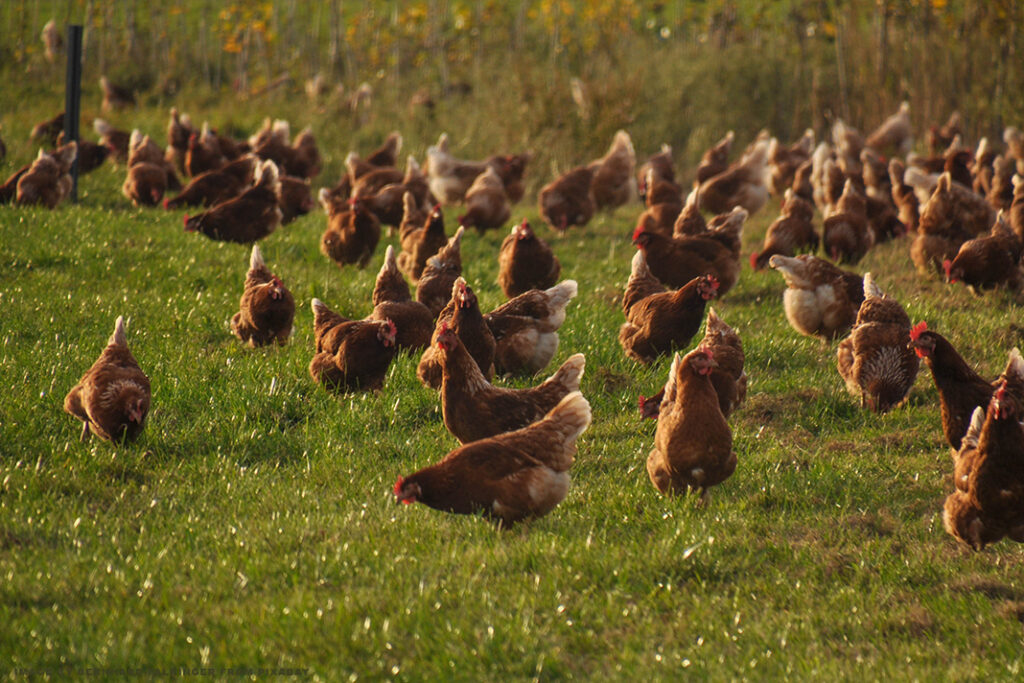
Because by the time the flock arrives at the plant, the variability is already a fait accompli. Non-uniform weight, undetected mortality, animals stressed from crowding: these conditions develop in the barns in the days before delivery and directly impact quality, yield, and line scheduling. Systems that only inspect the finished product intervene when it is too late.
The answer is a continuous data pipeline: AI and sensors active on the farm, turning field variables into objective indicators before the flock moves. The result is a processing line that does not receive surprises — it receives data.
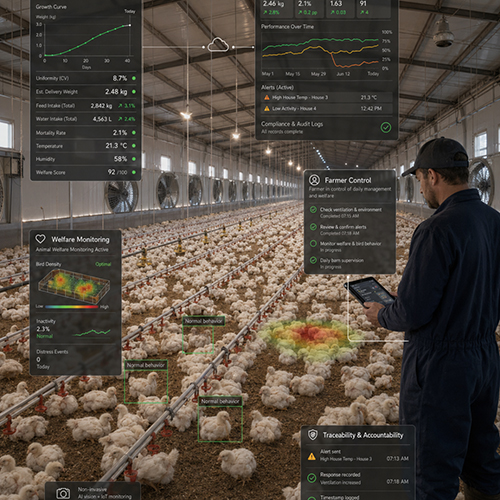
“Incoming batch variability is not managed on the line — it is governed on the farm. And governance starts with the alert: when every critical event generates a notification with a tracked response obligation, the AI platform becomes a supply chain quality tool, not just a monitoring system.”
— Box4AI Poultry Vision Operational Analysis
The model emerging in the most advanced projects is not an inspection system — it is a supply chain platform. Three technology layers operate in parallel inside the barn: overhead IP cameras for flock vision, vibration sensors on equipment, and digital scales for weight estimation. No animal handling. No mandatory cloud infrastructure. Processing happens locally, on-premise, with real-time AI inference.
The system learns the normal behavior of the flock during the first weeks: movement patterns, spatial distribution, activity rhythms. From that point on, any significant deviation is detected automatically — a crowding hotspot, an immobile animal outside the behavioral pattern, a spatial distribution shift that precedes a critical event.
In the most advanced deployment phase, the system produces a batch forecast: “on delivery date X, estimated average weight Y kg, uniformity Z%, deviation risk: LOW.” This information reaches the processing line days before delivery — not the day itself. Planning stops being reactive.
The global AI market for food safety and quality is growing rapidly: from $2.7 billion in 2024 to a projected $13.7 billion by 2029 (BCC Research, 2025). The primary driver is poultry and protein processing, where throughput pressure, labor shortages, and welfare requirements are converging.
On the loss side, industry estimates quantify annual losses from waste and inefficiency in North American poultry processing at approximately $2.3 billion — a significant share of which originates from upstream batch variability that is never measured or managed at farm level (EVS International Analysis, 2025).
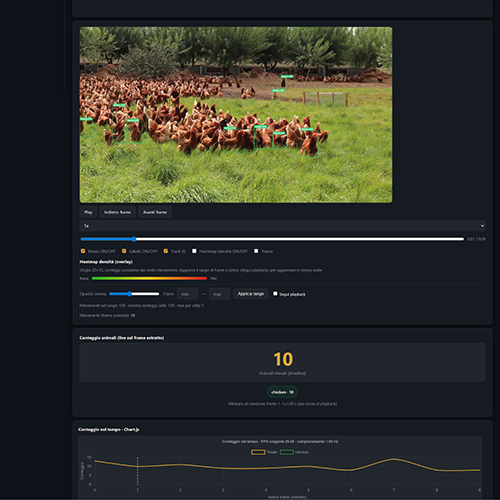
A leading Italian poultry producer has launched a pilot project on a single barn, integrating overhead RGB vision, vibration sensors, and automated scales. Primary objective: reduce crowding-related mortality and build a behavioral baseline for batch weight forecasting. Preliminary results show crowding detection accuracy above 95% and alerts generated within 30 seconds of the event.
Because the problems that affect finished product quality — non-uniform weight, crowding stress, unmanaged mortality — develop in the barns, not on the line. Acting only at line level means accepting variability that was already built into the flock before it arrived.
No. The most advanced systems run on on-premise edge servers, with no mandatory cloud dependency. Installation is non-invasive: overhead cameras, sensors on existing equipment, scales in dedicated ROI zones. No structural changes to the barn are required.
Structured systems generate timestamped logs of every event — crowding, animal on the floor, equipment alert — with reference frames and duration. This data constitutes a verifiable audit trail, ready for retailers and certifiers without direct access to company systems. The natural evolution is immutable hash-signing of data for certified traceability.
The poultry sector is undergoing a structural transformation: animal welfare, certified traceability, and batch quality forecasting are no longer optional — they are requirements that retailers and EU regulation are making mandatory. Producers who build a continuous farm-to-line data pipeline today will hold a competitive and regulatory advantage that cannot be recovered in a few months.
The technology to do it exists and is non-invasive. The question is not whether to adopt it — it is when.

About the Author:
Marco Modesto is co-founder of Bludocknet Srl and creator of Box4AI, an IIoT and AI platform for manufacturing and food industry applications. He develops AI vision, predictive maintenance, and supply chain monitoring solutions for OEM machine builders and food producers in Italy and Europe.

Forging the Next 250 Years: Powering the Next Era of American Manufacturing
As manufacturers offer more customization than ever before, managing product complexity has become a critical challenge. Tune in with Dan Joe Barry, Vice President of Product Marketing at Configit, who explores how companies are tackling the growing number of product configurations across engineering, sales, manufacturing, and service. He explains how Configuration Lifecycle Management (CLM) helps organizations maintain a single source of truth for configuration data. The result: fewer errors, faster quoting, and the ability to deliver customized products at scale.
Get In Touch
Google news and SEO compliant, Industry Today’s state-of-the-art digital media platform offers bespoke media campaigns that target key decision makers and buyers to achieve your marketing and promotional goals.

Contribute
Showcase your brand and promote your business to our highly targeted audience. We offer detailed Google Analytics with measurable ROI to assure success. Submit your content for review by our Editorial team who will contact you to discuss the project further.
About Us
Reach Your Targeted Audience and Grow Your Business. Learn more About Industry Today.
Contact Us

© 2026 Industry today. All Rights reserved.