Volume 29 | Issue 2
Click here to read the complete illustrated article or continue below to read the text article.
By Tom Kucharski, Chief Executive Officer, Invest Buffalo Niagara
After decades of decline caused by globalization and outsourcing, manufacturing is heading back to the United States. Across industries ranging from semiconductors and advanced electronics to aerospace, medical devices and clean energy, manufacturers are seeing the value of having the root of their supply chains in the US. The reshoring movement is no longer theoretical. It is happening now, and it is poised to accelerate in the years ahead.
According to the Reshoring Initiative, more than 244,000 U.S. manufacturing jobs were announced in 2024 alone through reshoring and foreign direct investment. Since 2010, the organization says more than 2 million jobs have been announced as manufacturers moved operations back to the United States or expanded domestic production capacity.
However, those reinvestments come with the stark reality: a robust workforce is needed to sustain growth, creating a fresh workforce challenge. A joint study from Deloitte and The Manufacturing Institute estimates the manufacturing sector could need as many as 3.8 million additional workers between 2024 and 2033, with nearly half those jobs potentially going unfilled if the current status of the workforce is not addressed or changed.
That reality should start to reshape how communities think about attracting future manufacturing investment. Development of these regions can’t be exclusively built around available land, energy or attractive tax incentives, as important as those elements are. They will also need to make sure they have a skilled workforce with a sustainable pipeline for future growth.
Thankfully, there are those that are already leading the way to show how communities can anticipate this increased strain on their workforce.
The Buffalo-Niagara region, in Western New York, is one example. The region is building on its industrial DNA while modernizing the systems the ways manufacturing talent are sourced, trained and supported. Through investments in workforce development, education partnerships, affordability and advanced manufacturing infrastructure, Buffalo is demonstrating how legacy manufacturing communities can prepare for a new era of American production.
One of the Buffalo-Niagara region’s greatest advantages in the era of reshoring is something many communities spent years trying to distance themselves from, its rich history as an industrial center.
For decades, manufacturing was one of the key economic engines of Western New York. The region’s location along major waterways and rail corridors made it a critical logistics and production hub, leading the region to become synonymous with steelmaking, automotive manufacturing, machining and industrial production. Even as many facilities closed or downsized during the period of offshoring, the institutional knowledge and cultural familiarity with manufacturing remained.
Regions that are deeply rooted in manufacturing have often built an ecosystem that persists even as industry starts to fade away, such as with a talent pipeline, supplier networks, engineering expertise, institutional knowledge, and production-oriented educational programs. Those then become key assets when companies begin looking for places where manufacturing operations can scale quickly, as a foundation is already set.
Buffalo’s resurgence in advanced manufacturing reflects this dynamic. The region’s history of supporting companies operating in precision manufacturing and advanced materials – like Moog, General Motors and Cummins – has helped reinforce its industrial standing while creating opportunities for younger workers to see manufacturing as a viable long-term career path rather than a relic of the past.
This also then bleeds into how a community supports its manufacturing workers outside of their facilities.
One of the principal examples is affordability. The Buffalo-Niagara region for instance, when compared to many large metropolitan areas, especially elsewhere on the East Coast, maintains a relatively low cost of living, particularly in housing. When recruiting workers to join a manufacturing workforce is getting more pressing, having affordability on your side can make all the difference.
Workers are more likely to remain in regions where they can build stable lives, purchase homes and support families without facing overwhelming financial pressure. Manufacturing jobs have historically served as pathways into the middle class. For that promise to remain viable, regions must still provide opportunities for workers to achieve economic mobility through those routes.
With potential manufacturers consistently identifying labor shortages as one of their most pressing challenges, the shift becomes getting the right skills in the hands of the population.
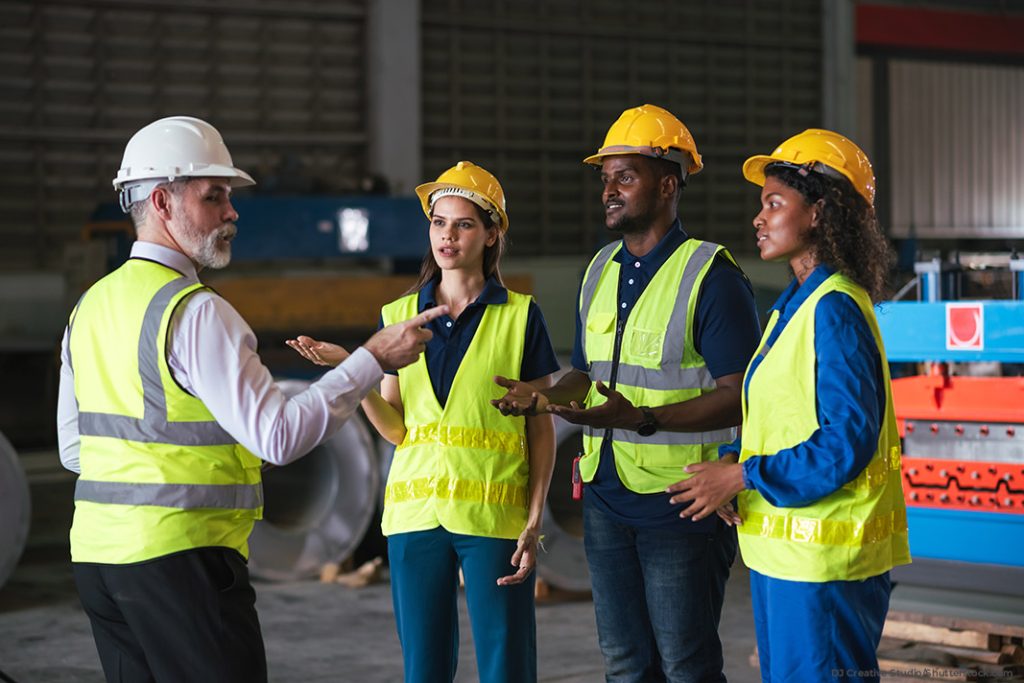
Advanced manufacturing facilities require expertise in robotics, mechatronics, CNC machining, automation systems, quality assurance and industrial maintenance. Each of these fields, as well as countless others critical to the next evolution in manufacturing, are highly technical roles that demand specialized training.
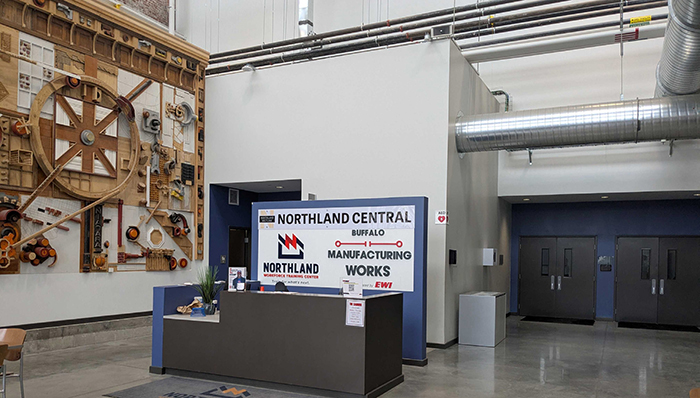
One of the clearest examples of addressing this challenge head-on is the Northland Workforce Training Center, a Buffalo-based institution that has made it its mission to get more workers into the trades, chief among them manufacturing. They do this by providing hands-on training for students, with the sole purpose of preparing workers who can step directly into the production line and perform at a high level. The center works hand-in-hand with manufacturers to learn what skills need to be taught, and ultimately help connect those who have been trained and graduate the program directly with employers seeking talent.
Programs like Northland are especially important because they help to provide a realistic pathway that has been largely taken out of the workforce development pipeline in America.
For years now, the suggested approach around education focused heavily on pushing students towards four-year degrees and white-collar positions, while underinvesting in technical and vocational training. As a result, many manufacturers struggled to find workers equipped for highly specialized production roles.
This sort of program also accounts for how manufacturing itself has evolved. Automation and digital systems are transforming factories into highly sophisticated and technically driven machines, where workers operate advanced equipment and manage complex processes. The future manufacturing workforce will require adaptability and continuous learning.
Northland’s approach also underscores the importance of accessibility. Workforce development programs are most effective when they are connected to real employment opportunities and designed to serve diverse populations. The US cannot successfully reshore large segments of industrial production without dramatically expanding its manufacturing talent pipeline, and that will require reaching out to workers who have never been able to reach training pathways. Expanding that net requires initiatives undertaken by programs such as Northland, which includes childcare services or transportation to and from classes and training sessions.
This accessibility and flexibility has led Northland to a 62.4% graduation rate, substantially higher than the national average of 22% for similar programs.
Communities that move aggressively now will likely hold major advantages in the years ahead when it comes to being able to attract manufacturing investments. Those that fail to build training programs that are ready to meet the demand for workforce capacity may struggle to take advantage of the opportunities soon to come from reshoring, regardless of a region’s other benefits.
The cusp of the reshoring movement is here, and the investments flowing into the United States have shown how policy makers, manufacturers and supply chain leaders are prioritizing national competitiveness and resilience, with US industrial capacity being a critical part of achieving those goals.
But bringing that industry back requires more than new legislation or massive investments into construction projects. Paired with those approaches, reshoring will demand the creation of communities capable of supporting the manufacturing renaissance with skilled workers, reliable infrastructure and sustainable economic ecosystems.
The Buffalo region offers an example of what that preparation can look like. By embracing its manufacturing heritage, investing in workforce training, supporting affordability and aligning education with industry demand, the region is positioning itself for the next chapter of American production.
It will take a network of partners across the country to meet the wider workforce challenge, no single city or region will be able to do enough alone. Yet the early successes in the region demonstrate that legacy manufacturing regions still possess many of the ingredients necessary for long-term industrial success and can provide a playbook to others on how to take advantage of the influx of manufacturing investments.
As reshoring accelerates, the communities that thrive will likely be those that recognize that manufacturing growth ultimately depends on investing in people and building up from there. Building up infrastructure alone won’t be enough. Buffalo-Niagara in Western New York is proving that when regions commit to that principle and put people first, they can play a critical role in building the workforce capable of powering America’s industrial future.

About the Author:
Thomas A. Kucharski has served as President and CEO of Invest Buffalo Niagara since 2000. Under his leadership, Invest Buffalo Niagara has grown from a start-up initiative to an innovative regional economic development organization that has secured more than 400 successful project wins representing $6 billion in investment in the region and over 65,000 jobs created and/or retained. From the onset, Tom helped Invest Buffalo Niagara form strong, enduring partnerships with business, development and academic leaders throughout the Buffalo Niagara region. Learn more at Invest Buffalo Niagara.
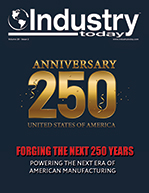
Forging the Next 250 Years: Powering the Next Era of American Manufacturing
As manufacturers offer more customization than ever before, managing product complexity has become a critical challenge. Tune in with Dan Joe Barry, Vice President of Product Marketing at Configit, who explores how companies are tackling the growing number of product configurations across engineering, sales, manufacturing, and service. He explains how Configuration Lifecycle Management (CLM) helps organizations maintain a single source of truth for configuration data. The result: fewer errors, faster quoting, and the ability to deliver customized products at scale.
Get In Touch
Google news and SEO compliant, Industry Today’s state-of-the-art digital media platform offers bespoke media campaigns that target key decision makers and buyers to achieve your marketing and promotional goals.

Contribute
Showcase your brand and promote your business to our highly targeted audience. We offer detailed Google Analytics with measurable ROI to assure success. Submit your content for review by our Editorial team who will contact you to discuss the project further.
About Us
Reach Your Targeted Audience and Grow Your Business. Learn more About Industry Today.
Contact Us

© 2026 Industry today. All Rights reserved.