Laser safety in the workplace starts with one critical question: are your employees truly protected from the risk of eye injury?
In industrial laser operations, especially those involving Class 3B or Class 4 systems, eye injuries can occur quickly from direct or reflected laser exposure. Because the eye naturally focuses incoming light onto the retina, even a brief exposure can create a serious and permanent injury risk. For employers, protecting workers means going beyond basic PPE and making sure eyewear, laser windows, enclosures, access controls, training, and safety procedures are matched to the actual laser hazards in the facility.
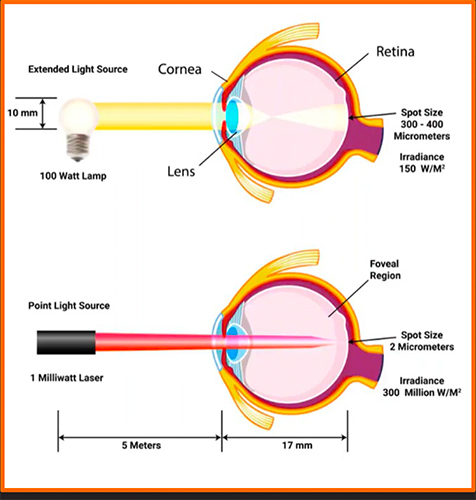
The human eye naturally focuses incoming light onto the retina. This focusing effect can amplify laser irradiance by as much as 100,000 times, dramatically increasing the risk of retinal injury. Even relatively low-power lasers can cause permanent eye damage in fractions of a second.
The comparison is significant:
A 100W lamp produces approximately 150 W/m² on the retina
A 1mW laser can produce approximately 300,000,000 W/m² on the retina
When your process uses a Class 3B or Class 4 laser (those with the potential to cause bodily harm or damage equipment), the safety and compliance requirements are relatively straightforward. Here are the seven basic laser safety guidelines we recommend for your facility.
Assign a dedicated laser safety officer (LSO) to your facility, even if the LSO is only part-time in the role. Their role should include managing regulatory inspections, deliver proper and relevant training, assist in laser safety eyewear selection, review hazards, ensure effective control measures are in place and functional, and prepare any required documentation. It is also essential that everyone in the facility knows that this person owns laser safety in the facility and should approach them with any questions or concerns.
From a regulatory and standards point of view, all employees in the laser environment need awareness training that addresses laser use at the facility that is run by your LSO. More importantly, all laser users should have documented on-the-job training that includes an orientation to the specific laser systems, as well as site/process-specific safety (re reflections, non-beam hazards). Having you LSO document the training protects the company and reinforces compliance.
Accidents are preventable but risk typically can’t be fully eliminated. The LSO must walk that line, relying on the safety engineered into the laser system, and holding employees accountable to SOPs and checklists. With unenclosed class 4 industrial laser systems, the potential hazards include: serious eye and skin damage from direct exposure to the beam and/or laser reflections, secondary emissions from the work-piece incandescence, and plasma and why using the right laser safety eyewear is critical.
In many laser applications, operators need certified laser safety eyewear (LPE) to properly protect the eyes. In the industrial setting, laser safety eyewear should meet three essential requirements:
All laser protective eyewear should be permanently labeled with:
Laser welding applications, be aware of these additional concerns:
All laser standards call for some type of access control (aka control measures) to keep the unapproved out of harm’s way, whether those are laser protective viewing windows, interlocked doors or administrative controls. Access control to a Class 4 laser use area is one of the most greatly misunderstood laser safety standards, and there are several ways to accomplish it.
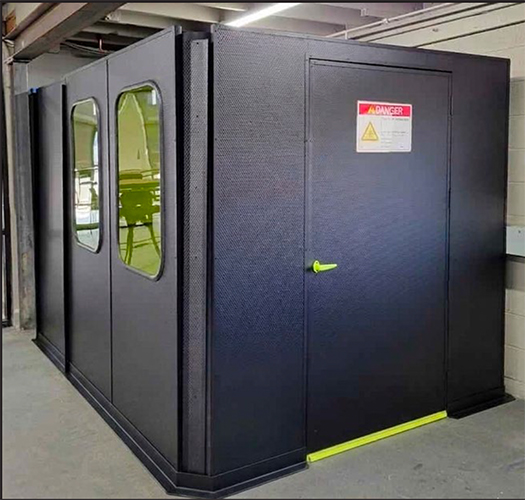
Laser enclosures are the preferred engineering control because they physically contain the beam and eliminate exposure to personnel. Keep in mind these must be designed to withstand the laser’s output without degradation — and material selection should be based on the wavelength and power.
Safety interlocks should also be installed on access panels — opening the enclosure should disable the laser or reduce output to safe levels. Plus, posting warning labels on the enclosure exterior and at every service access point will help reduce recordable incidents.
A word of caution your enclosure integrity must be regularly inspected — damage, gaps, or worn seals can compromise protection.
Acrylic and polycarbonate laser window filters are especially important for enclosed laser work cells, robotic welding systems, laser marking stations, medical device production lines, cleanroom laser environments and custom automation systems. However, not all the laser windows will meet the quality standards necessary to properly protect the operator worker from exposure.
This is why it is important to work with an experienced manufacturer of laser protective windows. Because they will know exactly how to match the laser window with the laser’s wavelength, power level, beam characteristics, and distance. They will also have the skill to make sure these windows are properly seated within safety frames…. as light leakage gaps can create exposure risks and not meet the necessary enclosure certifications. This becomes increasingly important in regulated industries like aerospace, medical device manufacturing, semiconductor production and defense.
Create the boundary between the safe and non-safe zone, referred to as the Nominal Hazard Zone or the Nominal Ocular Hazard Distance with signs. These signs should clearly state the hazards and safety requirements, including laser wavelength and the OD for safety eyewear.
Your LSO should have a documented plan of action in the event a laser accident happens. This ensures people know who and how to report an incident, and that there’s a medical response process to follow and timeline for follow-up investigations. These are all important processes, and like insurance, it’s right to have them in place in the event they’re needed.
The broader industry trend is to put an industrial laser safety program in place that shifts from the mentality of: “protect the worker with PPE” toward: “design the hazard out through engineered containment.” This makes certified eyewear, helmets, laser windows, enclosure materials, and integrated viewing systems far more important than they were a decade ago.
NoIR is gaining attention because they help bridge a major industrial gap by offering practical laser safety solutions for real-world manufacturing environments where standards are still evolving and liability expectations continue to rise.
NoIR Insight has been designing and manufacturing specialty protective eyewear and windows in the United States for more than 50 years, helping customers achieve reliable vision protection through precision-engineered solutions.
Please remember this is only basic overview to help you properly protect you operators from damage from your laser equipment. If you have any questions on laser safety for your team members, please contact:
David W. Bothner
Vice President, Business and Product Development
P+1.248.387.4148
F+1.734.769.1708
Edbothner@noirinsight.com | noirinsight.com | @noirinsight

Forging the Next 250 Years: Powering the Next Era of American Manufacturing
As manufacturers offer more customization than ever before, managing product complexity has become a critical challenge. Tune in with Dan Joe Barry, Vice President of Product Marketing at Configit, who explores how companies are tackling the growing number of product configurations across engineering, sales, manufacturing, and service. He explains how Configuration Lifecycle Management (CLM) helps organizations maintain a single source of truth for configuration data. The result: fewer errors, faster quoting, and the ability to deliver customized products at scale.
Get In Touch
Google news and SEO compliant, Industry Today’s state-of-the-art digital media platform offers bespoke media campaigns that target key decision makers and buyers to achieve your marketing and promotional goals.

Contribute
Showcase your brand and promote your business to our highly targeted audience. We offer detailed Google Analytics with measurable ROI to assure success. Submit your content for review by our Editorial team who will contact you to discuss the project further.
About Us
Reach Your Targeted Audience and Grow Your Business. Learn more About Industry Today.
Contact Us

© 2026 Industry today. All Rights reserved.