Jessica Sanderson of CDA will explain how material and supplier choices shape performance and impact for LCA, ESG, and specifiers.
MCLEAN, VA — The Copper Development Association (CDA) has announced that its Director of Sustainability, Jessica Sanderson, will present at two upcoming conferences:
ENSURE (Environmental Sustainability Through Waste and Recycling), taking place April 13–15, 2026, at the Four Points by Sheraton Wakefield Boston Hotel & Conference Center in Wakefield, Massachusetts; and
EMC (The Environmental Markets Conference), taking place April 27–30, 2026, at the Chattanooga Convention Center in Chattanooga, Tennessee.
In both sessions, Sanderson will introduce CDA’s “Define and Refine” framework, which offers a comprehensive approach to comparing copper’s sustainability with that of other materials.
Emphasizing that aligning recycled content comparisons and scrap carbon accounting is essential for credible sustainability metrics, her presentations will outline how material selection establishes key sustainability attributes, such as durability and recyclability. Sanderson will also show how supplier practices influence environmental impact through consistent reporting and clear boundaries.
“Material choice defines the sustainability performance of the system,” says Sanderson, “while supplier selection refines the impact.”
Her presentations will be grounded in two recent CDA publications: “Recycled Content in Copper: Practical Definitions for Real-World Applications”; and “CDA Scrap Accounting Guidance: Ensuring Consistency in Product Carbon Footprints.” Together, these resources establish a clear semi-fabrication casting boundary for recycled content and recommend a consistent cut-off approach for business-to-business, product carbon disclosures.
In her presentations, Sanderson will share how CDA and its U.S. semi-fabricator members have:
Her presentation will show how inconsistent methods can yield misleading comparisons of recycled content. For instance, classifying internal scrap differently can lead to major discrepancies in reported recycled percentages for similar material flows. Sanderson will share CDA’s tools and templates for consistent, accurate reporting.

“We’ve made real progress standardizing recycled content and scrap reporting across U.S. semi-fabricators,” Sanderson says. “Now, our goal is to help sustainability practitioners and engineers understand what’s behind the data so that copper can be compared fairly with other materials. Getting the methodology right is key to making informed material choices.”
Her remarks will connect these approaches to priority sectors, including data centers, power infrastructure, and the built environment.
“We want the sustainability community that writes the rules, especially the LCA practitioners and standards
bodies, to see the work the copper industry has already accomplished,” Sanderson adds. “Our goal is to ensure copper is evaluated on a level playing field, so designers, specifiers, and procurement teams have environmental data that is truly comparable and useful for making decisions.”
To learn more about how copper powers more sustainable progress across energy, infrastructure, and technology, visit the Copper Development Association’s #ContinuousCopper page.
About CDA
Copper Development Association Inc. (CDA) is a U.S.-based not-for-profit association of the global copper industry, bringing together North American copper and copper alloy semis fabricators and the global copper mining and production industries. CDA is committed to promoting the proper use of copper materials in sustainable, efficient applications for business, industry, and the home.

Forging the Next 250 Years: Powering the Next Era of American Manufacturing
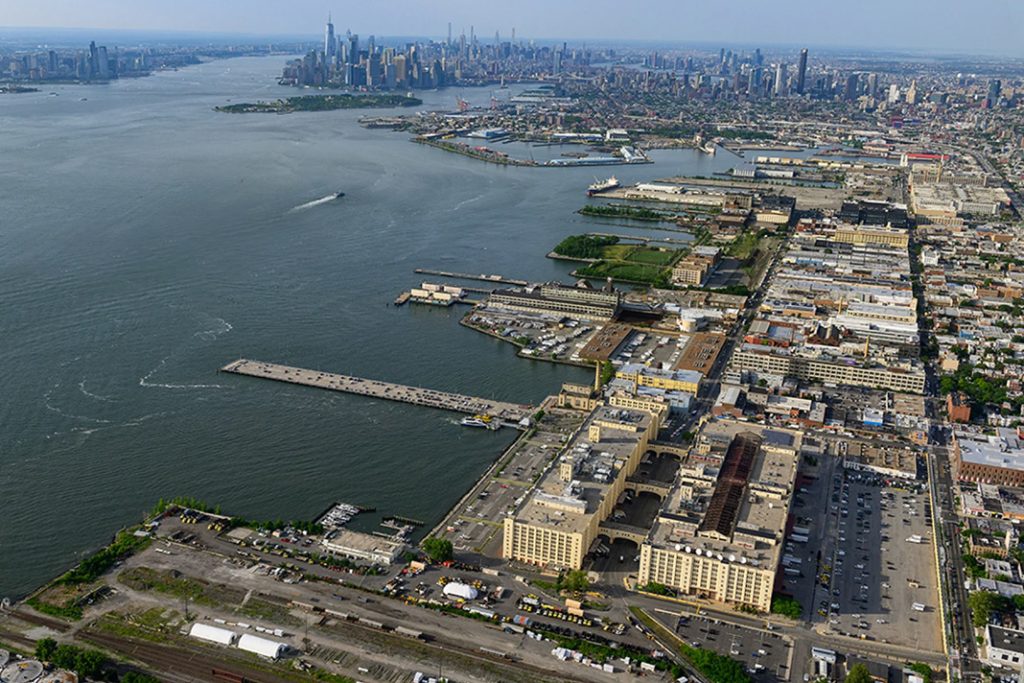
Brooklyn Army Terminal (BAT) began as a World War II-era military supply base. Today it is New York City’s largest publicly owned industrial campus, with 59 waterfront acres, more than 4 million square feet and over 100 businesses. In this episode of Industry Insights, Bridget Chansakul, Vice President of Leasing & Portfolio Management at NYCEDC, explains what space is available and what’s planned for the 250,000+ square feet of new industrial space in Building A. She also covers how the ferry, parking and on-site childcare help tenants hire and keep workers, along with workforce partnerships, City incentives for manufacturers and where BAT is headed next.
Get In Touch
Google news and SEO compliant, Industry Today’s state-of-the-art digital media platform offers bespoke media campaigns that target key decision makers and buyers to achieve your marketing and promotional goals.

Contribute
Showcase your brand and promote your business to our highly targeted audience. We offer detailed Google Analytics with measurable ROI to assure success. Submit your content for review by our Editorial team who will contact you to discuss the project further.
About Us
Reach Your Targeted Audience and Grow Your Business. Learn more About Industry Today.
Contact Us

© 2026 Industry today. All Rights reserved.