A survey of 321 leaders in engineering, supply chain, manufacturing, R&D and digital innovation in Climate Tech, EVs, Robotics or MedTech.
AI adoption has reached near-universal levels. 97% of companies report using AI across core manufacturing and supply chain workflows, with leaders describing it as essential to future success. Adoption is accelerating fastest in supply chain execution, quality management, and production planning—areas where speed and precision directly impact performance.
In response to continued global volatility, companies are prioritizing on-shoring and near-shoring strategies. The U.S. has emerged as the top region for supplier expansion across industries.
Manufacturers are building flexible, multi-regional networks designed to adapt quickly to disruption rather than rely on single-region supply chains.
98% of leaders are actively mitigating tariff impacts, whether by switching suppliers, redesigning parts, or restructuring sourcing strategies. Rather than waiting out volatility, companies are making permanent adjustments to protect margins and continuity.
Engineering bandwidth is under strain. 83% of engineers now spend more than four hours per week on procurement-related tasks, a sharp increase year over year.
As product complexity increases, freeing up engineering time is becoming a competitive necessity.
Belief in the importance of digital manufacturing platforms jumped to 97%, reinforcing a broad shift away from manual, fragmented supplier management.
Companies are moving toward integrated, AI-powered platforms that provide visibility, coordination, and real-time decision-making across the supply chain.
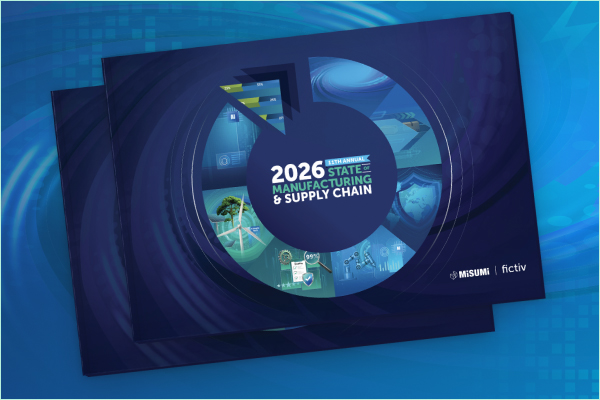
2026 State of Manufacturing & Supply Chain

Forging the Next 250 Years: Powering the Next Era of American Manufacturing
In this episode of Industry Insights, Ricky Watts, General Manager, Industrial and Robotics Division at Intel Corporation, explains why the Industry 4.0 groundwork manufacturers have been laying for years is now the foundation for AI at scale. He describes how IT and OT systems are finally coming together, and how agentic AI can pull data from the plant floor, the supply chain and the C-suite to find out why a production line is underperforming. Watts also covers why chips have become strategic infrastructure, the rise of physical AI and robotics in harsh industrial settings, and the skills tomorrow’s workforce will need. He finishes with a layered approach to cybersecurity in software-defined plants.
Get In Touch
Google news and SEO compliant, Industry Today’s state-of-the-art digital media platform offers bespoke media campaigns that target key decision makers and buyers to achieve your marketing and promotional goals.

Contribute
Showcase your brand and promote your business to our highly targeted audience. We offer detailed Google Analytics with measurable ROI to assure success. Submit your content for review by our Editorial team who will contact you to discuss the project further.
About Us
Reach Your Targeted Audience and Grow Your Business. Learn more About Industry Today.
Contact Us

© 2026 Industry today. All Rights reserved.