In a fast-changing industry, selecting the right MES partner is key to ensuring manufacturers can adapt and maintain long-term performance.
By Jeff Winter, Strategic Advisor at Critical Manufacturing
Manufacturing leaders are operating in a climate of relentless pressure. Product cycles contract almost by the month, supply networks remain volatile, and customer expectations climb ever higher. Speed alone is no longer enough; personalisation and flawless quality are now non-negotiable. The concept of the smart factory offers a credible way forward, promising tightly connected processes, instant visibility, and the agility to adjust in real time.
That vision, however, will not be achieved by technology in isolation. The first, often overlooked, decision sets the tone for everything else: selecting the manufacturing execution system (MES) and the partner who will deliver and evolve it. Far from being a routine procurement exercise, this is a leadership call. The choice will determine whether transformation accelerates or stalls before reaching its potential.
Many organisations still approach MES selection as if they were buying any other software package. A list of requirements is drawn up, potential suppliers are scored, and a contract is signed. On the surface, that seems methodical. Yet it ignores a fundamental truth: MES is the link between strategic intent and what actually happens on the shop floor. With the right platform, the factory gains a nervous system capable of coordinating resources, maintaining standards, and responding instantly to change. A poor fit, by contrast, will leave even the most advanced machinery and analytics underutilised.
What carries equal weight is the partner behind the platform. An MES will remain in place for a decade or more. Over that time, industry regulations will tighten or shift, new customer demands will emerge, and technologies that barely exist today will become essential. Only a partner with a clear vision, adaptability, and a profound grasp of your world can ensure the investment stays relevant.
Rolling out an MES across one site is a significant undertaking. Extending it across multiple facilities, possibly in different regions, multiplies the challenge. A pilot project might take a year to complete; a global rollout could stretch over most of a decade. Often, it is not the software that slows the process, but the human factors, alignment between departments, managing organisational change, and maintaining focus when operational demands compete for attention.
Think back a decade. The industrial internet of things was at the fringes, AI’s role in production was tentative, and digital twins were largely experimental. Now, all three are embedded within advanced MES platforms, driving predictive maintenance, enabling autonomous adjustments, and increasing yield. The next decade will bring its own wave of change, perhaps quantum-enhanced optimisation, fully self-configuring production lines, or net-zero manufacturing standards. A static MES will not survive that journey intact.
This is why partner choice belongs at the leadership level. Selecting an MES provider is closer to choosing a strategic ally than signing a software license. The right partner will not simply follow instructions; they will anticipate needs, shape solutions, and help sustain momentum when other priorities compete for attention.
Strong partners also help compress timelines. They bring proven deployment methods, sector-specific templates, and networks of skilled integrators who understand both the technology and the realities of your production environment. That combination can turn a drawn-out implementation into a coordinated transformation.
Industry 4.0 rests on three primary pillars: execution, connectivity, and analysis. MES is the execution pillar, the point where strategy becomes action. It coordinates people, machines, and materials, ensuring work is completed in the correct sequence, to the right quality, at the right time.
Without that central execution layer, even sophisticated analytics and high-end automation will fail to deliver their full value. MES ties the other two pillars together. Connectivity feeds it with data from machines and systems. Analysis generates insights that can be actioned through MES controls. Together, they enable the factory to respond with agility rather than reacting in hindsight.
Modern MES platforms have evolved far beyond basic tracking and scheduling. They absorb IoT data for condition monitoring, trigger predictive maintenance, and offer modular architectures that adapt as the business grows. This is what allows a factory to shift production for a new customer or adjust to a regulatory change without losing efficiency or control.
Remove MES from the equation, and you are left with islands of capability, each operating well in isolation but failing to work as a coherent whole. That disconnection erodes the return on every other technology investment.
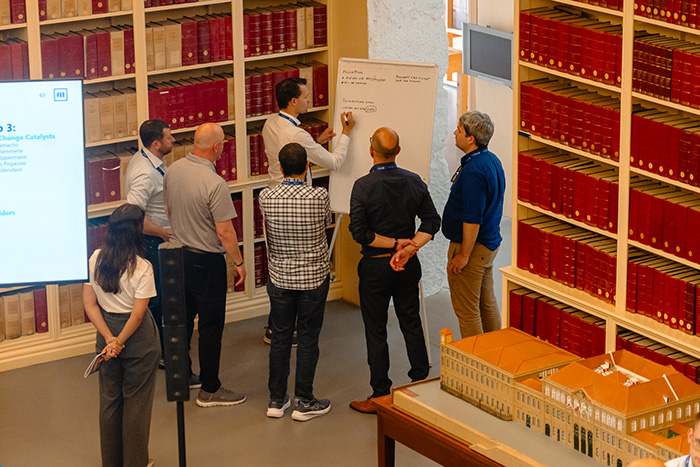
Software development skills are vital, but MES leadership requires more. It calls for an understanding of the industries where the system will operate. In sectors such as semiconductors, wafer yield is paramount and integration with complex equipment is essential. Medical device manufacturing demands embedded compliance and traceability in every process. Electronics assembly needs rapid reconfiguration and strict quality at high volume.
This depth of understanding is reinforced by involvement in standard-setting bodies and professional networks. Alignment with frameworks such as ISA-95 provides more than technical compatibility; it gives everyone on the project a shared vocabulary and set of reference points. That shortens the learning curve, avoids misinterpretation, and reduces risk during multi-site deployment.
Sector-specific insight changes the way MES is designed. In regulated industries, quality gates and validation checks are hard-coded. In fast-moving markets, scheduling flexibility and change-management tools are built in. In capital-intensive projects, the focus is on integrating planning, resource allocation, and quality control into a single, accessible environment.
A partner with this breadth of knowledge can help you avoid false starts, align technology with operational goals, and ensure the platform supports both today’s needs and tomorrow’s ambitions.
Once MES is in place, it becomes part of the operational backbone. Updates will come regularly, but the real test is whether the provider can evolve the platform to meet changes over the long haul.
A strong track record is the best indicator. Look for consistent, substantive updates rather than cosmetic upgrades. Watch for evidence that the provider has integrated emerging technologies at the right moment, not before they are proven, and not years after competitors.
Ecosystem strength matters too. Global rollouts depend on a network of integrators capable of delivering consistent quality in different markets. Certified, well-supported partners ensure that each implementation meets the same standard, wherever it takes place, while also bringing local knowledge to the table.
Transformation will rarely proceed in a straight line. Markets change abruptly, regulations tighten, and new technologies disrupt established processes. The MES partner should be able to adjust with you, ideally getting ahead of such shifts and advising on how to respond before they arrive.
Long-term success also depends on building your own in-house capability. A committed partner will ensure your people can manage, adapt, and extend the MES without relying heavily on external teams. Training, shared problem-solving, and collaborative innovation embed transformation into the fabric of daily operations.
The MES you install is more than software; it is a decision about who you trust to help steer your manufacturing future. Partners with vision, adaptability, and industry knowledge can keep you competitive through the next decade’s uncertainties. Those without these qualities risk leaving you with technology that no longer fits your needs.
Factories that succeed in Industry 4.0 will have treated MES selection as a strategic alliance. They will have chosen partners able to navigate uncertainty, adopt new technologies at the right time, and remain focused on outcomes that matter to the business.
This is a long game. The choice you make now will shape not just your digital capabilities but your operational reality for years to come. Select a partner who can grow with you, challenge your thinking, and ensure that your smart factory vision becomes a sustainable, competitive advantage.

About the Author:
With almost 20 years of experience working for different industrial automation product and solution providers, Jeff Winter has a unique ability to simplify and communicate complex concepts to a wide range of audiences, educating and inspiring people from the shop floor up to the executive board room. Jeff is also highly active in the Industry 4.0 community. He serves on the Executive Board for the International Society of Automation (ISA), the International Board of Directors for Manufacturing Enterprise Solutions Association (MESA), is a U.S. registered expert for the International Electrotechnical Commission (IEC) as a member of TC 65, and as a Smart Manufacturing Advisor to CESMII. www.criticalmanufacturing.com
The Rise of American Manufacturing: A New Industrial Era
As manufacturers offer more customization than ever before, managing product complexity has become a critical challenge. Tune in with Dan Joe Barry, Vice President of Product Marketing at Configit, who explores how companies are tackling the growing number of product configurations across engineering, sales, manufacturing, and service. He explains how Configuration Lifecycle Management (CLM) helps organizations maintain a single source of truth for configuration data. The result: fewer errors, faster quoting, and the ability to deliver customized products at scale.
Get In Touch
Google news and SEO compliant, Industry Today’s state-of-the-art digital media platform offers bespoke media campaigns that target key decision makers and buyers to achieve your marketing and promotional goals.

Contribute
Showcase your brand and promote your business to our highly targeted audience. We offer detailed Google Analytics with measurable ROI to assure success. Submit your content for review by our Editorial team who will contact you to discuss the project further.
About Us
Reach Your Targeted Audience and Grow Your Business. Learn more About Industry Today.
Contact Us

© 2026 Industry today. All Rights reserved.