Direct gating, supported by regrind and material loops, reduces resin waste and cost while supporting circular manufacturing strategies.
By Christopher Preger, Director Molding Core Process Technology, TE Connectivity
Global plastic waste has exceeded 350–360 million tons annually, with only about 9% being recycled. As a result, manufacturers are increasingly required to rethink their material strategies.
One of the most effective levers for rapid improvement lies inside the injection molding process itself. Traditionally, melt is conveyed through cold runners or hot runner systems with manifolds, generating sprue that must be reprocessed or scrapped. In contrast, fully hot runner direct gating introduces melt directly into the part cavity and eliminates sprue at its source.
At TE Connectivity (TE), direct gating is combined with regrind strategies and controlled material loops. This approach has already helped TE avoid more than 5,000 tons of plastic waste since FY21 to today, demonstrating that productivity and sustainability can reinforce each other.
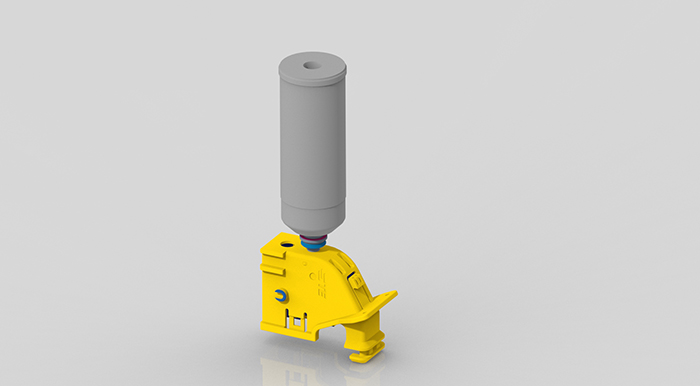
Eliminating sprue removes a non-value-adding step from the process, reduces energy consumption for reprocessing, and lowers maintenance requirements.
Despite this, many manufacturers hesitate to adopt direct gating due to the initial investment in tooling and hot runner systems. However, when applied to suitable parts and production volumes, returns can be quickly achieved. TE’s conversion projects have demonstrated payback within 12 to 24 months in applicable use cases, while high-volume applications often recover costs in less than one year through reduced resin consumption, shorter cycle times, and simplified handling.
Stable processing is critical for successful implementation. Direct gating requires precise hot runner temperature control, robust mold design standards, and preventive maintenance to avoid degradation or blockage.
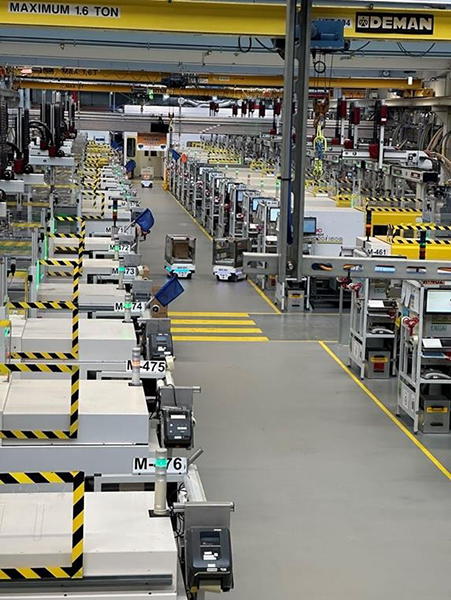
To ensure consistent, repeatable results, one should focus on a structured deployment approach that includes early feasibility checks, unified technical guidelines, and close collaboration across teams. Using this approach, a majority of initial candidate products were successfully converted to direct gating.
Circularity is most effective when material loops stay close to production. Internal regrind provides the most efficient resource pathway as it is fully traceable and more consistent than external material streams. When internal reuse is not feasible, qualified partners can recombine materials to industrial-grade specifications that meet defined testing and approval requirements.
At the same time, eliminating sprue avoids additional grinding, drying, and handling steps, reducing energy consumption and process risk. Direct gating is a melt delivery method designed to eliminate sprue generation, which makes it a foundational tool for supporting any zero-waste molding strategy.
Today, the availability of technical thermoplastics such as PA66, specialty PBT variants, and high temperature polymers is increasingly constrained. Global supply limitations, combined with improved molding efficiency that reduces available external regrind, reinforce the strategic importance of broader circular manufacturing practices that focus on resource efficiency and long‑term material reuse.
These specialized materials depend on controlled additives, stable reinforcement levels and certifications. Even small changes can require full requalification. As such, designing parts and molds for direct gating in mind from the beginning can support the reduction of virgin resin use while maintaining specification compliance.
Achieving zero-waste molding is supported by informed design, stable processes, and structured material loops. By eliminating sprue at the source, direct gating directly addresses waste generation. At the same time, optimized regrind strategies extend material life within controlled systems. When combined with data‑driven process stability, these approaches ensure that efficiency gains can be sustained as production scales.
However, increased efficiency introduces a new consideration. As resin waste reduction methods keep developing, the traditional internal source of regrind decreases. Looking ahead, manufacturers must consider alternative sources of regrind and rethink material flows early in the design phase.
Reducing waste at one stage of the process reshapes how circularity is achieved across the entire value chain.

About the Author:
Christopher Preger is Director of Molding Core Process Technology within the Integrated Operations Network at TE Connectivity. He leads global initiatives in precision molding, process innovation and sustainable manufacturing.

Forging the Next 250 Years: Powering the Next Era of American Manufacturing
As manufacturers offer more customization than ever before, managing product complexity has become a critical challenge. Tune in with Dan Joe Barry, Vice President of Product Marketing at Configit, who explores how companies are tackling the growing number of product configurations across engineering, sales, manufacturing, and service. He explains how Configuration Lifecycle Management (CLM) helps organizations maintain a single source of truth for configuration data. The result: fewer errors, faster quoting, and the ability to deliver customized products at scale.
Get In Touch
Google news and SEO compliant, Industry Today’s state-of-the-art digital media platform offers bespoke media campaigns that target key decision makers and buyers to achieve your marketing and promotional goals.

Contribute
Showcase your brand and promote your business to our highly targeted audience. We offer detailed Google Analytics with measurable ROI to assure success. Submit your content for review by our Editorial team who will contact you to discuss the project further.
About Us
Reach Your Targeted Audience and Grow Your Business. Learn more About Industry Today.
Contact Us

© 2026 Industry today. All Rights reserved.