Manufacturing teams can prevent injuries by addressing mental health as part of safety. This article explains risks and offers practical, easy‑to‑use tips.
By Adele Spallone
Safety is at the core of every manufacturing shift. Today, it goes beyond just protective gear. It includes mental wellness. Factors, like stress, tiredness, and personal challenges, can lower focus and raise accident risks. Nearly half of manufacturing employees say their mental health has affected their productivity, according to The Hartford’s 2025 national survey of U.S. workers.
Yet manufacturing employees often don’t announce when they’re having a hard time. Approximately 41% of workers in manufacturing cite stigma as the major reason for not reaching out. Consider these factors:
Manufacturing work relies on strong crews, steady hands, and clear minds. So, The Hartford and the National Alliance on Mental Illness (NAMI), the nation’s largest grassroots mental health nonprofit, created practical mental health guides for busy production teams so every crew can look out for one another and go home safe – every day, every shift.
“For manufacturing teams, mental health is not separate from safety but part of how injuries are prevented,” said NAMI Director of Workplace Mental Health Meg Delp. “When leaders normalize conversations about stress and emotional strain, they create safer, more resilient crews.”
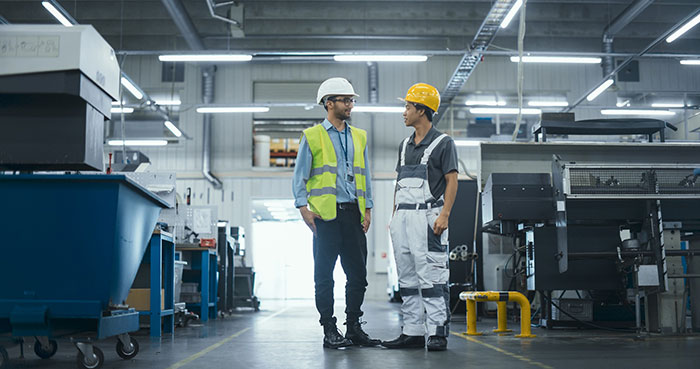
Just as organizations encourage workers to speak up about physical hazards, they can encourage conversations about emotional strain, fatigue, and burnout.
Leaders — supervisors, leads, and long‑tenured teammates — set the tone for what’s OK to talk about. When you acknowledge stress openly and talk about mental health the same way you talk about physical safety, you normalize it for your team and hopefully they will take care of their own well‑being, too.
Short, straightforward talk helps reinforce that mental health matters as much as physical safety. You can say something like: “We talk safety every day. Mental health is part of that. Keeping our minds healthy so we don’t get hurt or hurt someone else.”
Supervisors can speak openly about mental wellness in routine meetings. Sharing that a deadline stressed you out or that you didn’t sleep well, signals that everyone struggles sometimes.
Many companies offer benefits and resources to boost employees’ mental health and create a culture of safety. Taking time to review what is offered at work can prepare you to step up if an issue comes up during your shift.
NAMI and other community organizations offer information and educational programs to increase mental health awareness for supervisors and workers.
Through its StigmaFree Workplace Coalition, NAMI partners with employers, like The Hartford, to make mental health part of everyday workplace culture. This initiative provides practical tools that help leaders across industries reduce mental health stigma, strengthen psychological safety, and help leaders create cultures of trust and shared responsibility.
Anyone can call the NAMI HelpLine at 1-800-950-6264 to learn more about availability of their resources in various locations.
Mental health can show up in small changes: mistakes or irritability. If you notice a shift in someone’s behavior — making unusual errors, showing up late, or seeming anxious — it may be a sign they need someone to check in. A simple question can prevent accidents and help someone who might be carrying more than they show.
No one is expecting you to be a therapist. You just need to notice, listen, and suggest ways they can get professional support.
You can also think about simple adjustments to offer help over time, such as a quiet place for a break for an employee who experiences anxiety. Flexible schedules, such as a compressed work week, help combat burnout and support work-life balance.
Most importantly, treat behavior changes as signals to check in, not punish. People may be juggling kids, aging parents or financial pressures. Respect that. Consistency builds trust — noticing and checking in when something seems off.
Sometimes a situation goes beyond a tough day. A mental health crisis is when a person is at immediate risk of harming themselves or others or if they are experiencing extreme emotional distress. It can look like intense panic or anger, talking about giving up, self-harm, or hearing or seeing things that aren’t real.
If this happens, your job is to keep everyone safe and get help fast. Stay calm and speak slowly to the person in crisis. Move the person to a safer area if possible — away from tools or machinery. If someone says they feel unsafe, take it seriously.
If you believe someone may be considering self-harm call 988, the national suicide and crisis lifeline. It provides free and confidential emotional support to people in suicidal crisis or emotional distress 24 hours a day, 7 days a week in the United States.
Call 911 if there is immediate danger or a weapon.
Working together, we can create a workplace where everyone feels safe — physically and mentally — and where every teammate knows someone is looking out for them.

About the Author:
Adele Spallone is the head of The Hartford’s clinical operations for Workers’ Compensation and Employee Benefits. More resources can be found at The Hartford.
About The Hartford
The Hartford is a leader in property and casualty insurance, employee benefits and mutual funds. With more than 200 years of expertise, The Hartford is widely recognized for its service excellence, sustainability practices, trust and integrity.
More information on the company and its financial performance is available at www.TheHartford.com.
The Hartford Insurance Group, Inc., (NYSE: HIG) operates through its subsidiaries, under the brand name, The Hartford®, and is headquartered in Hartford, Connecticut. For additional details, please read The Hartford’s legal notice.

The Rise of American Manufacturing: A New Industrial Era
As manufacturers offer more customization than ever before, managing product complexity has become a critical challenge. Tune in with Dan Joe Barry, Vice President of Product Marketing at Configit, who explores how companies are tackling the growing number of product configurations across engineering, sales, manufacturing, and service. He explains how Configuration Lifecycle Management (CLM) helps organizations maintain a single source of truth for configuration data. The result: fewer errors, faster quoting, and the ability to deliver customized products at scale.
Get In Touch
Google news and SEO compliant, Industry Today’s state-of-the-art digital media platform offers bespoke media campaigns that target key decision makers and buyers to achieve your marketing and promotional goals.

Contribute
Showcase your brand and promote your business to our highly targeted audience. We offer detailed Google Analytics with measurable ROI to assure success. Submit your content for review by our Editorial team who will contact you to discuss the project further.
About Us
Reach Your Targeted Audience and Grow Your Business. Learn more About Industry Today.
Contact Us

© 2026 Industry today. All Rights reserved.