Manufacturers may need to rethink “Made in USA” claims after a new National Advertising Division ruling signaled tougher scrutiny.
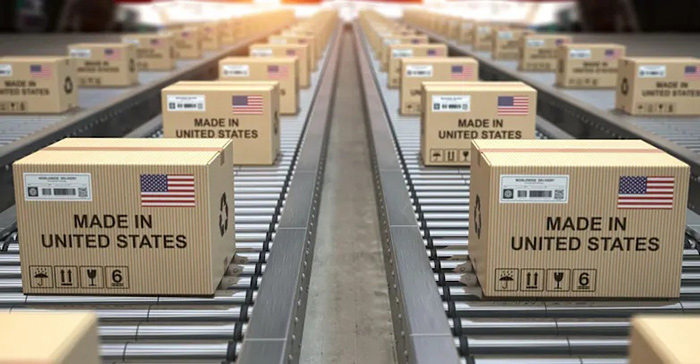
A recent decision by the National Advertising Division of BBB National Programs (NAD) may mean it’s time for manufacturers to revisit how they’re thinking about “Made in USA” (MUSA) claims for products that contain de minimis imported content.
Under federal law enforced by the Federal Trade Commission (FTC), it has long been the case that, provided the claim does not mislead reasonable consumers, a marketer can claim a product is MUSA even if it contains a de minimis amount imported content. The FTC has carefully avoided specifying a particular percentage of content that count as de minimis. However, many manufacturers assume up to 5% foreign costs is an acceptable threshold, given the California law permitting MUSA claims for products with foreign content accounting for up to 5% of wholesale value.
With its recent decision finding Bashlin Industries, Inc. (Bashlin) could not substantiate and should discontinue MUSA claims for a “climber” product for which over 95% of manufacturing costs were incurred in the USA, the NAD turned that assumption on its head. Here’s what happened and what it might mean.
The NAD an independent self-regulatory forum for the U.S. advertising industry. It reviews competitor challenges and determines whether advertising claims are true and substantiated according to established advertising law principles.
Participation in the NAD process is voluntary, and the NAD’s decisions are nonbinding. However, advertisers (and their lawyers) watch the forum carefully for several reasons. First, because NAD attorneys are expert on analyzing advertising laws and evaluating claim substantiation, their decisions can provide helpful guardrails on how the law applies in situations regulators have not specifically addressed. Second, failure to participate in the NAD process or remediate claims to the NAD’s satisfaction can result in advertising being publicly referred to the FTC or other regulators. And last, but certainly not least, NAD decisions can provide new theories or roadmaps for class action plaintiffs. So, seemingly small decisions like Bashlin’s can have significant implications for marketers.
When it comes to substantiating MUSA claims, the NAD relies on the FTC’s guidance, which has remained largely unchanged since the 1940s. To advertise a product as MUSA, marketers should be prepared to demonstrate that it is “all or virtually all” (AOVA) MUSA, all the way back to raw materials. That is, the advertised product should have no more than a de minimis amount of imported content.
The FTC considers flexible factors to determine whether this standard is met, including the percentage of costs attributable to imported materials, how far back in the manufacturing chain the imported content is, and the importance of the imported content to the form or function of the product. In situations where U.S. manufacturing costs are high, that last factor becomes important, because if the imported content confers the product’s essential design or function, it may mislead consumers not to disclose its presence.
Bashlin told the NAD that over 95% of its costs to manufacture climbers were incurred in the USA. The other 5% was apparently attributable to parts of unknown origin, including a one-inch buckle and some screws. Acknowledging most of the costs to manufacture were incurred in the U.S., the NAD looked to the FTC’s final factor: the role the imported content played. And it found the imported buckle in “serv[ed] an essential function for comfort and proper fit,” while the screws helped hold the product together. Together, the NAD concluded, these parts were significant enough to render an unqualified claim unsubstantiated.
On one hand, the FTC’s MUSA compliance guidance contemplates this result when there is something particularly material about the presence of imported content in a product mostly produced in the United States. Even when imported content is de minimis by cost, it can be very consequential to consumers. In those cases, unqualified claims may be misleading. However, importance of the imported content is only one of several factors – not necessarily the dominant factor – the FTC considers as part of its deception analysis.
Bashlin’s is a close call; it’s hard to know whether an unqualified claim would deceive consumers under the circumstances. Although comfort and fit are important, based on the description in the decision, it seems unlikely that this content of unknown origin – in a product 95% MUSA – is the type of “essential element” the FTC’s test is intended to cover. Instead, this seems more like threads and screws that, although important to holding a product together (after all, most products don’t contain extraneous content), are de minimis enough to avoid triggering the need for a qualification.
This case marked a complete, across-the-board loss for Bashlin on its MUSA marketing. Not only did the NAD find the claim for the climbers unsubstantiated, it also rejected MUSA imagery in Bashlin logos, claims for third-party products, and claims on products featured in safety videos.
However, the decision on the climbers is particularly consequential because it suggests that making an unqualified claim for a product that incorporates any foreign content at all could place a marketer at high risk of a self-regulatory challenge. And, on the margins, this newly elevated risk may make investment in re-shoring manufacturing less attractive for some companies.
The Bashlin case shows the NAD means business when it comes to MUSA claims, and we may see more competitors trying to leverage the forum. If you make MUSA claims for your products consider these takeaways.

About the Author:
Julia Solomon Ensor is counsel in the Advertising & Media Industry Group at Reed Smith in its Washington D.C. office, helping clients navigate complex advertising and consumer protection challenges. With 15 years of hands-on experience at the Federal Trade Commission where she served as the “Made in USA” program manager, Julia brings a deep understanding of regulatory expectations and enforcement priorities that enables her to anticipate potential risks and develop practical, business-focused solutions that keep clients ahead of the curve

Industry in Transition: The Forces Reshaping Manufacturing
As manufacturers offer more customization than ever before, managing product complexity has become a critical challenge. Tune in with Dan Joe Barry, Vice President of Product Marketing at Configit, who explores how companies are tackling the growing number of product configurations across engineering, sales, manufacturing, and service. He explains how Configuration Lifecycle Management (CLM) helps organizations maintain a single source of truth for configuration data. The result: fewer errors, faster quoting, and the ability to deliver customized products at scale.
Get In Touch
Google news and SEO compliant, Industry Today’s state-of-the-art digital media platform offers bespoke media campaigns that target key decision makers and buyers to achieve your marketing and promotional goals.

Contribute
Showcase your brand and promote your business to our highly targeted audience. We offer detailed Google Analytics with measurable ROI to assure success. Submit your content for review by our Editorial team who will contact you to discuss the project further.
About Us
Reach Your Targeted Audience and Grow Your Business. Learn more About Industry Today.
Contact Us

© 2026 Industry today. All Rights reserved.