TSMC imported half its workforce from Taiwan and still couldn’t replicate shop floor discipline. The gap isn’t skills—it’s behavior.
By James Glover
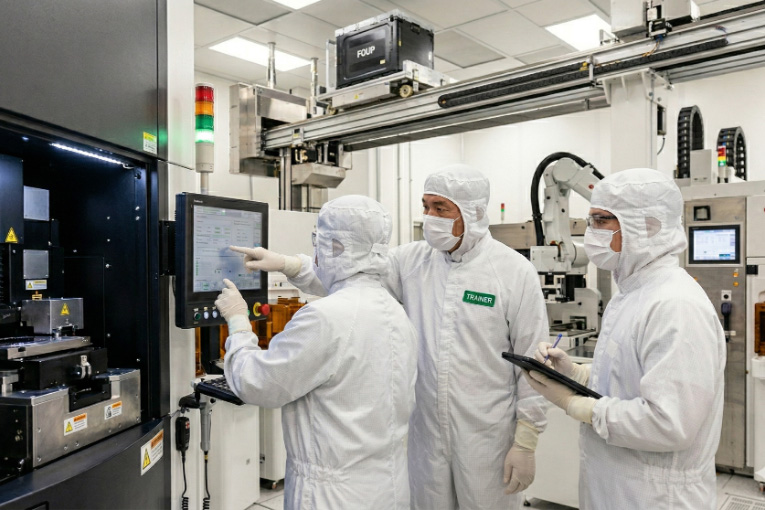
When TSMC committed $165 billion to Arizona semiconductor fabs, industry observers focused on the technical challenge of replicating 3-nanometer chip production. But the real struggle emerged elsewhere. The company imported 50% of its workforce from Taiwan and still couldn’t replicate the shop floor culture that made it the world’s most advanced chipmaker. The delays, the 27% Glassdoor approval rating from American employees, the cultural friction—all point to something deeper than a skills gap.
TSMC founder Morris Chang predicted this. Speaking at the Brookings Institution, he declared U.S. manufacturing efforts “a very expensive exercise in futility,” noting that when a machine breaks at 1 a.m. in the U.S., it gets fixed the next morning—in Taiwan, it gets fixed at 2 a.m.
The difference isn’t technical knowledge. It’s workplace behavior.
The standard industry narrative—nearly 2 million manufacturing jobs unfilled by 2033, the semiconductor industry 67,000 skilled workers short—centers on skills gaps. Those challenges are real. But TSMC’s Arizona experience exposed something the skills-gap framing misses entirely.
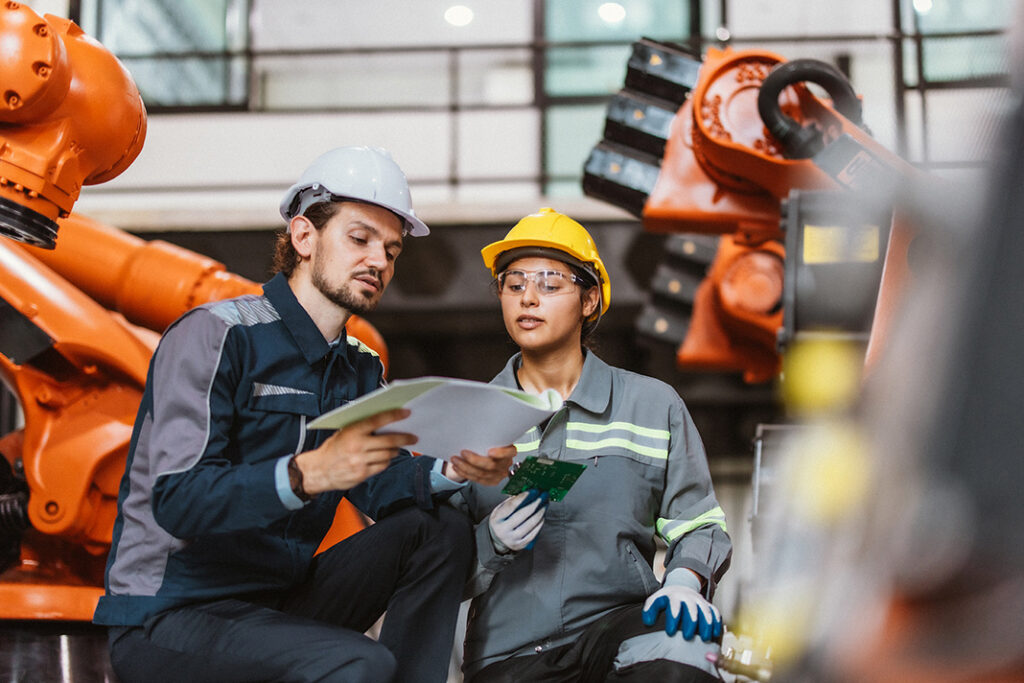
The company brought workers who already possessed technical skills—engineers trained in semiconductor manufacturing, technicians who understood the equipment, managers who knew TSMC’s processes. Yet they couldn’t achieve the operational discipline that defines TSMC’s Taiwanese facilities. Procedures got skipped under production pressure. Equipment issues didn’t get addressed with the same urgency. Quality standards fluctuated in ways unacceptable at headquarters.
This wasn’t ignorance. It was behavioral patterns that didn’t align with manufacturing’s requirements for procedural consistency.
Notably, TSMC’s Arizona fabs eventually achieved yields exceeding Taiwan’s—proof that American workers can match and even surpass technical performance. But the path there involved massive cost overruns, workforce turnover, and cultural friction that a more systematic approach to behavioral development could have reduced. The question was never whether American workers could do the work. It was how much disruption organizations would absorb getting there.
American manufacturing’s challenge isn’t finding workers who know what to do—it’s developing workers who consistently do what they know.
That distinction matters because it points to fundamentally different solutions. Skills training addresses knowledge gaps. But operational excellence requires behavior patterns that persist when supervisors aren’t watching, when production targets loom, when easier alternatives present themselves.
The broader context makes this urgent. American culture genuinely excels at innovation—manufacturing accounts for 55% of all U.S. patents, and American firms lead in management quality. Tesla and SpaceX demonstrate what American innovation culture produces: breakthrough technologies developed through rapid iteration and first-principles thinking.
But innovation behaviors don’t automatically transfer to operational consistency. The same cultural traits that drive creative problem-solving—questioning authority, prioritizing individual judgment, resisting rigid procedures—can undermine the systematic discipline that manufacturing operations require. Reskilling strategies that focus solely on technical capabilities need to add the behavioral dimension as well.
Beyond technical training, facilities need infrastructure that develops workplace behaviors and habits. Not abstract values or cultural messaging, but systematic practice of specific behaviors in actual work contexts.
The time dimension matters more than most workforce strategies acknowledge. Research on habit formation shows that building automatic behaviors requires approximately 10 weeks of consistent practice—not 10 weeks of instruction, but 10 weeks of actual behavioral repetition in context. Most manufacturing training programs compress everything into days, nowhere near the timeline needed for lasting behavior change.
This explains why traditional approaches fail. Classroom training creates understanding. Workers genuinely learn procedures, safety protocols, quality standards. But understanding doesn’t automatically produce consistent execution under real-world pressure. The forgetting curve compounds the problem: without reinforcement, the majority of training content vanishes within a month.
What works requires different infrastructure. One Japanese manufacturer with American operations discovered that improving procedural adherence demanded practice activities at multiple organizational levels simultaneously. Operators needed practice conducting quality checks during actual production—not in training environments but with real equipment under genuine time pressure. Team leads needed systematic ways to document barriers that prevented operators from following procedures. Supervisors needed practice coaching based on actual observed patterns rather than delivering general reminders. Managers needed visibility into root causes so they could address actual barriers rather than defaulting to “more training.”
This approach produced measurable changes: reduced waste rates, improved quality metrics, fewer safety incidents. But more fundamentally, it created behavioral patterns that persisted—the kind of operational discipline TSMC expected but couldn’t replicate in Arizona through technical training alone.
Technology shifts have made behavior-focused development newly possible at scale. What wasn’t feasible a decade ago—delivering systematic practice activities during workflow, personalizing those activities to specific roles and skill levels, measuring behavior changes rather than just completion—has become operational reality. The workforce challenges facing manufacturing and maintenance leaders demand solutions that go beyond recruitment and compensation strategies.
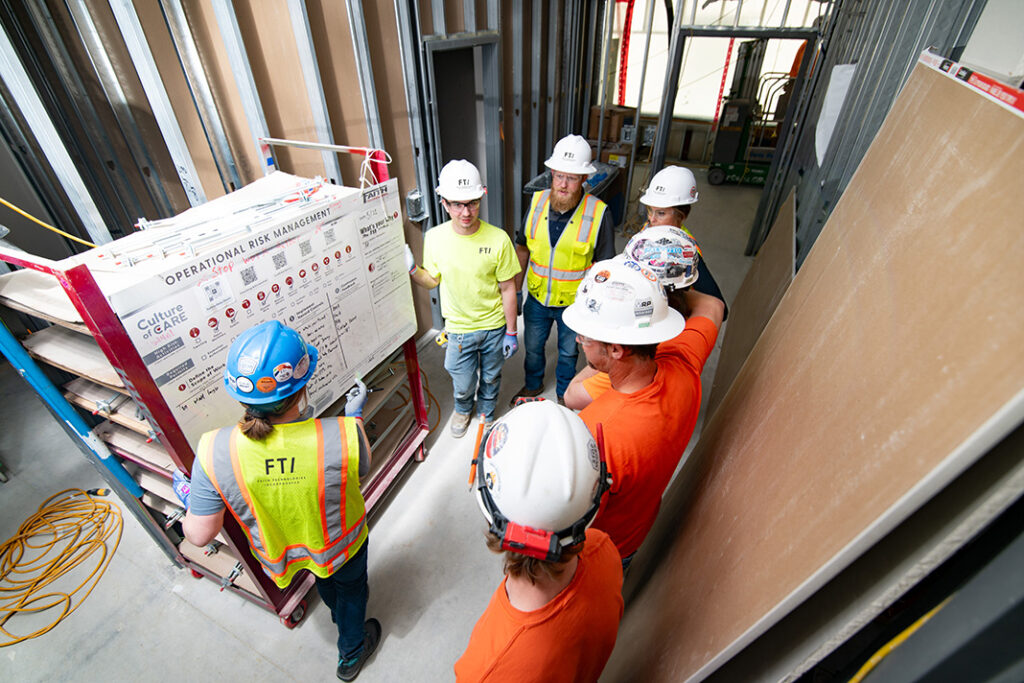
This looks different from traditional training. Instead of pulling workers off production for classroom sessions, facilities deliver bite-sized activities that workers complete during their regular responsibilities. A routine quality check becomes a practice opportunity. Equipment maintenance becomes skill reinforcement. Documentation becomes habit formation.
The workflow integration solves multiple problems simultaneously. Workers practice behaviors in the exact context where those behaviors need to occur—under real time pressure, with actual equipment, facing genuine challenges. The practice doesn’t disrupt operations; it enhances them. And systematic delivery over extended periods provides the repetition timeline that behavior change requires.
The measurement transformation matters equally. Rather than tracking training completion, effective workforce development tracks behavior changes. Are operators conducting more thorough equipment checks? Are team leads systematically escalating issues? Are supervisors coaching based on documented patterns? These behaviors connect directly to operational outcomes in ways that knowledge assessments never do.
Manufacturers can’t wait for education solutions to expand and mature, like Toyota’s AMT program or BMW Scholars. They need to develop the behavioral consistency of the workers they already have on the shop floor, during actual production. Starting now. That means building practice into daily workflow, using structured activities that reinforce the right behaviors in the right context, delivered consistently until habits form.
Challenges like TSMC Arizona’s won’t be solved by bringing in more foreign managers or conducting additional orientation sessions. The solution requires building the shop floor behaviors that support operational excellence—systematically, over time, during actual work.
The workforce gap isn’t primarily about what American manufacturing workers know. It’s about what they consistently do. And behavior change happens through practice, not instruction. The manufacturers who understand this distinction will solve the workforce challenge their competitors can’t. It’s not about finding different workers, but developing workers differently.

About the Author
James Glover is CEO of Flint Learning Solutions and has 25+ years of experience in SaaS and AI-driven behavior change. He specializes in helping organizations transform workplace behaviors through activity-based training integrated into daily work. www.flintls.com
Read more from the author:
Stop Bleeding $260,000 Per Hour: Make Manufacturing SOPs into Habits | Quality Digest, November 2025
Leverage the Science of Behavior to Improve Leadership Development | Forbes, July 2025

The Rise of American Manufacturing: A New Industrial Era
As manufacturers offer more customization than ever before, managing product complexity has become a critical challenge. Tune in with Dan Joe Barry, Vice President of Product Marketing at Configit, who explores how companies are tackling the growing number of product configurations across engineering, sales, manufacturing, and service. He explains how Configuration Lifecycle Management (CLM) helps organizations maintain a single source of truth for configuration data. The result: fewer errors, faster quoting, and the ability to deliver customized products at scale.
Get In Touch
Google news and SEO compliant, Industry Today’s state-of-the-art digital media platform offers bespoke media campaigns that target key decision makers and buyers to achieve your marketing and promotional goals.

Contribute
Showcase your brand and promote your business to our highly targeted audience. We offer detailed Google Analytics with measurable ROI to assure success. Submit your content for review by our Editorial team who will contact you to discuss the project further.
About Us
Reach Your Targeted Audience and Grow Your Business. Learn more About Industry Today.
Contact Us

© 2026 Industry today. All Rights reserved.