Leveraging 3D printing to build a decentralized network of small factories near customers yields shorter lead times and production at scale.
By Calla Scotch
The electronics manufacturing industry has been stagnant for decades, and U.S.-based companies have traditionally relied on huge overseas factories to handle most circuit board manufacturing.
However, by leveraging cutting-edge 3D printing technologies to build a decentralized network of smaller factories closer to their customers, businesses can see shorter lead times – from weeks to days for mid-volume manufacturing; and from days to hours for low-volume manufacturing – and production at scale.
Today, 89% of electronics manufacturing is done overseas; labor costs are lower, manufacturing ecosystems are established and the infrastructure is well-optimized. But recent years have taught us that manufacturing overseas also comes with challenges: long lead times, limited proximity to factories and a vulnerable supply chain.
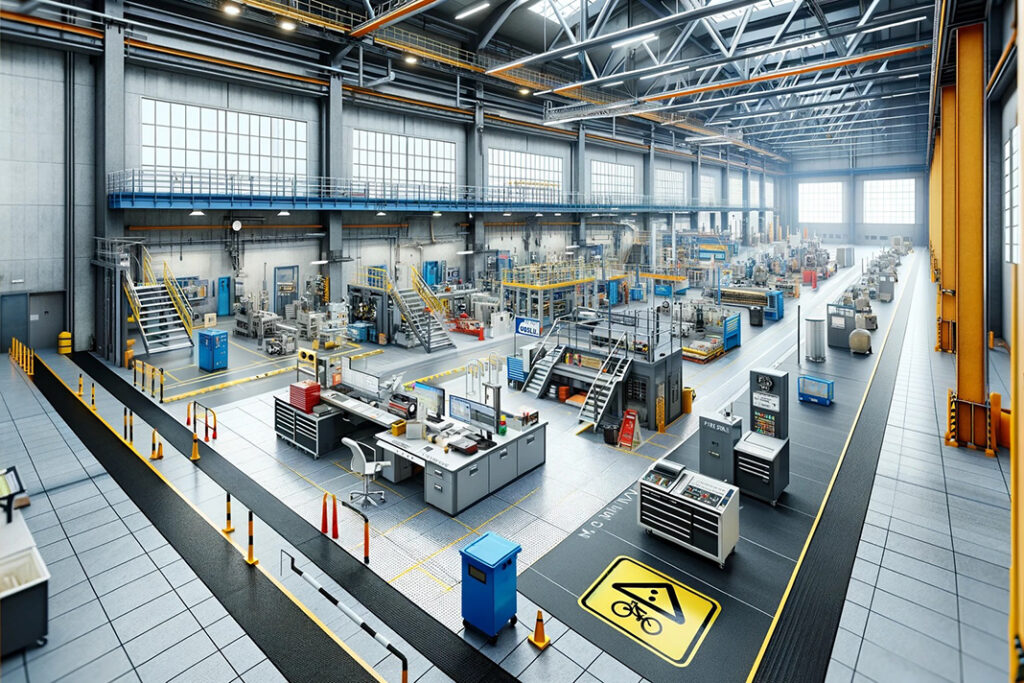
Proximity of the factory to its customers can help to alleviate these pain points. Smaller factories that decentralize manufacturing from single mega-plants means that manufacturing facilities can be “everywhere,” eliminating shipping delays entirely and saving significant resources.
Proximity alone, however, doesn’t solve the challenge in its entirety. To be viable, smaller facilities need reliable, cost-competitive production methods capable of meeting throughput expectations of modern electronics manufacturing.
Although 3D printing is often seen as slower than traditional fabrication processes, this comparison rarely considers the production economics of traditional PCB fabrication. For small-to-medium batch electronics, the coordinated output of hundreds of parallel additive fabrication units can approach the throughput of a conventional PCB line while requiring far less up-front capital. Since each unit functions independently, output scales directly with local market demand, and maintenance on a single printer doesn’t halt the entire operation.
This combination of proximity and versatility can cut lead times and costs and removes the need for excessive parts or information transport. This improves communication between customer and manufacturer and provides all the benefits of in-house manufacturing with few of the downsides.
Historically, circuit boards have been made subtractively. However, printing circuit boards with additive technology is more sustainable, more versatile and enables the development of flexible circuits and unique geometries. Process design constraints prohibit traditional manufacturers from utilizing this method.
Sustainability
Conventional subtractive manufacturing removes material from a bulk starting stock, inherently generating waste. Additive manufacturing reverses that equation; it builds each part from the ground up using only the feedstock required to form the part and dramatically increasing material utilization. This means less waste, simpler handling of unused material and a smaller environmental footprint across the entire production line.
Versatility
Traditional serial manufacturing lines are optimized for scale, not flexibility. They occupy large footprints and are difficult to reconfigure. When one station fails, production across the entire line is affected.
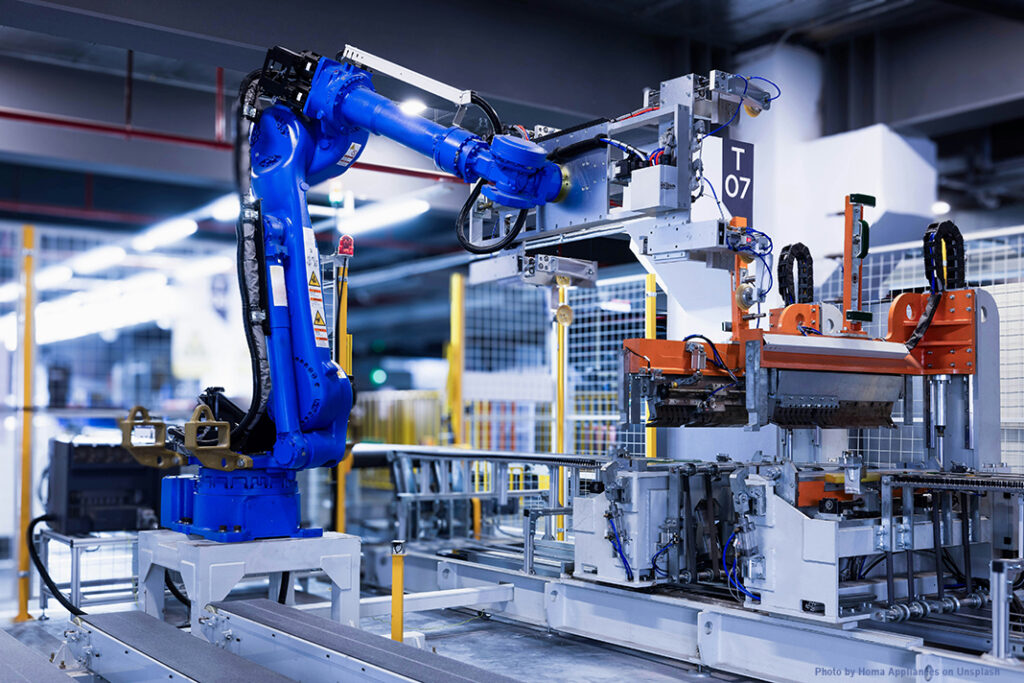
Additive manufacturing, conversely, utilizes independent printing units, which can be scaled to meet demand without high capital investment. A set of twenty printers can produce twenty different parts simultaneously, making them capable of high-mix electronics manufacturing. If a single printer fails, production continues at nearly full capacity. This modularity supports both resilience and cost efficiency while meeting necessary production speeds.
Developing flexible circuits
3D printing enables flexible electronics by creating circuitry on thin, compliant materials instead of fixed rigid boards. The process builds the circuit pattern additively; it isn’t limited by the planar tooling or lamination steps used in traditional PCB fabs. As a result, electronics formed on substrates can bend, fold or curve, giving hardware teams the ability to embed copper interconnects in shapes and locations that were previously impractical or impossible.
3D-printing electronics provides a unique opportunity perfectly suited to U.S. distribution channels and supply chains; it can scale to mid- or even high-volume production in the right scenarios.
It’s not just a prototyping tool. It’s a new manufacturing model.
Shorter lead times & regional production
Traditional manufacturing often uses large, centralized factories, has long shipping distances and produces large batches. Small factories located near end-markets reduce transportation time, improve inventory management and enable rapid response to fluctuating demand.
One report found that micro-factories lowered local distribution expenses by up to 40% through localized production.
Given that the average cost of major supply chain disruption is about $1.5 million per day in manufacturing contexts, reducing lead time and reliance on long logistics chains significantly mitigates risks.
Increased supply chain resilience
Large centralized supply chains are vulnerable to disruptions (natural disasters, geopolitical issues, logistical bottlenecks). Small factories spread out geographically, however, reduce single‐point failure risk and reduce propagation of disruptions upstream.
The World Economic Forum found that micro-factories consume fewer resources, require fewer people and can be more agile, making them less vulnerable to large disruptions.
Lower inventory risk & improved optimization
Traditional manufacturing relies on make-to-stock production, but that ties up capital, increases risk of obsolescence and creates waste when demand changes.
Small factories and micro-factories, however, enable make-to-order or on-demand production; they manufacture only what customers need, when they need it. This shifts companies away from holding large safety stocks and toward real-time demand fulfillment.
Small factories enable shorter development cycles; better control of IP; and better support.
Shorter development cycles and more flexible respins
Hardware traditionally relies on large factories that operate within long scheduling windows. Production typically includes quoting, tooling, setup and shipping, which often involves international transit. These steps slow down product revisions and force hardware teams into long development cycles.
Small factories remove many of these steps. They rely on digital production methods and small-batch workflows, allowing them to begin work quickly and produce parts without large setup requirements. These microfactories are “highly automated, flexible production setups” that support high-mix and low-volume output, which naturally shortens development time.
Microfactories are particularly effective for small and medium-size manufacturers that need quicker turnaround and do not require the scale of very large plants.
Because local production removes much of the shipping delay, respins and revisions can be produced faster. This does not make the process instantaneous, but it does make hardware iteration more responsive and less dependent on distant factories.
Better control over intellectual property
Producing hardware in large offshore factories often requires sharing design files, material specifications and manufacturing instructions with multiple external parties, which increases the potential for information leaks.
By keeping production in a smaller, local facility, companies minimize access to their designs. This is important in fields where layouts, firmware interfaces, materials and other design details carry meaningful intellectual property value.
Improved support for customization and variable production
Large factories are usually optimized for high-volume standardized parts production. They depend on economies of scale and often require long runs to justify setup and tooling. This structure makes small-batch, custom or frequently updated hardware both difficult and expensive to produce.
Microfactories, in contrast, are designed to support variety rather than scale. Research on the “microfactory model” highlights that these facilities are useful for customized or adaptable products because they can operate economically at smaller batch sizes.
This makes it easier for companies to build hardware variants, update designs quickly or supply niche products without the overhead of mass production lines.
What began as a project to build a 3D printer for fun turned into understanding how to turn that project into a company. Going through Georgia Tech’s Create-X Startup Lab, Startup Launch and Idea to Prototype (ITP) programs and participating in InVenture Prize, a faculty-led innovation competition, enabled me to discover that this cool science project actually filled a major gap in the industry.
Startup Lab enabled me to think about establishing a manufacturing business to fill that gap and gave me new ways of thinking about how to scale it. When our team won the 2025 InVenture Prize, it provided us the opportunity to promote our technology; that’s when we began to ship products.
Learning about evidence-based entrepreneurship, talking to customers, building a viable business model and shipping products through Create-X, gave me confidence to pursue the business. Create-X mentors there aren’t just theorists; they’re business people who provide the support necessary for student founders like me to launch successful startups.
I learned how to grow and scale a team and a business. I couldn’t have learned that in a classroom or on my own. It would’ve taken three or four startups to gain that experience.
With a robust startup ecosystem, the City of Atlanta also actively supports its founders. The labs and physical space they provide are critical to hardware startups; they offer startup founders at every stage of the business unique opportunities to grow and to thrive.
The move towards smaller, decentralized factories that use additive technology is an important change in how electronics are made. It reduces the length of supply chains, makes production more resilient and allows for quick, flexible manufacturing. As these smaller facilities grow, they offer quicker advancements in technology and create a more sustainable, flexible and futureproof manufacturing system.

About the Author:
A third-year Materials Science Engineering student at the Georgia Institute of Technology, Calla Scotch is Founder and Lead Technical Developer at Convexity Electronics, a 3D printed electronics startup targeted at high-volume manufacturing of PCBs for aerospace applications, consumer electronics, RF communications and more. Find Calla on LinkedIn.

Industry in Transition: The Forces Reshaping Manufacturing
As manufacturers offer more customization than ever before, managing product complexity has become a critical challenge. Tune in with Dan Joe Barry, Vice President of Product Marketing at Configit, who explores how companies are tackling the growing number of product configurations across engineering, sales, manufacturing, and service. He explains how Configuration Lifecycle Management (CLM) helps organizations maintain a single source of truth for configuration data. The result: fewer errors, faster quoting, and the ability to deliver customized products at scale.
Get In Touch
Google news and SEO compliant, Industry Today’s state-of-the-art digital media platform offers bespoke media campaigns that target key decision makers and buyers to achieve your marketing and promotional goals.

Contribute
Showcase your brand and promote your business to our highly targeted audience. We offer detailed Google Analytics with measurable ROI to assure success. Submit your content for review by our Editorial team who will contact you to discuss the project further.
About Us
Reach Your Targeted Audience and Grow Your Business. Learn more About Industry Today.
Contact Us

© 2026 Industry today. All Rights reserved.