As businesses race to cut meet Net Zero goals, many find themselves held back by concerns around perceived costs and lack of expertise.
By Massimo Muzzì
For many businesses, the urgency to cut energy costs and emissions has never been greater. The path forward to do this is often unclear, with concerns about potential upfront investment, the lack of required technical expertise, and uncertainty about how to start. As organizations look for practical ways to electrify operations, boost energy efficiency, and make progress toward Net Zero, the question is how they can afford and implement the technologies needed to achieve it.
According to a survey by the Energy Efficiency Movement, more than nine in ten companies plan to make energy efficiency improvements within the next three years. Nearly half of them have set an even more ambitious target of becoming carbon neutral within the next five years.
Businesses are committed to change but face challenges that stop them from turning intention into action. The biggest barrier is cost. The Energy Efficiency Movement’s survey suggests that 53 percent of companies see this as the number one barrier to improving energy efficiency, particularly when related to capital expenditure (CapEx).
Another major barrier is lack of knowledge. Nearly a quarter of businesses surveyed report that they don’t know how to improve energy efficiency and feel they don’t understand the available energy-saving technology options well enough. Others fear that a green transition could create downtime and disruption, while others see the lack of specialist contractors and consultants caused by a widening skills gap across many sectors as a major impediment.
Whatever the reason, one thing is clear. Businesses are uncertain about how to accelerate their electrification journey in a cost-effective way.
There are a number of ways companies can access cost effective technologies while reducing the costs of adoption.
One answer is the as-a-Service approach, where organizations can get all the benefits of using an asset without the costs of owning and maintaining it by paying a subscription fee instead. By effectively limiting costs to predictable operational expenses only, the as-a-Service approach provides a way for organizations to manage their budgets more easily while tapping into the benefits of shared assets that would be difficult to afford by themselves.
When applied to renewable energy and electrification projects, this subscription-based model offers an attractive financing tool, with businesses able to make a fundamental shift from CapEx to OpEx and take advantage of cutting-edge technology with little to no upfront costs.
Many businesses understand that these assets are a prerequisite to a successful energy transition but cannot afford to build on-site BESS capacity and often lack the right technical knowledge and resources to implement and manage it. This is where the as-a-Service approach can help.
With BESS as-a-Service (BESSasS), businesses can future-proof their assets and energy supply while staying profitable and sustainable with reduced CapEx. In this model, a BESSaaS partner takes care of everything that’s needed to build and operate a BESS, including finance, insurance, and implementation to commissioning, maintenance, and cybersecurity. All the business has to do is pay a quarterly fee.
BESSaaS doesn’t just enable businesses to unlock critical energy storage capacity with no upfront costs. Shifting from CapEx to a predictable OpEx structure also eliminates the need for major capital approvals, speeding up the implementation of on-site BESS. There are also further savings to be made. As installation, commissioning, and maintenance are part of the service offering, businesses don’t need to hire new personnel or invest in technical training.
There are longer-term benefits, too. A BESSaaS contract typically covers future modernization, upgrades, or retrofits, providing a cost-effective alternative to replacing entire electrical systems. In this way, businesses reduce their total cost of ownership (TCO) and maximize their ROI.
As well as eliminating CapEx and reducing TCO, a predictable OpEx model can also create new revenue streams, accelerating a business’s ROI. Some countries allow businesses that generate their own renewable energy to take part in ancillary services markets like voltage regulation and frequency balancing, enabling them to sell excess stored power back to the grid to generate extra revenue. In such cases, Energy Trading-as-a-Service (TaaS) offers access to the trading algorithms that can help them sell at the right time, during peak demand. These same services can also help EV charging facilities to monetize excess power by selling stored or generated electricity back to the grid or to other consumers.
One of our customers at a UK-based commercial business park recently decided to turn its existing solar PV system into a revenue-generating asset as part of its BESSaaS contract. The company is set to achieve an 80 percent reduction in energy costs and up to £92,500 in additional annual revenue from energy trading and ancillary grid services.
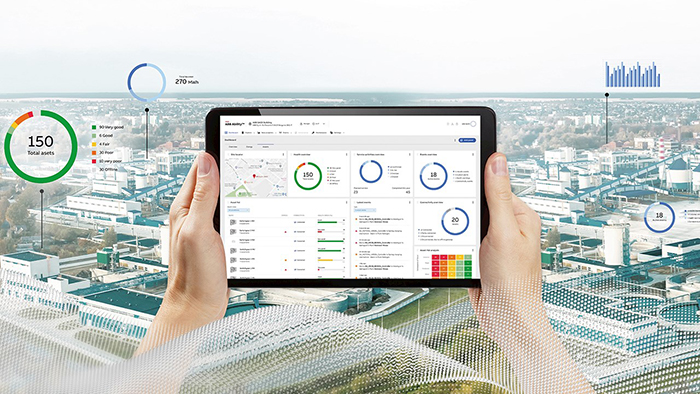
While many businesses recognize the vital contribution of AI and digital technologies in enabling a successful energy transition, nearly one in three worries that they lack the necessary skills needed to manage them. This is another area where the BESSaaS approach can offer benefits.
As well as energy storage capacity, BESSaaS also leverages AI-driven tools such as Intelligent Energy Management and Optimization to maximize energy savings through peak shaving, time-of-use energy management, and increased self-consumption of energy from on-site solar. Using these tools, businesses can store energy when prices are low and use it during peak demand periods when energy prices surge. In places like Texas, where energy prices can spike by as much as 30,000% per kilowatt-hour during scorching heat waves, AI-driven peak shaving can save companies significant energy costs.
Another benefit of AI tools is their ability to provide data-driven insights for accurate reporting, better decision-making, and measuring ROI. Businesses can stay compliant with the latest sustainability reporting regulations, build business cases, and secure external funding.
While AI minimizes the need for skilled personnel and training, businesses can still rely on human guidance and advice from their BESSaaS partners. In this way, a lack of on-site skills isn’t a barrier to installation and operation, as businesses can tap into readily available expertise whenever they need it.
People and businesses want the same thing: a resilient, cost-competitive low-carbon energy system that is available when needed. Renewables and electrification are how we get there. Battery energy storage and other emerging technologies will be the bedrock of this fundamental energy transition, and this is where businesses can and must take the lead.
With an as-a-Service approach, an OpEx-only model like BESSaaS makes it easier and more affordable to tap into the benefits of on-site renewable energy sources. Cost no longer needs to be an excuse for inaction. Businesses can now count on access to cutting-edge, AI-driven technology and specialist consultancy from their partners that can help them rapidly adopt and scale up their energy infrastructure. The path to Net Zero has never been more achievable.
About the Author:
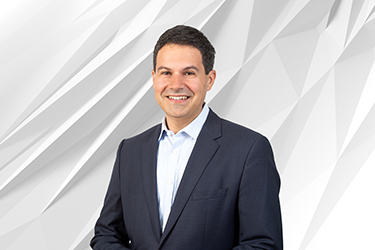
Massimo Muzzì is the Head of Strategy, Business Development and Sustainability of ABB Electrification, a position he has held since February 2024.
ABB Electrification has more than 50,000 employees across 100 countries. The team collaborates with electrical distribution and energy management customers and partners to solve the world’s greatest challenges. As the global energy transition accelerates, ABB Electrification plays an important role in electrifying the world in a safe, smart, and sustainable way.
Prior to his current role, Massimo was Head of Business Development for ABB Electrification. He joined ABB in 2008 as a member of the Corporate Strategy team and continued in roles of increasing responsibility to ABB’s treasury department and then to lead Strategy and Mergers & Acquisitions for ABB’s Robotics Division.
Massimo holds a Master of Science in Telecommunications Engineering from Politecnico di Milano, Italy; a Diplôme d’Ingénieur from ENSTA-ParisTech, France; a Master of Science in Music Research from IRCAM, France; and an International MBA from the University of St. Gallen, Switzerland.

Forging the Next 250 Years: Powering the Next Era of American Manufacturing
As manufacturers offer more customization than ever before, managing product complexity has become a critical challenge. Tune in with Dan Joe Barry, Vice President of Product Marketing at Configit, who explores how companies are tackling the growing number of product configurations across engineering, sales, manufacturing, and service. He explains how Configuration Lifecycle Management (CLM) helps organizations maintain a single source of truth for configuration data. The result: fewer errors, faster quoting, and the ability to deliver customized products at scale.
Get In Touch
Google news and SEO compliant, Industry Today’s state-of-the-art digital media platform offers bespoke media campaigns that target key decision makers and buyers to achieve your marketing and promotional goals.

Contribute
Showcase your brand and promote your business to our highly targeted audience. We offer detailed Google Analytics with measurable ROI to assure success. Submit your content for review by our Editorial team who will contact you to discuss the project further.
About Us
Reach Your Targeted Audience and Grow Your Business. Learn more About Industry Today.
Contact Us

© 2026 Industry today. All Rights reserved.