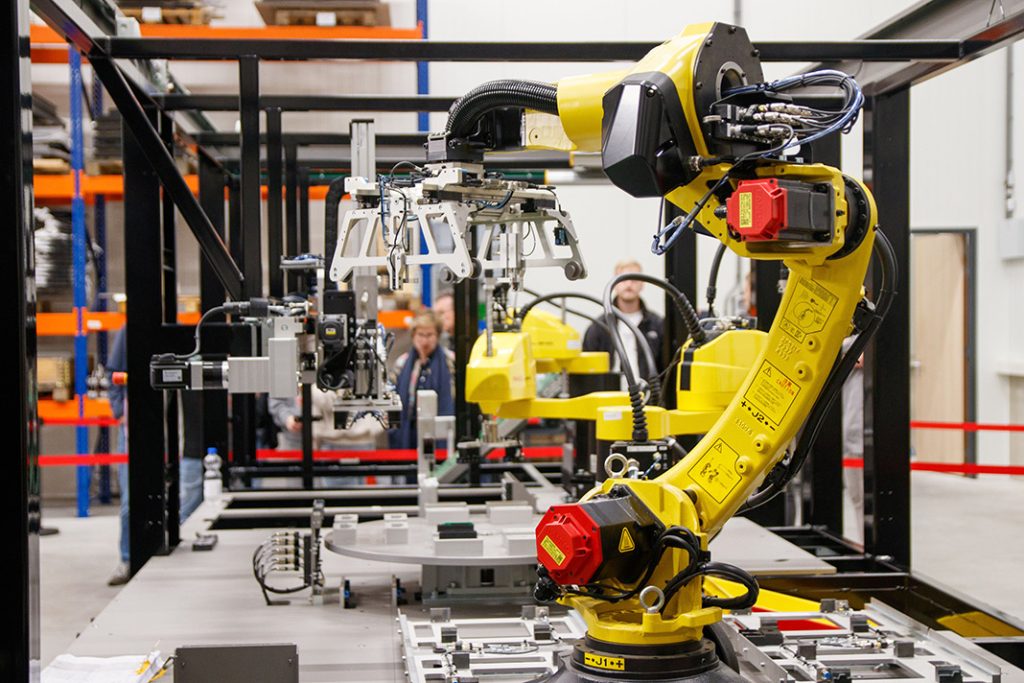
How IP conflicts delay launches, force redesigns, and disrupt global supply chains.
By Isaku Begert
Product manufacturers are accustomed to managing risk. Lead times, quality escapes, supplier volatility, and regulatory requirements are built into operating plans. But one risk is still too often treated as an afterthought until it becomes a crisis: patent disputes.
Many manufacturers assume patent litigation is a late-stage legal event that occurs after a product succeeds. In practice, patent disputes increasingly function as an operational disruption tool. A single claim can slow a product launch, force a redesign at the worst possible moment, or create supply-chain uncertainty that ripples across tooling, procurement, and customer commitments.
This is not merely a legal problem. It is a manufacturing and go-to-market problem. Companies that treat patent risk as part of scale-up discipline are far more likely to protect schedules, preserve design flexibility, and avoid expensive pivots under pressure.
What follows is a practical, manufacturer-focused view of how patent disputes disrupt production and how to reduce the risk without turning engineering teams into lawyers.

Patent disputes disrupt manufacturing in ways that are often predictable. They tend to force multiple teams to reallocate their time and attention:
The most damaging aspect is the timing. Patent assertions frequently arrive during the exact window when the product is most expensive to change: after design freeze, after tooling has been commissioned, and after supply agreements or customer commitments have been finalized.
From an operational standpoint, the problem is not only whether the claim is valid or strong. The problem is that even a weak claim can impose a decision deadline on a product business.
Many companies assume that if they are careful during research and development, they are insulated. But patent risk often surfaces later because of the reality of how manufacturing programs evolve.
A product can remain relatively obscure during development and prototyping. However, visibility increases dramatically when the product enters commercial channels, is demonstrated at trade shows, is certified, or begins shipping at volume. At that point, competitors and patent holders have enough information to map patent claims to product features.
Cost-down initiatives, second sourcing, and vendor substitutions are routine during scale-up. These changes can create inadvertent overlap with someone else’s claim set. A new sensor, a revised connector, a different thermal approach, a supplier’s firmware update, or a redesigned bracket can all change the IP profile and attendant risk.
In many industries, product differentiation increasingly comes from system architecture, controls, and integration choices rather than from any single component. This is also where patent portfolios are often concentrated, because integration features are harder to replicate without redesign.
The practical implication is that early R&D diligence is helpful, but not sufficient. IP exposure can change as soon as the program transitions from engineering effort to commercialization.
Manufacturers do not need to run a multi-month freedom-to-operate investigation for every project to manage patent risk effectively. A more realistic approach is a targeted, risk-weighted assessment aligned to the milestones that lock in cost and schedule.
Below is a practical checklist that manufacturing and product teams can implement without slowing development.
Before tooling and procurement are finalized, identify the handful of features that define the product architecture and would be expensive or difficult to redesign late. These typically include:
The goal is not perfection. The goal is to identify obvious overlap early enough to preserve options. Focus on competitors’ portfolios, frequent patent asserters in the industry, and technologies in crowded areas.
In fast-moving disputes, the ability to explain “how the system works” clearly and consistently is important. Short internal notes explaining why design choices were made and which alternatives were considered can reduce disruption later and increase flexibility for redesign.
Late-stage changes are inevitable. The key is to ensure the changes that matter get reviewed. Most companies already have an engineering change order process; the only adjustment is adding a lightweight IP review gate for high-risk substitutions (critical components, control logic, safety systems, power subsystems, or core mechanical interfaces).
When a cease-and-desist letter arrives, outside counsel typically needs the same set of information immediately: block diagrams, interface descriptions, operating modes, and high-level design documents. Creating this in advance and having it easily accessible reduces engineering distraction and accelerates response time.
The throughline is simple: do not wait until after tooling and sourcing decisions have removed flexibility. Patent disputes exploit inflexibility.
Global supply chains are now the default for manufacturing. That reality creates two risk categories that companies often underestimate:
When key components or finished products cross borders, the supply chain can become a litigation lever. Even without a final merits determination, claims and related proceedings can cause uncertainty that suppliers and customers react to quickly.
From a practical standpoint, manufacturers should know:
The purpose is not to redesign a supply chain around IP risk. The purpose is to avoid discovering, in the middle of a dispute, that the product has a single point of failure in sourcing.
Third-party suppliers regularly provide parts, firmware, reference designs, and “standard” subsystems. Manufacturers sometimes assume that because a supplier is reputable, IP issues are automatically handled. That assumption can be costly.
Practical steps that reduce risk include:
Supplier relationships are essential. But in an IP dispute, a manufacturer is often the party with the most to lose operationally. The contracts should reflect that reality.
Redesign is one of the most misunderstood options in patent disputes. Many teams think redesign means scrapping the product and starting over. Often, the most effective redesign is surgical, especially when a patent claim depends on a specific arrangement, sequence, or control behavior.
Redesign is most viable when:
In these scenarios, redesign is not only a defense tactic. It can become leverage, because it changes the range of commercial outcomes.
Redesign becomes risky when:
Late redesign is where companies can accidentally trade one risk for another. The point is not to avoid redesign. The point is to treat redesign as an engineering program with its own risk assessment, not as a panicked attempt to plug an already leaking dike.
Manufacturers do not need to become patent experts to manage patent risk. They need to recognize that patent disputes function like other operational risks: they strike hardest when design flexibility is low, and commitments are high.
The most effective response is proactive and practical:
Companies that do this are not trying to eliminate patent risk. They are doing something more valuable: reducing the chance that a patent dispute dictates the product schedule.
In a manufacturing environment where timing is a competitive advantage, that discipline increasingly separates the companies that launch on schedule from those forced into expensive, last-minute pivots.

About the Author:
Isaku Begert is an intellectual property litigation attorney at Marshall, Gerstein & Borun LLP.
Read more from the author:
Patent disputes in ESS are on the rise: Here’s how developers can prepare | Energy Storage News, April 2026
DISCLAIMER: The information contained in this article is for informational purposes only and is not legal advice or a substitute for obtaining legal advice from an attorney. Views expressed are those of the author and are not to be attributed to Marshall, Gerstein & Borun LLP or any of its former, present, or future clients.

Forging the Next 250 Years: Powering the Next Era of American Manufacturing
As manufacturers offer more customization than ever before, managing product complexity has become a critical challenge. Tune in with Dan Joe Barry, Vice President of Product Marketing at Configit, who explores how companies are tackling the growing number of product configurations across engineering, sales, manufacturing, and service. He explains how Configuration Lifecycle Management (CLM) helps organizations maintain a single source of truth for configuration data. The result: fewer errors, faster quoting, and the ability to deliver customized products at scale.
Get In Touch
Google news and SEO compliant, Industry Today’s state-of-the-art digital media platform offers bespoke media campaigns that target key decision makers and buyers to achieve your marketing and promotional goals.

Contribute
Showcase your brand and promote your business to our highly targeted audience. We offer detailed Google Analytics with measurable ROI to assure success. Submit your content for review by our Editorial team who will contact you to discuss the project further.
About Us
Reach Your Targeted Audience and Grow Your Business. Learn more About Industry Today.
Contact Us

© 2026 Industry today. All Rights reserved.