Smart facility and financing decisions can give manufacturers the flexibility to increase production, hire talent and invest in innovation.
By Dean Aloe
What financing strategies help manufacturers expand capacity while preserving cash for growth?
For manufacturers, growth often requires significant investments in facilities, equipment, workforce development, and inventory. The challenge is expanding production capacity without tying up excessive cash in real estate. Many manufacturers are addressing this challenge by combining strategic site selection with financing structures that minimize upfront capital requirements, allowing them to invest more resources into operations and growth.
Across the United States, manufacturers continue to face rising land costs, limited industrial inventory, and increased operating expenses in established markets. These factors are driving many companies to evaluate secondary and emerging manufacturing regions that offer greater space, lower costs, and room for future growth.
For specialty manufacturers, the challenge can be even greater. Production processes often require large facilities, specialized equipment, warehousing capacity, and room for customization. When space constraints begin limiting growth, expansion becomes a necessity rather than an option.
ARTO, a Southern California-based manufacturer of handcrafted tile, brick, stone, and architectural surfaces, encountered exactly this challenge. Founded in 1966, the company built its reputation on producing premium design materials for luxury hospitality, residential, and commercial projects.
Operating from its Gardena, California headquarters, ARTO had expanded as much as practical within its existing footprint. Demand continued growing, but the company needed significantly more square footage to support future operations.
When manufacturers examine expansion opportunities, site selection decisions are rarely based on cost alone. Workforce availability, transportation access, quality of life, and community alignment often play significant roles.
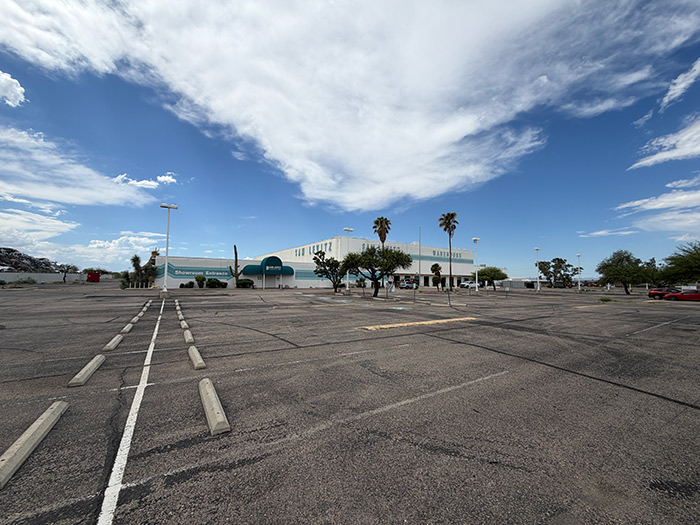
ARTO evaluated multiple locations, including areas in Nevada, Mexico, and Arizona. Ultimately, Tucson emerged as the preferred option.
The company found the region offered a combination of available industrial space and a culture that aligned with its emphasis on craftsmanship, design, and creativity. Just as important, Tucson provided capacity for future growth that would have been difficult to achieve within Southern California’s increasingly constrained industrial market.
The decision led to the acquisition of a nearly 130,000-square-foot industrial facility, providing substantial room for operational expansion.
For manufacturers considering geographic expansion, ARTO’s experience illustrates an important lesson: location decisions should support both operational requirements and long-term strategic goals.
Securing the right property is only part of the equation. Manufacturers frequently face competing demands for capital during expansion.
Cash may be needed for:
When excessive capital is committed to a building acquisition, businesses may limit their ability to fund these critical growth initiatives.
This is why capital preservation has become an increasingly important consideration during facility expansion projects.
One solution utilized by many owner-occupied businesses is the SBA 504 loan program. The program allows qualified manufacturers to acquire commercial real estate with a lower down payment than many conventional financing structures while providing long-term fixed-rate financing.
For ARTO’s facility acquisition, the financing structure enabled the company to preserve capital that could be directed toward operational growth rather than committed solely to the real estate purchase.
“For growing manufacturers, the decision isn’t simply where to expand. It’s how to expand while retaining the financial flexibility needed to hire employees, invest in equipment, and respond to market opportunities.”
Too often, manufacturers view financing as a transactional element of expansion rather than a strategic decision. In reality, financing structure can significantly influence the pace and success of growth initiatives.
According to the U.S. Small Business Administration, the SBA 504 program is specifically designed to support long-term investments in commercial real estate and major fixed assets that contribute to business expansion and job creation.
For manufacturers, predictable occupancy costs can be particularly valuable. Fixed-rate financing reduces exposure to interest-rate uncertainty while simplifying long-term planning.
It also creates greater confidence when making decisions about hiring and production capacity.
ARTO’s leadership viewed this flexibility as an important component of the company’s broader growth strategy. With approximately 85 employees at the time of expansion, the business positioned itself to significantly increase its workforce and production capabilities over time.
Large expansion projects rarely proceed without obstacles.
Manufacturers routinely encounter challenges involving approvals, financing partners, construction timelines, permitting requirements, or economic conditions.
Experienced project partners can play an important role in navigating these challenges.
In ARTO’s case, issues arose during the financing process that threatened to delay the acquisition. Despite these complications, the project moved forward successfully through coordination among the parties involved.
The situation highlights another lesson for manufacturers: selecting experienced advisors and financing partners can be nearly as important as selecting the property itself.
Expansion projects often involve significant complexity, and companies benefit from working with teams that understand both industrial real estate and manufacturing growth requirements.
Successful expansion is rarely about solving today’s space limitations alone.
The most effective manufacturers evaluate how a new facility will support future hiring, product development, operational efficiency, and market opportunities.
For family-owned manufacturers like ARTO, this perspective carries additional significance. Growth investments frequently represent decisions that will influence multiple generations of ownership and employees.
By securing additional production capacity and preserving operational flexibility, the company created a foundation for continued growth while maintaining the craftsmanship-focused approach that has defined the business for decades.
As manufacturers continue navigating changing market conditions, labor challenges, and evolving customer demands, expansion strategies that combine thoughtful site selection with disciplined capital management will remain a powerful competitive advantage.
Many secondary markets offer lower operating costs, greater industrial space availability, workforce opportunities, and room for future growth compared with traditional manufacturing hubs.
Manufacturers often need cash for equipment, hiring, inventory, technology, and facility improvements. Preserving liquidity helps support these investments while reducing financial strain.
The structure of a financing package affects cash flow, risk exposure, and future investment capacity. Financing that reduces upfront capital requirements can support faster operational growth.
Key considerations include available space, workforce access, transportation infrastructure, business costs, community fit, and long-term growth potential.
Manufacturing expansion requires more than finding a larger facility. Companies must balance location strategy, operational needs, and capital allocation to ensure sustainable growth. Businesses that preserve working capital while expanding capacity are often better positioned to invest in innovation, workforce development, and long-term competitiveness.

About the Author:
Dean Aloe is Senior Vice President of Business Development at TMC Financing, the nation’s leading SBA 504 lender. He works with manufacturers and business owners across Arizona and the western United States to secure financing for facility expansion, equipment investments, and long-term growth initiatives.
Forging the Next 250 Years: Powering the Next Era of American Manufacturing
As manufacturers offer more customization than ever before, managing product complexity has become a critical challenge. Tune in with Dan Joe Barry, Vice President of Product Marketing at Configit, who explores how companies are tackling the growing number of product configurations across engineering, sales, manufacturing, and service. He explains how Configuration Lifecycle Management (CLM) helps organizations maintain a single source of truth for configuration data. The result: fewer errors, faster quoting, and the ability to deliver customized products at scale.
Get In Touch
Google news and SEO compliant, Industry Today’s state-of-the-art digital media platform offers bespoke media campaigns that target key decision makers and buyers to achieve your marketing and promotional goals.

Contribute
Showcase your brand and promote your business to our highly targeted audience. We offer detailed Google Analytics with measurable ROI to assure success. Submit your content for review by our Editorial team who will contact you to discuss the project further.
About Us
Reach Your Targeted Audience and Grow Your Business. Learn more About Industry Today.
Contact Us

© 2026 Industry today. All Rights reserved.