As AI agents take on operational roles, manufacturers must build accountability, transparency, and oversight from day one.
By Chris Kuntz, VP of Strategic Operations, Augmentir
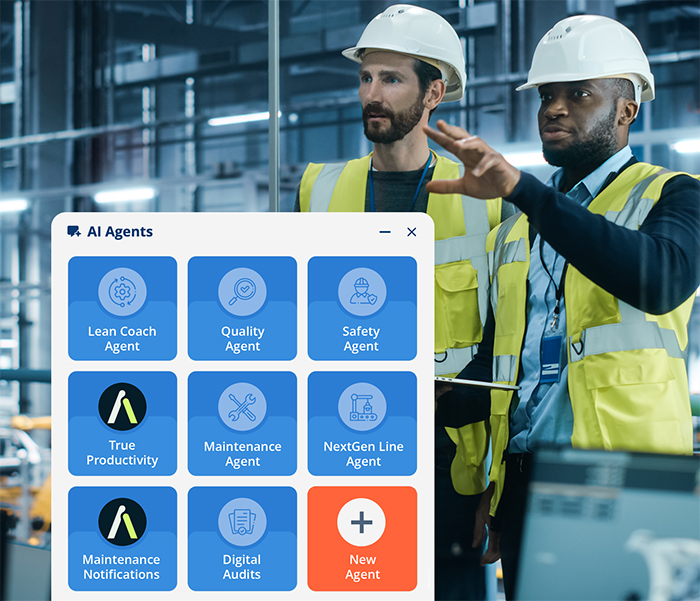
Across manufacturing and industrial operations, artificial intelligence is evolving from an analytical tool to a platform for operational execution. Today’s AI agents operate as digital workers alongside human workers on the factory floor, guiding frontline workers, triggering workflows, and positively influencing decision-making, thereby strengthening safety, quality, and performance.
Real progress in manufacturing operations and employee satisfaction has resulted from these innovations. But AI has also created a new level of complexity when it comes to determining accountability. When an AI agent makes the wrong decision, who is responsible, and how can it be rectified?
AI systems are often viewed as independent actors, particularly as they become more autonomous. But that framing does not hold up, particularly in industrial environments.
Every AI agent operates within a defined system by design. It is trained on specific data, context, and configured constraints, then deployed into workflows designed by people. Technology can’t be held responsible for flawed outcomes. That responsibility rests with the business. A disciplined, standardized approach can help make that accountability clear.
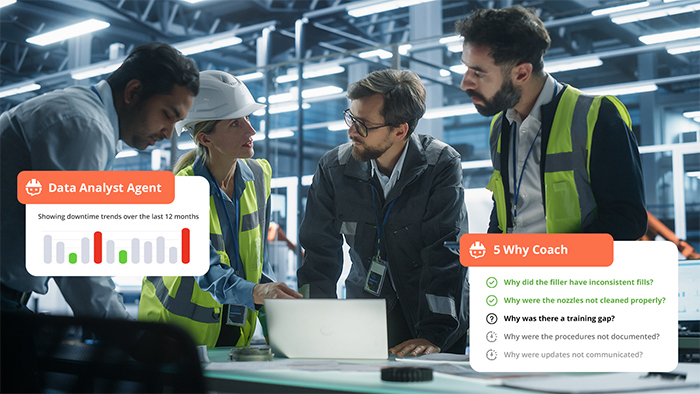
Industrial organizations are historically built on traceability. For example, an equipment failure can be diagnosed and corrected. Safety incidents always have clear pathways for escalation and resolution. Standards like these are necessary for a functioning workplace environment.
Companies may design and deploy systems that are not yet mature, and many deployments lack visibility into decision-making or rely on incomplete data. When AI is embedded into execution, these gaps can become real risks.
To make AI agents usable in real operations, accountability needs to be designed in from the beginning. This can be framed through six practical guardrails:
These guardrails maximize the adoption of AI into operational workflows and make AI truly usable in an environment where accountability matters.
There is sometimes a misconception that the goal of implementation is full agentic autonomy. In industrial settings, that’s neither practical nor advisable. The most effective execution will strike a balance, where AI manages more data-intensive, repetitive tasks and sources insights at a broader scale. The role of humans is to then contextualize those insights, provide judgments, and make final decisions.
This balanced approach creates a clear chain of responsibility, and therefore accountability, while utilizing AI to improve the human experience in a complex, real-world environment.
When an AI-related issue occurs, the focus often centers on the specific decision or action. In reality, the seeds of liability may have been sown well before that moment. Possible contributing factors include how the system was designed, the quality of the data it relies on, the operational context it is given, the clarity of its boundaries, and the presence or absence of oversight.
If the system has been conceived of and built out correctly, organizations can understand what happened and respond effectively. If they are not, accountability becomes difficult to establish and ever harder to defend.
The role of AI agents in industrial operations is continuing to expand and change every day. We have already seen significant benefits, from improving productivity to addressing workforce challenges and driving more consistent execution.
However, these gains come with increased responsibility. Organizations need to approach AI design and implementation with the same discipline applied to safety, quality, and operational excellence. That means building systems that are transparent, governed, and clearly owned from the outset.
Liability shouldn’t be addressed after failure. It needs to be built into the system from the start. AI doesn’t change who is responsible, but it raises the stakes on getting it right.

About the Author:
Chris is the VP of Strategic Operations at Augmentir, where he oversees the planning and execution of the company’s go-to-market strategy. Chris has over 20 years of experience in high tech solution delivery, marketing, business development, and consulting in the industrial software sector. Prior to Augmentir, Chris was the VP of Marketing at ThingWorx, the leading Industrial IoT (IIoT) platform company (acquired by PTC), where he managed the IoT marketing activities and partner programs. Previously, Chris held executive positions in marketing and business development at multiple successful software companies. Chris has a BS in Mechanical Engineering and Computer Science from SUNY Binghamton.

Forging the Next 250 Years: Powering the Next Era of American Manufacturing
As manufacturers offer more customization than ever before, managing product complexity has become a critical challenge. Tune in with Dan Joe Barry, Vice President of Product Marketing at Configit, who explores how companies are tackling the growing number of product configurations across engineering, sales, manufacturing, and service. He explains how Configuration Lifecycle Management (CLM) helps organizations maintain a single source of truth for configuration data. The result: fewer errors, faster quoting, and the ability to deliver customized products at scale.
Get In Touch
Google news and SEO compliant, Industry Today’s state-of-the-art digital media platform offers bespoke media campaigns that target key decision makers and buyers to achieve your marketing and promotional goals.

Contribute
Showcase your brand and promote your business to our highly targeted audience. We offer detailed Google Analytics with measurable ROI to assure success. Submit your content for review by our Editorial team who will contact you to discuss the project further.
About Us
Reach Your Targeted Audience and Grow Your Business. Learn more About Industry Today.
Contact Us

© 2026 Industry today. All Rights reserved.