Survey findings show Foreign-Trade Zones boost U.S. competitiveness by strengthening risk management and supply chain resilience.
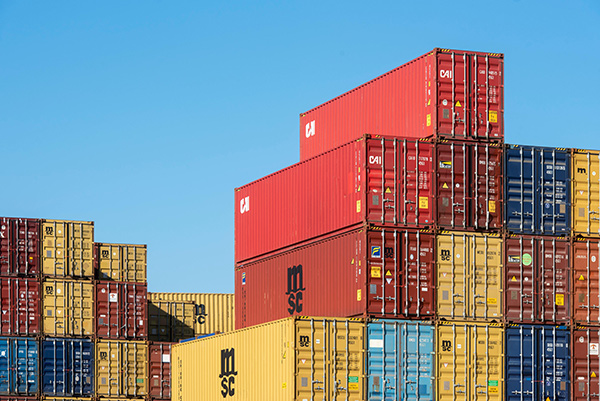
WASHINGTON – New survey findings released by the National Association of Foreign-Trade Zones (NAFTZ), the only national trade association focused solely on the U.S. Foreign-Trade Zone (FTZ) program, point to continued momentum for the national initiative as companies and communities navigate ongoing volatility in global trade, tariffs and supply chains.
Within federally designated Foreign-Trade Zones, goods are treated as outside U.S. Customs territory, allowing companies to store, process, assemble or manufacture products while deferring or reducing customs duties. As trade conditions remain fluid, U.S. FTZs are increasingly being used as a strategic tool to manage risk, improve compliance and support long-term investment decisions.
In NAFTZ’s year-end survey of private-sector FTZ users and operators (manufacturers, distributors and logistics companies), nearly half (49%) of the respondents reported increased FTZ activity in 2025. This includes higher production levels, admissions, exports or inventory volumes. An additional 18% of respondents reported stable activity year-over-year, underscoring the program’s role as a stabilizing force amid trade uncertainty.
Looking ahead, expectations for growth remain strong. More than 83% of responding grantees – typically local or regional economic development organizations that administer zones – anticipate increased applications and overall U.S. FTZ activity in 2026, signaling confidence from communities actively recruiting and supporting investment. Among U.S. FTZ user/operator respondents, expectations for expanding FTZ-based operations in 2026 averaged above the midpoint on a 100-point likelihood scale, with many indicating strong intent to grow their use of the program next year.
The survey also illustrates how companies are using U.S. FTZs to respond to shifting trade and supply chain conditions. While duty deferral (72%), weekly entry and merchandise processing fee savings (56%), and duty savings (51%) remain the most frequently cited benefits, respondents increasingly emphasized operational and strategic advantages such as security and compliance accuracy (21%), inventory accuracy and visibility (18%), and reduced supply chain volatility (15%).
Operationally, FTZ user/operator respondents reported navigating a wide range of pressures in 2025, including supplier diversification, nearshoring evaluations, demand fluctuations and tariff-driven sourcing changes – further highlighting the importance of flexibility within trade infrastructure. Looking to 2026, they identified emerging opportunities tied to advanced inventory management systems (21%), nearshoring and reshoring trends (31%), e-commerce growth and faster fulfillment expectations (15%), and global competitiveness pressures (33%), as key factors shaping their FTZ strategies.
“Foreign-Trade Zones have long served as a practical, proven tool for helping American companies adapt to change,” said Jeff Tafel, president of NAFTZ. “As trade conditions continue to evolve, these findings show that U.S. FTZs are delivering real-world value – supporting operational flexibility, strengthening supply chains, and enabling investment decisions that benefit communities across the country.”
At the community level, the U.S. FTZ program continues to demonstrate clear economic development impact. Two-thirds (67%) of responding FTZ grantees reported that their zones directly supported new or expanded economic development activity in 2025, including user expansions and new participation, and an equal share said they continue to receive positive feedback from companies on the value of FTZ participation. Nearly 63% also indicated that the U.S. FTZ program has adapted well to the current macroeconomic environment, reinforcing its relevance as trade and industrial policy evolves.
Together, these findings reinforce the continued importance of the U.S. Foreign-Trade Zone program as a tool for strengthening U.S. competitiveness, supporting investment and creating jobs – particularly as companies and communities plan for growth amid a complex global trade landscape.
About the National Association of Foreign-Trade Zones (NAFTZ)
NAFTZ is a nonprofit trade association comprised of 950 members spanning the U.S. and Puerto Rico. The association is the collective voice of all that engage in the U.S. FTZ program, serving as the premier advocacy and educational organization for the U.S. FTZ community of professionals. For questions or more information about U.S. FTZs, visit its website at www.naftz.org.
Methodology: NAFTZ distributed the survey to its full membership – including U.S. FTZ grantees and private-sector users and operators – in early December 2025 and received responses from a meaningful cross-section of its membership.
The Rise of American Manufacturing: A New Industrial Era
As manufacturers offer more customization than ever before, managing product complexity has become a critical challenge. Tune in with Dan Joe Barry, Vice President of Product Marketing at Configit, who explores how companies are tackling the growing number of product configurations across engineering, sales, manufacturing, and service. He explains how Configuration Lifecycle Management (CLM) helps organizations maintain a single source of truth for configuration data. The result: fewer errors, faster quoting, and the ability to deliver customized products at scale.
Get In Touch
Google news and SEO compliant, Industry Today’s state-of-the-art digital media platform offers bespoke media campaigns that target key decision makers and buyers to achieve your marketing and promotional goals.

Contribute
Showcase your brand and promote your business to our highly targeted audience. We offer detailed Google Analytics with measurable ROI to assure success. Submit your content for review by our Editorial team who will contact you to discuss the project further.
About Us
Reach Your Targeted Audience and Grow Your Business. Learn more About Industry Today.
Contact Us

© 2026 Industry today. All Rights reserved.