Volume 29 | Issue 2
Click here to read the complete illustrated article or continue below to read the text article.
By Ben Ifshin, Co-Founder and CEO, WhereWeGo
My co-founder Leah Lykins and I are both former public high school teachers. When we started WhereWeGo eight years ago, we were not thinking about building marketplaces. We were thinking about what we thought was a much simpler problem: Why is it so hard for people to figure out what careers exist, how to get into them, and where to go for help?
That question turned out to be deceptively complicated. Along the way, we have gotten a lot of things wrong. Some of our early builds were too ambitious. Others solved the wrong problem. A few got used exactly the way we intended and still didn’t produce the outcomes we hoped for. That track record of both success and failure is what makes me want to write honestly about what it takes to build these platforms well, especially at a time when interest in launching them is surging, but far less attention is paid to what it takes to sustain and make them work.
There is more energy behind talent marketplaces and workforce websites than I have seen in the eight years we’ve been doing this work. Workforce boards, state agencies, universities, and nonprofits are all trying to build platforms that match people to jobs, training, and career pathways. The federal government is putting real money behind the effort. The National Science Foundation recently announced a $224 million initiative to fund AI-readiness coordination hubs in every U.S. state and territory with a digital resource component. The Department of Labor is co-sponsoring it. The message is clear: Every state is going to need digital infrastructure for workforce development, and it needs to be built soon.
That’s exciting. It’s also a setup for a lot of expensive failure if the people building and funding these platforms don’t learn from what’s come before.
Talent marketplaces are taking off because employers are tired of hiring through blunt filters like degrees, titles, and keyword-heavy résumés when what they really need is a clearer way to find people with the skills to do the work. At the same time, nonprofits, workforce groups, and public agencies see them as a way to open doors for capable people who get screened out by degree requirements even though they learned those skills somewhere else.
Here’s something that most people building talent marketplaces underestimate: you are not building a website. You are building a multi-sided market. And multi-sided markets are notoriously difficult to get right.
Think about what a talent marketplace has to do. It needs to attract workers and give them a reason to come back. It needs employers or training providers on the other side who trust the platform enough to keep their listings current. It needs data that’s accurate and fresh, which means someone has to maintain it. It needs to serve people with wildly different levels of digital literacy, motivation, and trust. And it needs to deliver on promises: if someone follows a pathway the platform recommends and it doesn’t lead anywhere, they won’t come back. Neither will anyone they tell.
Traditional marketplaces like Airbnb or Uber spent billions solving these dynamics. Talent marketplaces are expected to do it on grant budgets with small teams. That doesn’t mean it’s impossible. It means you have to be much smarter about where you invest your time and money, and much more honest about what you don’t know yet.
We recently published a report that digs into why social impact technology fails after studying years of platform data, user behavior, and our own mistakes. A few patterns stood out that are especially relevant to talent marketplaces.
Most platforms are funded like construction projects: there’s a budget for the build, a deadline for launch, and success is measured by whether both were hit. But software is not a building. Without ongoing investment, it actively degrades. We’ve seen organizations spend $1,000,000 on a launch, then starve the product for two years until it breaks, then spend another $2,000,000 rebuilding from scratch. When you compare that to a team that spends less upfront but invests steadily in iteration, the cost per meaningful outcome can be ten times lower. The culprit is almost always the same: funding is earmarked for the vision, not for the learning that comes after launch day.
Most talent marketplaces assume that if you give people better information about jobs and training, they will take action. Build a cleaner directory, add better search, list more resources. But accessing workforce services is not like shopping online. When you ask someone to create a profile on a career platform, you’re asking them to confront questions about their identity and their future. Am I the kind of person who needs help? Can I actually do this? Those moments of hesitation are where most users drop off, and more information doesn’t resolve them. Typical social impact platforms see bounce rates above sixty percent and profile creation rates between two and four percent. Those aren’t signs of a discovery problem. They’re signs of a behavioral one.
Beneath every marketplace is a growing pile of obligations that most organizations don’t budget for: security patches, compliance updates, data that goes stale, APIs that are unpredictable or disappear, program officers and staff whose heroic labor was holding a project together. Self-managed infrastructure can quietly consume tens of thousands of dollars a year in labor and tooling costs that don’t create new value. They just prevent collapse. For talent marketplaces specifically, data hygiene is brutal. When forty percent of companies are posting ghost jobs and public datasets are years out of date, users learn fast that they can’t trust the information. And once that trust breaks, getting people to come back is nearly impossible.
Talent marketplace plans tend to put a high premium on day 1 features: the taxonomies, the directory, the matching algorithm, the profile flow, and far less on what the product needs to do on day 1,000. Day 1,000 is when growth either compounds through the product or gets carried by staff. Network effects have to be built into the architecture. The artifacts users create have to pull new users in. Partners need ways to deepen involvement without a custom onboarding call. When these aren’t continuously fine-tuned, impact ends up tied to headcount, and the only way to grow is to hire.
So what do you do with all of this? Give up? Of course not. The need is real and the opportunity is enormous. But the approach has to change.
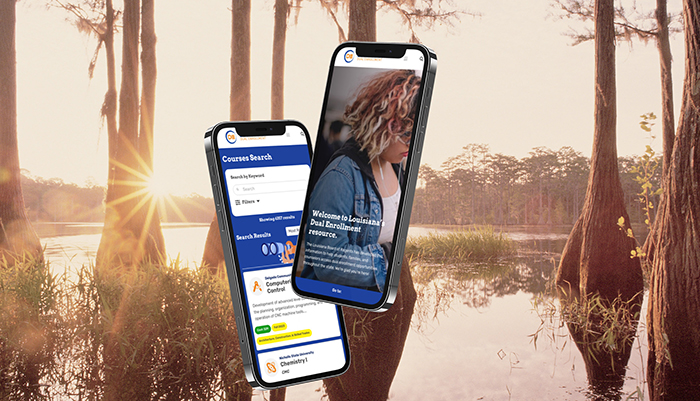
The traditional model is to spend a year and a lot of money building a big platform, launch it with a press event, and hope people show up. We call this the launch-and-leave model, and it’s responsible for a staggering amount of waste. We think the better approach is closer to what we’re now calling Stewardship: treat the technology like a garden you tend.
In practice, that means a few things. Start smaller than you think you should. Test with real users before you’ve built the whole system. Budget for years two and three at the same time you budget for year one. Measure cost per outcome, not cost per deliverable. And involve the internal staff who will maintain the platform from the very beginning, not after the developers leave.
We’re trying this ourselves with WhereWeGo Labs, an initiative we just launched. The idea is simple: build fast, free workforce tools every thirty days, each one designed around a real problem that workers or workforce organizations face. Some are scrappy. Some will fail. That’s the point. AI makes it possible to build and test useful tools far faster and cheaper than it was even two years ago. A training program navigator for Mississippi. An industry clarity score that tells workers how easy or hard it is to break into a given field. A credential tracker for training programs that matches grads with jobs every day.
None of these are massive platforms. They’re small bets designed to learn quickly and solve specific problems. The ones that work can grow. The ones that don’t cost almost nothing to try. That’s a fundamentally different risk profile than the traditional model, where you don’t find out if something works until you’ve spent most of the budget.
The federal investment that’s coming will create a wave of new talent marketplace projects across the country. The teams that succeed will not be the ones with the biggest budgets or the flashiest launches. They will be the ones that build light, test in the open, and commit to the long work of keeping their platforms alive and useful after launch is forgotten.
We’ve been doing this for eight years. We’re still learning. But we’ve seen enough to know that the biggest risk in this work is not building the wrong thing. Failure doesn’t usually come from a bad initial build. It comes six to eighteen months later, when the data starts to drift, the experience stops improving, and no one is accountable for what happens next. It’s often building the right thing and then walking away from it.
About the Author:
Ben Ifshin is the co-founder and CEO of WhereWeGo, focused on building practical workforce technology that strengthens opportunity across entire regional ecosystems. WhereWeGo platforms learn from the workers they serve. With academic roots in biology and early work in education, Ben leads with a belief that systems work when people feel seen, supported, and connected. At WhereWeGo, he brings together employers, community organizations, and civic institutions to make career pathways visible and accessible. Ben also serves as a Parks Commissioner in Water Valley, Mississippi and sits on the board of the Yalobusha Greenways Alliance, reflecting his commitment to building strong, interconnected communities online and in the real world.

Forging the Next 250 Years: Powering the Next Era of American Manufacturing
As manufacturers offer more customization than ever before, managing product complexity has become a critical challenge. Tune in with Dan Joe Barry, Vice President of Product Marketing at Configit, who explores how companies are tackling the growing number of product configurations across engineering, sales, manufacturing, and service. He explains how Configuration Lifecycle Management (CLM) helps organizations maintain a single source of truth for configuration data. The result: fewer errors, faster quoting, and the ability to deliver customized products at scale.
Get In Touch
Google news and SEO compliant, Industry Today’s state-of-the-art digital media platform offers bespoke media campaigns that target key decision makers and buyers to achieve your marketing and promotional goals.

Contribute
Showcase your brand and promote your business to our highly targeted audience. We offer detailed Google Analytics with measurable ROI to assure success. Submit your content for review by our Editorial team who will contact you to discuss the project further.
About Us
Reach Your Targeted Audience and Grow Your Business. Learn more About Industry Today.
Contact Us

© 2026 Industry today. All Rights reserved.