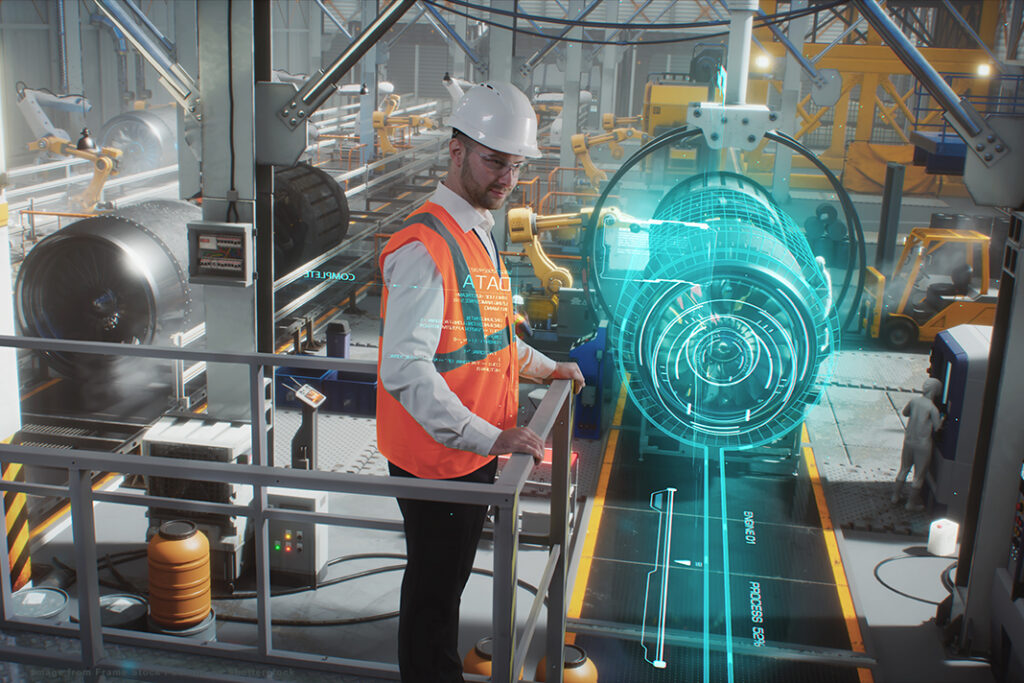
The hidden costs of legacy systems driving manual data collection and how manufacturers can reclaim those lost hours.
By Michael Masser, Group Product Manager, Rockwell Automation
In a time when digital transformation promises greater efficiency and competitiveness than ever, one could reasonably expect the old reality of manually collecting data to be a thing of the past. Yet in a recent survey conducted by the Manufacturing Leadership Council, 70% of manufacturers reported they were still manually collecting data. This widespread practice of antiquated methods is not a minor inefficiency — it’s creating huge productivity bottlenecks and draining resources when manufacturers can least spare them to weather economic volatility.
The price tag is record-breaking. Companies spend $30 million on average to maintain each legacy system, totaling $1.14 trillion in annual spend on maintaining existing IT assets. For manufacturers already battling supply disruptions, talent shortages, and margin compression, these legacy systems represent the most significant vulnerability they cannot afford.
The millions spent annually on maintaining one legacy system is just the tip of the iceberg. In addition to the maintenance cost itself — hardware, software, and special technical support — companies must contend with a substantial number of hidden expenses that accumulate exponentially over time. According to research from RecordPoint, legacy systems command up to 80% of global IT budgets annually, leaving minimal expenditure available for innovation and strategic efforts.
The effect on the workforce is just as disconcerting. 60% of companies that have implemented Common Business-Oriented Language (COBOL) report that talent acquisition of skilled developers is their biggest headache, with the typical COBOL programmer now being 55 years old and 10% of the workforce retiring annually. The dwindling talent pool raises labor costs and creates dangerous institutional knowledge gaps that threaten business continuity.
The shortcomings of manual data entry are not just a matter of the time it takes to enter numbers but also the ripple effect that runs through entire operations. Examples of this include delayed decision-making, hidden quality problems, and missed opportunities for optimization that competitors could already well be exploiting.
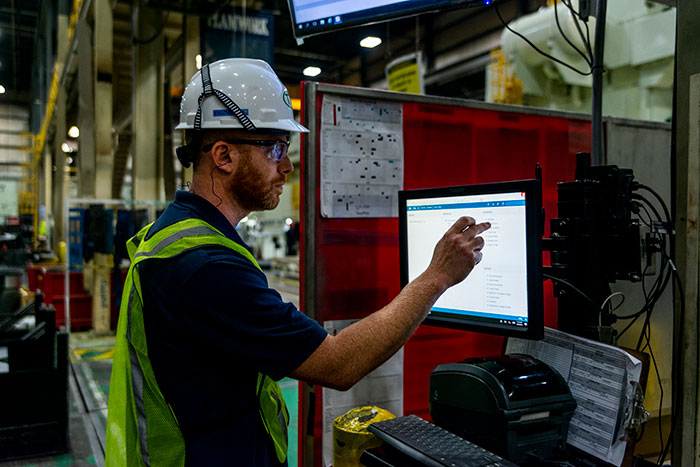
One of the most destructive areas of legacy-influenced manual data gathering is its effect on production setup and changeover procedures. In today’s flexible manufacturing operations where speed of response to market needs is key, manual operations are bottlenecks that propagate throughout the process.
Consider an average changeover on a production line. In manual data gathering, operators will have to enter machine settings, quality parameters, and production quantities by hand — a process that not only increases changeover times but also heightens the potential for human error. All these inefficiencies are especially troublesome in high-mix, low-volume production settings where the need for frequent changeovers is so great.
The Manufacturing Leadership Council survey reveals that 44% of manufacturing CEOs have seen at least twofold increases in the amount of data they collect within their company today compared to two years ago. With growing volumes of data, manual collection mechanisms become impractical, leaving a gap between available information and available insights.
Legacy systems not only frustrate IT departments — they are actively pushing off the next generation of manufacturing talent. In an industry already struggling with substantial workforce challenges, with attracting and retaining a quality workforce as the fourth highest concern (55.76%) in the Manufacturing Leadership Council survey, legacy technology adds yet one more obstacle to recruitment and retention.
Younger entrants to the job market, comfortable with intuitive, web-based software, expect the same from professional life. Faced with decades of interfaces, hand-entry requirements, and hacks that one must do to get systems to work, many opt to go elsewhere and work.
The effect on the productivity of existing employees simply cannot be overstated. When veteran employees spend most of their day manually entering data, job satisfaction plummets. About 30% of employees are so upset when technology in the workplace does not pan out that they seek new employment.
For most producers, fear of disruption during system modernization is the most significant obstacle to change. The threat of production halts, data migration failures, and problems with integration can put the decision process on ice, leading to companies clinging to the status quo despite rising costs. However, newer digital transformation methods have been developed in response to these concerns, offering pathways to phased migration that allows manufacturers to transition incrementally without interrupting operations.
The key to integration is to start with a business-first, not technology-first approach. By acting quickly on high-impact use cases and implementing targeted solutions, manufacturers can rapidly demonstrate value while building organizational confidence for broader transformation initiatives.
Integration solutions provide standard approaches for linking disparate systems, enabling manufacturers to bridge the difference between legacy infrastructure and emerging capabilities without total replacement. The approach has been successful in many sectors globally, with companies experiencing significant operations gain while minimizing disruption.
The reward of getting beyond legacy systems and manual data collection is tangible. Firms worldwide are already reaping major dividends from their digital transformation investments. Companies that have upgraded their data collection and management processes successfully report revolutionary benefits:
Results also ring true outside of operations performance. Companies that successfully update their technology have improved worker satisfaction, improved ability to recruit top talent, and greater flexibility in reaction to change in the market. A recent 2025 State of Manufacturing Report reports that 81% of manufacturers indicated that the struggles they are experiencing are accelerating their digital transformations, because companies understand that staying still is no longer an option.
For manufacturers who rely on legacy systems and manual data collectors, the message is clear: the cost of staying static is far greater than the cost of modernization. Each year that slips away shortens the window of opportunity, making catch-up increasingly difficult and expensive.
The change begins with a genuine assessment of current capabilities and a clarified vision of the future state. Quick, measurable value use cases must be the focus for producers in building toward end-to-end digital change.
With economic pressures mounting and competition more intense, manufacturers can no longer afford to have resource-siphoning legacy systems slowing them down. The tools, approaches, and success stories are available — what’s needed now is a concerted commitment to change.
The key takeaway here is that the $30 million yearly drain from traditional systems is not only an expense but also an opportunity cost that increases with each passing year. For manufacturers willing to capture lost hours and resources, the path to digital transformation has never been clearer or more critical to long-term success.

About the Author:
Michael joined Rockwell in July 2023 and is the Group Product Manager at Rockwell Automation. He has over 18 years of experience ranging from business development, shipping, and logistics to product management.

Forging the Next 250 Years: Powering the Next Era of American Manufacturing
As manufacturers offer more customization than ever before, managing product complexity has become a critical challenge. Tune in with Dan Joe Barry, Vice President of Product Marketing at Configit, who explores how companies are tackling the growing number of product configurations across engineering, sales, manufacturing, and service. He explains how Configuration Lifecycle Management (CLM) helps organizations maintain a single source of truth for configuration data. The result: fewer errors, faster quoting, and the ability to deliver customized products at scale.
Get In Touch
Google news and SEO compliant, Industry Today’s state-of-the-art digital media platform offers bespoke media campaigns that target key decision makers and buyers to achieve your marketing and promotional goals.

Contribute
Showcase your brand and promote your business to our highly targeted audience. We offer detailed Google Analytics with measurable ROI to assure success. Submit your content for review by our Editorial team who will contact you to discuss the project further.
About Us
Reach Your Targeted Audience and Grow Your Business. Learn more About Industry Today.
Contact Us

© 2026 Industry today. All Rights reserved.