As AI gains influence over manufacturing operations, real-time monitoring, clear access controls and human oversight become essential to managing risk.
By T.J. Marlin
Manufacturers need continuous visibility into where AI is operating, clear limits on what systems and agents can do and a forensic record of consequential actions. As AI moves into production planning, maintenance, quality, procurement and industrial code, those controls need to operate in real time and require human approval where production, quality or safety is at stake. The goal is to know what AI touched, what it did, who authorized it and what happened next.
Verizon’s 2026 Data Breach Investigations Report cited 3,627 manufacturing incidents, 2,713 of them with confirmed data disclosure. Ransomware featured in 61 percent of the sector’s breaches, and third parties were involved in just as many. Because manufacturing supports national interests, from defense to the goods people use every day, a stoppage at one manufacturer can reach suppliers, customers and the public.
The same manufacturers are adding AI to their operations. Rockwell Automation’s 2026 survey of more than 1,500 manufacturers found 34 percent of operations run AI-augmented today, with more than half expected by 2030. It also found 46 percent of manufacturers experienced at least one cyber incident in the past year.
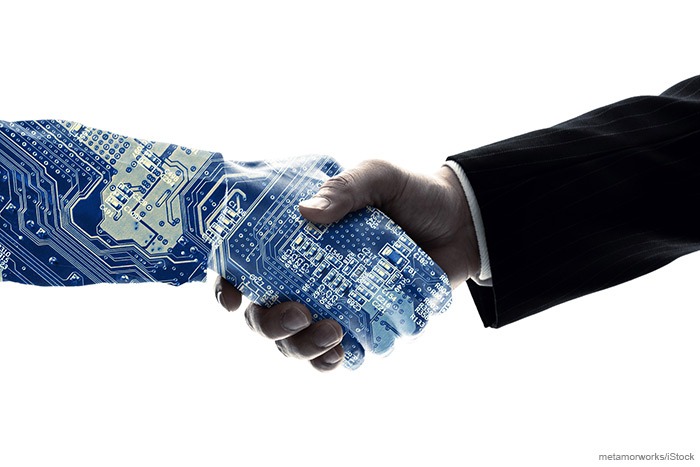
For manufacturers, this is quickly becoming an operations issue as much as a cybersecurity one. AI is moving into production planning, predictive maintenance, quality inspection, procurement and supply-chain decisions. Some systems recommend an action. Others can execute one. The distinction matters on a plant floor, where a bad decision can become scrap, downtime, a missed shipment or a safety problem before anyone has time to debate whether the model was technically correct.
I built a career reconstructing incidents after the damage was done, and the hardest cases always had the thinnest records. Factories are about to generate more cases like that. Operational technology was built for uptime, and on plenty of plant floors the event trail is an afterthought.
That starts with visibility. Manufacturers need a current view of which AI tools and agents are active, who is using them, what data they can reach and which systems they can act on. That view has to include approved platforms, AI features added by existing software vendors, tools employees bring in through browsers and personal devices and the AI-generated code moving through engineering teams. A quarterly inventory will age quickly in an environment changing this fast. Security and operations teams need to see AI activity as it happens and understand when behavior moves outside what the organization considers normal.
My company reviewed all 503 Form 10-K filings on record for S&P 500 companies against the SEC’s cybersecurity disclosure requirement. Nearly every company mentions AI, and about 3 percent describe a governed process for managing its cyber risk. An AI agent with system access looks a lot like a valid credential that never sleeps, and manufacturers are about to issue a lot of them.
The next step is deciding how much authority each AI system should have. A tool that summarizes maintenance records does not need the same controls as an agent that can change a production schedule, approve a software update or interact with a control system. Manufacturers can set policies that allow low-risk actions, warn on activity that deserves attention, block actions outside defined boundaries and require a person to approve decisions that could affect production, quality or safety. Those controls should follow the AI across tools and workflows. Otherwise, every new model, vendor or agent creates another place where the rules can disappear.
AI is also writing a growing share of the code behind industrial systems. Review practices built for human output now have to stretch across what machines produce as well.
Manufacturers should treat that record as part of operational resilience. For every consequential AI action, the surrounding systems should capture the instruction, the data accessed, the action attempted, the policy applied, any human approval or intervention and the outcome. That evidence should stay under the manufacturer’s control and be retained long enough to survive an incident review. It also creates a baseline for spotting AI drift, which is the distance between what an AI system was assigned to do and what it’s doing now. Models change, applications are updated and agents gain new permissions. A system that behaved normally last quarter may not behave the same way today. Continuous monitoring can flag those changes before they turn into downtime, safety issues or bad production decisions.
Speed compounds all of it. When an AI system reorders a schedule or changes a setpoint, somebody eventually asks why, and asking the model produces a fluent answer that no record supports. The records that hold up live in the systems around the model, written as the action happened.
In June, the Five Eyes cyber agencies warned that frontier AI will reshape cyberattack and defense on a timeline of months. Manufacturing already knows what a serious disruption can cost. Jaguar Land Rover’s 2025 attack halted production for more than six weeks, with an estimated economic impact of £1.9 billion that rippled across its supplier network. That happened before AI was widely embedded across the factory floor.
As manufacturers give AI greater access and authority, they need to know what every system did, what it touched, who authorized it and what happened as a result. That record needs to outlast the incident and have a clear owner. When the next disruption comes, the manufacturers that can reconstruct what happened quickly will be in the best position to get their lines, and the supply chains that depend on them, moving again.

About the Author:
T.J. Marlin is CEO of Guardrail Technologies and a former Big 4 Global Forensic Technology and Innovation Leader, where he spent years working at the intersection of investigations, technology and risk. He focuses on helping organizations see, control and secure AI as it becomes more capable and autonomous.

Forging the Next 250 Years: Powering the Next Era of American Manufacturing
In this episode of Industry Insights, Ricky Watts, General Manager, Industrial and Robotics Division at Intel Corporation, explains why the Industry 4.0 groundwork manufacturers have been laying for years is now the foundation for AI at scale. He describes how IT and OT systems are finally coming together, and how agentic AI can pull data from the plant floor, the supply chain and the C-suite to find out why a production line is underperforming. Watts also covers why chips have become strategic infrastructure, the rise of physical AI and robotics in harsh industrial settings, and the skills tomorrow’s workforce will need. He finishes with a layered approach to cybersecurity in software-defined plants.
Get In Touch
Google news and SEO compliant, Industry Today’s state-of-the-art digital media platform offers bespoke media campaigns that target key decision makers and buyers to achieve your marketing and promotional goals.

Contribute
Showcase your brand and promote your business to our highly targeted audience. We offer detailed Google Analytics with measurable ROI to assure success. Submit your content for review by our Editorial team who will contact you to discuss the project further.
About Us
Reach Your Targeted Audience and Grow Your Business. Learn more About Industry Today.
Contact Us

© 2026 Industry today. All Rights reserved.