Rising cargo theft demands a smarter approach. Real-time monitoring enables early detection, faster response, and stronger protection.
By Joe Morgan, Segment Development Manager, Critical Infrastructure, Axis Communications
Cargo theft is no longer the crime of opportunity it once was. Today’s theft activity is organized, sophisticated, and accelerating. According to industry data, incidents increased 13% from 2024 to 2025, with losses approaching $725 million. And the threat is concentrated: rail corridors, freight hubs, and ports—places where high-value goods are most exposed—have become the preferred hunting grounds for criminal organizations that operate more like logistics companies than street-level criminals.
These groups aren’t smashing windows and grabbing what they can find. They study transfer points and identify coverage gaps. Their thefts are coordinated, executed with patience and structure. Security measures designed for traditional facility protection, such as perimeter fencing, guard patrols, and static cameras, were built for a different threat model. They weren’t built for this.
The path forward is remote, real-time monitoring paired with intelligent verification, delivering benefits such as immediate detection of suspicious behavior, rapid response to threats, and protection that does not interfere with operational efficiency. This proactive approach aims to stop theft before it happens while maintaining smooth operations.

Cargo is most vulnerable when it’s in motion or when custody is changing hands. Rail yards, intermodal hubs, and freight staging areas create predictable dwell times that sophisticated theft rings have learned to exploit. High-value cargo categories like electronics, pharmaceuticals, and consumer goods are heavily concentrated at these nodes and disproportionately targeted by criminals.
What makes this especially difficult to counter is the patience and structure of modern theft organizations. They conduct reconnaissance before striking. They may have inside knowledge of schedules, shipment contents, and guard rotations.
Patrol-based security models struggle against this level of coordination. A guard making rounds covers only a fraction of a large facility at any given moment. Criminals who’ve done their homework know exactly where and when the gaps are. They understand that lengthy response times at remote or large facilities work in their favor.
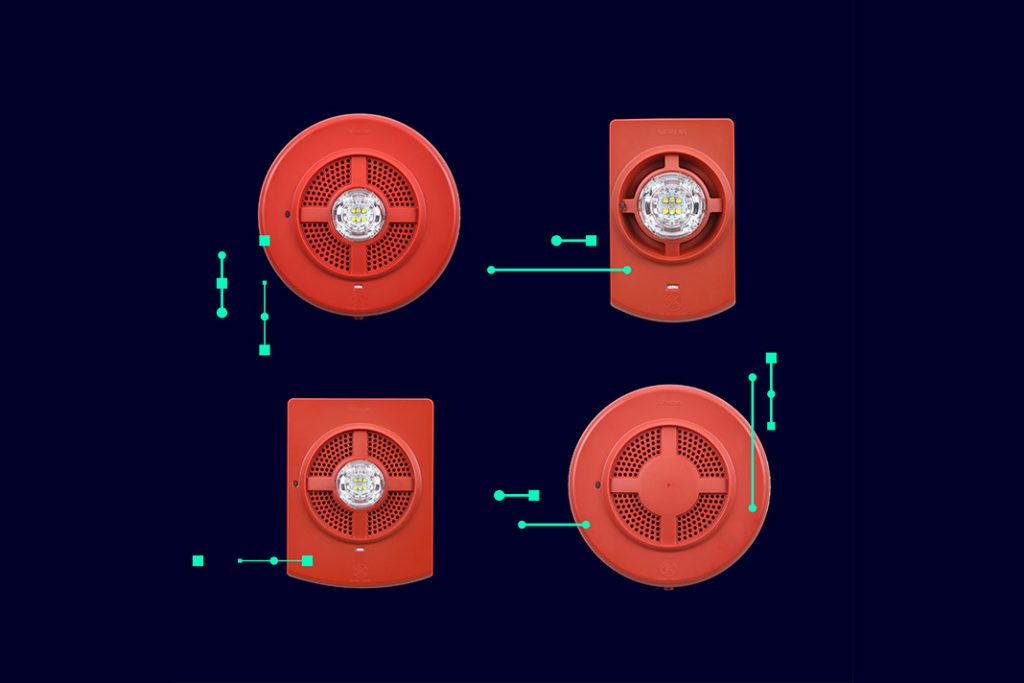
The first step in addressing this threat is eliminating the blind spots and coverage gaps that organized groups depend on. IP cameras with edge analytics provide always-on coverage across large, distributed facilities without requiring a human to watch every feed. These cameras analyze what they see in real time and flag anomalies: loitering in restricted areas, vehicles that don’t match expected logistics profiles, and unusual activity near loading docks after hours.
Alerts reach security personnel or remote monitoring centers only when they have been validated, enabling targeted responses and reducing unnecessary disruptions caused by false alarms. Cloud-managed platforms allow monitoring and management of multiple facilities from a single interface, streamlining operations. This layered, technologically advanced approach not only creates redundancy and removes single points of failure but also transforms security from a reactive model to one that proactively stops theft and optimizes workflows.
For smaller freight venues or staging areas without a dedicated central operations base (COB), third-party monitoring services enable access to the same advanced coverage. These services deliver continuous, expert oversight, enabling operators to detect and verify threats without hiring additional staff. This approach allows smaller operators to benefit from real-time, enterprise-grade monitoring, and effective theft prevention at any scale.
Detection is only part of the equation. The other challenge freight operators face is verifying threats quickly without creating delays for legitimate operations. Remote verification is the critical step between an alert firing and a response being deployed.
Several technologies make this possible in freight environments. Video analytics identify irregular behavior patterns, such as unusual dwell times, vehicles parked in unauthorized areas, or individuals moving against the flow of normal operations. Audio analytics detect breaking glass, raised voices, or unusual mechanical sounds, automatically redirecting nearby cameras to investigate. License plate recognition at entry and exit points distinguishes authorized carriers from unknown vehicles. Two-way audio lets remote operators challenge suspicious individuals without putting personnel on the ground.
When a verified threat is confirmed, the response is faster and better-informed than a patrol-based model allows. Personnel are directed to exactly where they’re needed, with real-time context already in hand.
There’s a common concern among freight operators that stronger security might slow throughput, but modern monitoring systems are designed to minimize friction. Most vehicles and personnel move seamlessly. Integration with existing logistics platforms allows the security system to efficiently differentiate between scheduled and unscheduled access, protecting assets without unnecessary delays. This ensures continuous cargo flow and security.
Response speed is actually faster under a remote monitoring model than under a patrol-based model. A remote operator reviewing an analytics-driven alert can clear or escalate in seconds. A patrol guard physically reaching the location takes significantly longer, and criminals plan around that gap.
The broader opportunity is predictive, not just responsive. As analytics mature, patterns across incidents and facilities can surface vulnerabilities before they are exploited. This enables operators to close gaps proactively and avoid reacting to losses after the fact.
Organized cargo theft is a structural problem, not a temporary spike. Operators who move toward integrated remote monitoring and intelligent verification are changing the risk calculus for criminal groups that depend on predictable gaps and slow response times.
The tools that solve this problem are available now and can benefit operations of every size, either through dedicated security infrastructure or managed monitoring services. Adopting them means operators can achieve stronger protection and smoother operations simultaneously, highlighting operational efficiency, flexible scaling, and reduced risk as the core benefits of real-time, intelligent monitoring.

About the Author:
Joe Morgan is the Business Development Manager for Critical Infrastructure at Axis Communications. He is responsible for developing strategies and building channel relationships to expand Axis’ presence in markets specific to Critical Infrastructure in North America. Joe has over 30 years of experience building market share in the critical infrastructure industry. He has completed course work to become specialized in Optical Imaging and through previous experience and additional coursework has also become specialized in Optical Security. Prior to joining Axis in 2017, Joe held previous positions serving in a business development and sales capacity at FLIR Systems, Olympus Industrial and Everest/VIT where he helped deliver new technology to emerging markets. Mr. Morgan focuses on thermal imaging specifically to the petrochemical and oil and gas markets. Joe has his CFATS certification and is an active member with ASIS. He holds a B.A. in education from the University of Texas at Arlington.

Forging the Next 250 Years: Powering the Next Era of American Manufacturing
As manufacturers offer more customization than ever before, managing product complexity has become a critical challenge. Tune in with Dan Joe Barry, Vice President of Product Marketing at Configit, who explores how companies are tackling the growing number of product configurations across engineering, sales, manufacturing, and service. He explains how Configuration Lifecycle Management (CLM) helps organizations maintain a single source of truth for configuration data. The result: fewer errors, faster quoting, and the ability to deliver customized products at scale.
Get In Touch
Google news and SEO compliant, Industry Today’s state-of-the-art digital media platform offers bespoke media campaigns that target key decision makers and buyers to achieve your marketing and promotional goals.

Contribute
Showcase your brand and promote your business to our highly targeted audience. We offer detailed Google Analytics with measurable ROI to assure success. Submit your content for review by our Editorial team who will contact you to discuss the project further.
About Us
Reach Your Targeted Audience and Grow Your Business. Learn more About Industry Today.
Contact Us

© 2026 Industry today. All Rights reserved.