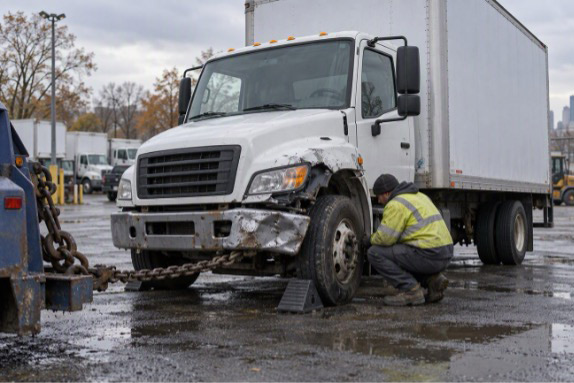
Commercial vehicle crashes in New York can involve multiple liable parties, including drivers, fleet operators, vehicle owners and maintenance providers.
A commercial crash rarely leaves one party liable. Control, ownership, maintenance, and even alcohol service can each trigger a separate investigation, and which ones apply depends on how the vehicle was arranged.
The numbers behind those investigations are sobering. In its December 2025 fact sheet, the Institute for Traffic Safety Management and Research counted 1,090 New York traffic fatalities and 12,743 serious injuries in 2024. Alcohol played a documented role in 172 of those deaths and 865 of those injuries, though the true count runs higher: blood-alcohol results were unavailable for some people who died. When the crash involves a driver who had been drinking, New York dram shop lawyers will start pulling the service records, because unlawful alcohol sales can put a bar or restaurant on the defendant list alongside the fleet operator.
Don’t assign liability based on appearances. The driver is the starting point, but direct driving fault is a different animal from responsibility imposed on an owner or employer. A logo on the door proves nothing on its own.
Start with the driving. Unsafe speed, distraction, fatigue: establish what the driver actually did and how it contributed to the collision. That’s the direct negligence question. Everything else builds outward from it.
Under New York Vehicle and Traffic Law § 388, an owner may bear responsibility for negligence committed during permissive use of the vehicle. Registration gives you an ownership lead, but permission still requires factual digging, including any restrictions on the driver’s vehicle assignment.
Maintenance providers deserve scrutiny too. In Espinal v. Melville Snow Contractors, Inc., 98 N.Y.2d 136 (2002), New York’s highest court recognized third-party liability where negligent performance creates or increases a danger, while stopping short of making every service contract a liability hook.
Keep employers and principals on the map while you check who controlled the assignment. Match the vehicle identifier to the operator named in the dispatch log.

Here the ownership question looks simple, and the exposure question isn’t. Identify the actual owner and employer, then examine permission and the trip’s business purpose before assuming the driver and the registered entity share the same exposure.
In Riviello v. Waldron, 47 N.Y.2d 297 (1979), the Court of Appeals treated scope of employment as fact-sensitive. Compare assigned duties with the driver’s actual route. Direct company negligence is a separate inquiry: hiring and training decisions, maintenance practices, dispatch instructions.
The contract isn’t conclusive. Under Bynog v. Cipriani Group, Inc., 1 N.Y.3d 193 (2003), supervision and scheduling matter alongside payment practices and control over the work. Pull the transportation agreement and the insurance requirements, then compare the contracted scope of work with what dispatch actually said.
Distinguish responsibility for someone else’s conduct from your company’s own alleged fault. A delivery deadline settles neither question. Review contractual authority over operations and any instructions your staff gave for that run.
Ownership and employment remain separate questions. An employee’s personal car can be on assigned work; an unsanctioned personal detour can change the employment analysis. Check the purpose of travel against the reimbursement request, and compare the employee’s account with contemporaneous work messages.
Rentals add a layer. Examine the authorized-driver terms and the vehicle’s maintenance history, and compare insurance notices with the renter’s stated reason for travel. Rental-company exposure needs separate legal review because federal law may affect owner-only claims. Don’t assume the fleet policy covers the rental; read the exclusions and the notice provisions.
After an impaired-driving crash, the driver faces a negligence claim. The seller may face a second one. For that reason, New York liquor liability claims after an accident require a separate look at what the seller could observe at each sale. New York General Obligations Law § 11-101 gives injured people a cause of action against anyone who unlawfully sold alcohol to a visibly intoxicated person whose intoxication caused injury. Separately, Alcoholic Beverage Control Law § 65 bars licensed sellers from serving a visibly intoxicated person and restricts sales to anyone under 21. Adamy v. Ziriakus, 92 N.Y.2d 396 (1998), permits circumstantial evidence on the visible-intoxication question, so receipts placing the driver at the premises, witness observations of impairment, and video showing continued service all warrant investigation, without settling liability on their own.
The New York State Driver’s Manual treats a BAC above 0.05% as legal evidence of impairment and 0.08% or more as evidence of intoxication. But BAC and visible intoxication are different inquiries. A later test doesn’t tell you what a server could see during service.
Timing patterns matter for what you preserve. The same December fact sheet found that 63% of New York fatal and personal-injury crashes involving a drinking driver in 2024 occurred between 6 p.m. and 3 a.m. That’s a reason to move fast on evening receipts and surveillance footage, not proof about any individual driver.
Reconstruct the service timeline rather than merely establishing that alcohol was purchased. Compare outward behavior during each sale with the recorded times of departure and collision. A positive alcohol test does not independently establish unlawful service. The distinction matters when you’re reviewing timestamped bar video.
Useful evidence does four things: connects the driver to the seller, documents the alcohol service, shows visible intoxication near the time of service, and links the resulting impairment to the crash. No single document does all of it. A receipt or a BAC result can leave gaps in the timeline.
Preserve your company’s own records immediately, before a vendor’s retention system overwrites the trip record, and have counsel send focused preservation requests to outside custodians. Name the relevant vehicle and a specific time window so recipients can locate responsive files. Ask each vendor for its actual retention settings and export procedure; a general assurance that data remains available isn’t one. Many video systems overwrite automatically after a short retention period.
No. Liability asks whose conduct or legal responsibility caused the loss; insurance asks which policy responds. The owner-liability provision discussed above concerns permissive use, not policy limits. Don’t treat proof of insurance as proof of fault, and read the actual policy before assuming a loss is covered. Your fleet or vendor policy may impose different notice duties than rental or personal coverage.
Yes. In Pegasus Aviation I, Inc. v. Varig Logistica S.A., 26 N.Y.3d 543 (2015), the Court of Appeals described a spoliation framework covering preservation duties and sanctions. Once litigation is reasonably anticipated, destroying relevant information invites a spoliation dispute, and the court will weigh the preservation obligation, the culpable state of mind, and the missing material’s relevance. Suspend routine deletion, and document what happened to any file that’s already gone.
Prompt review makes sense after a serious injury, when ownership and business relationships are uncertain, or when impairment is suspected and retention periods are short. That last factor is practical, not procedural: files that vanish on their own schedule are a reason to move now. Early involvement can coordinate preservation with insurer notice, though it doesn’t guarantee any legal or financial outcome. Bring the relevant contracts and available policy documents to the first call.
Responsibility after a commercial crash isn’t a single ownership question. Separate the driver’s conduct from statutory owner responsibility, and separate actual business control from alleged organizational fault or unlawful alcohol service. Then promptly preserve the records and evaluate each party under the rule that applies to it. That’s the whole exercise.
Forging the Next 250 Years: Powering the Next Era of American Manufacturing
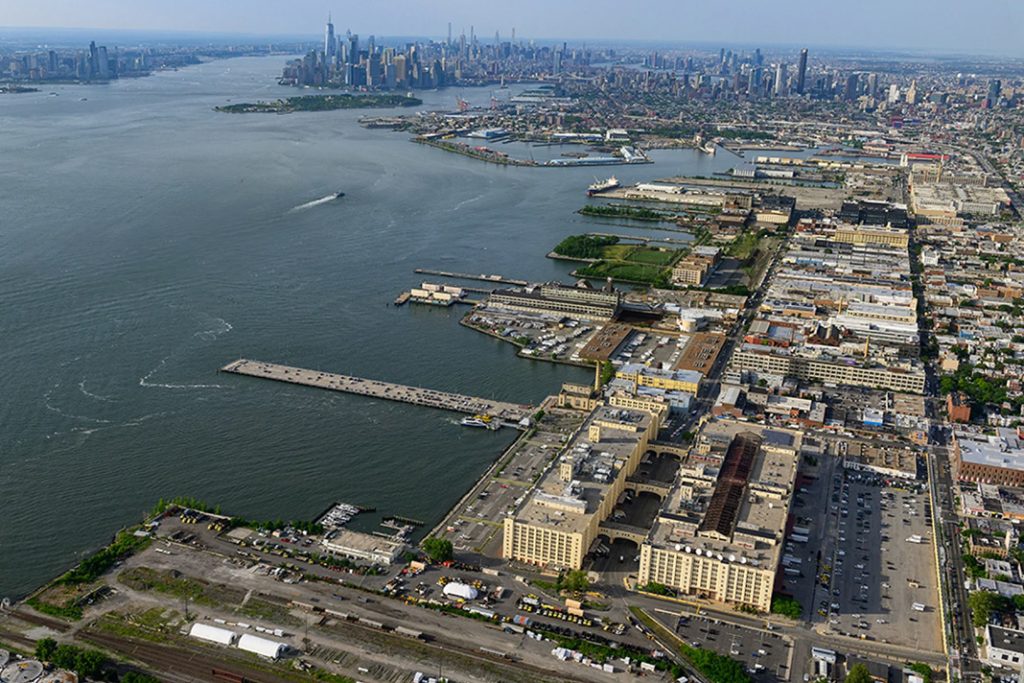
Brooklyn Army Terminal (BAT) began as a World War II-era military supply base. Today it is New York City’s largest publicly owned industrial campus, with 59 waterfront acres, more than 4 million square feet and over 100 businesses. In this episode of Industry Insights, Bridget Chansakul, Vice President of Leasing & Portfolio Management at NYCEDC, explains what space is available and what’s planned for the 250,000+ square feet of new industrial space in Building A. She also covers how the ferry, parking and on-site childcare help tenants hire and keep workers, along with workforce partnerships, City incentives for manufacturers and where BAT is headed next.
Get In Touch
Google news and SEO compliant, Industry Today’s state-of-the-art digital media platform offers bespoke media campaigns that target key decision makers and buyers to achieve your marketing and promotional goals.

Contribute
Showcase your brand and promote your business to our highly targeted audience. We offer detailed Google Analytics with measurable ROI to assure success. Submit your content for review by our Editorial team who will contact you to discuss the project further.
About Us
Reach Your Targeted Audience and Grow Your Business. Learn more About Industry Today.
Contact Us

© 2026 Industry today. All Rights reserved.