Volume 29 | Issue 2
Click here to read the complete illustrated article or continue below to read the text article.
By Annie Caggiano, SVP of Business Recruitment at the Central SC Alliance and Jason J. Giulietti, the President and CEO of the Central SC Alliance
The short answer: proximity, speed and risk management.
Automotive suppliers are moving earlier because EV manufacturing timelines are compressing and proximity to OEM operations increasingly affects speed, cost, and supply chain reliability. Rather than waiting for production to mature, suppliers are establishing operations near emerging manufacturing hubs to improve logistics and workforce access. In the Southeast, activity surrounding Scout Motors in South Carolina offers a useful example of how supplier ecosystems begin forming before production fully ramps up.
“Companies evaluating automotive projects want confidence that the pieces are already in place: workforce, infrastructure, logistics, and room to grow.”
– Central SC Alliance analysis
In traditional automotive manufacturing, suppliers often followed automakers into a market after production plans had matured. In today’s EV environment, that timeline is compressing.
Large-scale automotive projects increasingly require supplier ecosystems to take shape earlier in the process, sometimes years before vehicle production begins. For suppliers, proximity matters. Manufacturing components close to assembly operations can reduce transportation costs, improve responsiveness and lower risk during launch phases, particularly when production timelines are aggressive.
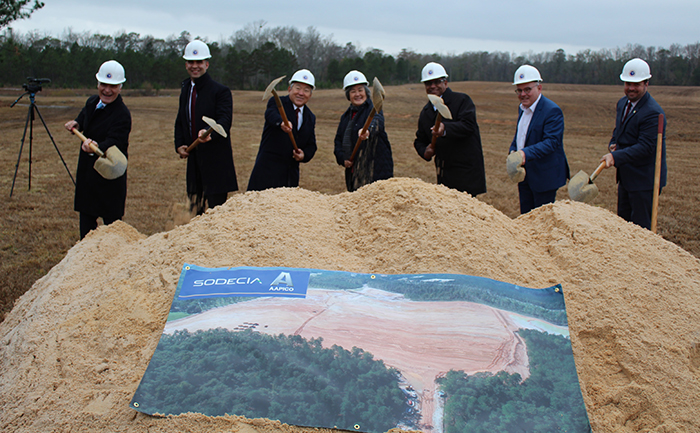
In Central South Carolina, the emergence of supplier activity around Scout Motors offers a real-time example of this shift. A joint venture between SODECIA, a Portuguese automotive supplier, and Thailand-based AAPICO has selected nearby Orangeburg County for operations supporting the broader automotive supply chain.
Many of these relationships also begin long before the public ever hears about a project. During confidential recruitment efforts, often referred to internally as the “codename phase,” economic developers, OEMs and suppliers gain early visibility into infrastructure, land availability, workforce access and long-term operational fit.
“The timeline has changed,” says Annie Caggiano, SVP of Business Recruitment at the Central SC Alliance. “Suppliers are evaluating opportunities much earlier because proximity and readiness matter more than ever in EV manufacturing.”
While every project develops differently, investments of Scout’s scale typically create demand for regional supplier support well beyond the assembly facility itself.
Increasingly, automotive suppliers are evaluating regions rather than individual sites.
For decades, automotive investment concentrated around established manufacturing hubs with mature supplier networks and major metro access. Increasingly, however, secondary U.S. markets are gaining ground, particularly in the Southeast.
The shift is being driven by a practical reality: manufacturers need room to move quickly.
As automotive suppliers evaluate where to establish operations, available industrial land, transportation access, labor availability and permitting timelines often matter as much as incentives. In larger or more saturated markets, those conditions can be harder to find at scale.
In the Central South Carolina region, the SODECIA/AAPICO joint venture illustrates how regional assets often shape location decisions rather than county lines alone.
Although the operation is located in Orangeburg County, its advantages extend well beyond a single jurisdiction. Companies evaluating the region gain access to interstate connectivity, proximity to the broader Scout Motors manufacturing ecosystem, and a labor shed that spans multiple counties.
For suppliers, that regional flexibility matters.
“Companies are evaluating regions, not just sites,” Caggiano said. “They want to understand how quickly they can access workforce, infrastructure, suppliers and logistics partners, and increasingly, those assets cross county boundaries.”
In many cases, neighboring counties offer complementary advantages. One community may provide available industrial land, while another contributes workforce density, logistics infrastructure, or existing manufacturing expertise. This regional approach allows projects to move faster and gives companies more flexibility as they scale operations.
Operational ease also increasingly factors into decision-making. Compared to larger manufacturing hubs, many secondary markets offer less congestion, lower costs and faster movement of goods and people, all advantages that can improve both workforce attraction and day-today efficiency.
Regions with available industrial land and multimodal access increasingly hold an advantage as automotive investment accelerates. Rather than competing internally, economic development organizations increasingly view growth through a regional lens, matching projects with the locations best suited to operational needs.
The Southeast’s rise as an automotive manufacturing hub has also become a story of international investment.
Foreign direct investment (FDI) continues to play a major role in how automotive ecosystems form in the United States, particularly as global suppliers look to establish operations closer to OEM production. According to multiple site selection and economic development analyses, the U.S. remains a leading destination for automotive- related FDI, with Southeastern states continuing to attract a significant share of those investments.
The SODECIA/AAPICO joint venture in Orangeburg County illustrates that trend in real time. The project brings together companies headquartered in Portugal and Thailand, both established players in the automotive supply chain, to support manufacturing growth tied to the broader Scout Motors ecosystem in South Carolina.
While international suppliers have long invested in the U.S., competition for those projects is intensifying. Increasingly, companies are prioritizing regions that offer speed-to-market, available industrial capacity, workforce access and the ability to scale alongside major OEM investments.
South Carolina has emerged as one of the states benefiting most from those dynamics, ranking No. 2 nationally for both foreign direct investment competitiveness and GDP growth in a 2025 industry analysis by Business Facilities.
“Global companies are increasingly looking for locations where predictability meets execution, not just where incentives exist,” says Jason Giulietti, FDIP, CEO of the Central SC Alliance. “For automotive suppliers, speed, workforce access, a strong partner network, infrastructure readiness and regional coordination are all equal as critical differentiators.”
In Central South Carolina, those strengths increasingly work together. The region’s access to industrial land, interstate infrastructure, and proximity to both existing and emerging manufacturing assets creates an environment where global companies can establish operations without some of the constraints found in more saturated markets.
As new EV-related investments continue across the Southeast, international suppliers are expected to remain a key part of the growth story, going beyond following automakers to shaping the supplier ecosystems forming around them.
Automotive investments increasingly succeed in regions built for long-term manufacturing growth rather than single-project wins.
Large-scale OEM projects require interconnected systems: workforce training, supplier access, transportation infrastructure, utilities, industrial land and institutional partnerships capable of scaling alongside growth. Increasingly, the regions winning automotive investments are those building ecosystems rather than pursuing isolated announcements.
The Southeast offers several examples of this model in action.
In Tennessee, the supplier ecosystem surrounding BlueOval City has accelerated alongside workforce and infrastructure planning tied to Ford’s EV investments. In Georgia, the region surrounding Hyundai Motor Group Metaplant America has emphasized technical workforce pipelines, supplier recruitment and industrial development to support long-term manufacturing growth.
The pattern is increasingly clear: major automotive projects rarely succeed in isolation.
Instead, they rely on regional ecosystems capable of supporting long-term operational growth.
In Central South Carolina, those efforts are taking shape through workforce and infrastructure partnerships designed to support future manufacturing needs. Workforce initiatives tied to Scout Motors include training partnerships with readySC and Midlands Technical College, helping prepare talent pipelines aligned with advanced manufacturing needs.
At the same time, industrial parks, transportation access and regional coordination efforts continue to shape how communities position themselves for future supplier investment.
“Regional competitiveness is increasingly about readiness,” said Giulietti. “Companies want confidence and predictability that workforce, infrastructure, utilities and supply chain support will be in place at launch and over the life of the investment.”
That regional lens matters because suppliers and manufacturers rarely operate within county boundaries. Workforce may come from one community, infrastructure from another, and industrial capacity from a third. Increasingly, economic development organizations across the Southeast are coordinating regionally to ensure projects can scale beyond a single site.
For regions competing in the next generation of automotive manufacturing, the question is becoming less about attracting one project, and more about whether the ecosystem exists to support what follows.
Major automotive investments do not succeed in isolation. As EV manufacturing expands across the Southeast, regions that can connect workforce, infrastructure, industrial capacity and supplier support will be better positioned to compete for what comes next.
EV production timelines are accelerating, and suppliers increasingly need proximity to OEM operations to reduce logistics risk and improve responsiveness.
Many offer available industrial land, workforce access, transportation infrastructure and fewer operational constraints than larger metro areas.
International suppliers remain essential to automotive ecosystems, particularly as OEM investments create demand for nearby production and logistics capabilities.
Regions increasingly compete on workforce readiness, infrastructure, supplier networks, industrial land availability and operational speed.
About the Authors:

Jason J. Giulietti is the President and CEO of the Central South Carolina Alliance, leveraging 20+ years of expertise in economic development. His strategic leadership has significantly shaped South Carolina’s economic landscape, fostering collaborative efforts among all eight regional development alliances in the state. Under his guidance, these partnerships facilitated $958.6 million in investments and 4,208 new jobs in the last two years. Previously, as President and CEO of the Greater San Marcos Partnership, Jason led a successful five-year strategic plan that attracted more than $4 billion in capital investments and created more than 7,500 jobs. Jason is recognized for his relationship-driven approach to economic development, marked by accountability, transparency, and authenticity. His achievements include being named one of Industry Era’s Top 10 Influential Leaders and earning the Foreign Direct Investment Professional (FDIP) designation.

Annie Caggiano is a senior economic development and global business recruitment executive with 20+ years of experience driving large-scale manufacturing investment, site selection and product development in South Carolina from across the U.S. and international markets. Having previously led the Global Business Development team at the South Carolina Department of Commerce, Annie is a proven leader in closing complex, high-value projects, building and managing high-performing teams, and advising C-suite executives and public-sector leadership on incentive strategy, infrastructure readiness and long-term economic impact. Throughout her career, she has been recognized for disciplined execution, relationship-driven dealmaking and delivering measurable results.
Forging the Next 250 Years: Powering the Next Era of American Manufacturing
As manufacturers offer more customization than ever before, managing product complexity has become a critical challenge. Tune in with Dan Joe Barry, Vice President of Product Marketing at Configit, who explores how companies are tackling the growing number of product configurations across engineering, sales, manufacturing, and service. He explains how Configuration Lifecycle Management (CLM) helps organizations maintain a single source of truth for configuration data. The result: fewer errors, faster quoting, and the ability to deliver customized products at scale.
Get In Touch
Google news and SEO compliant, Industry Today’s state-of-the-art digital media platform offers bespoke media campaigns that target key decision makers and buyers to achieve your marketing and promotional goals.

Contribute
Showcase your brand and promote your business to our highly targeted audience. We offer detailed Google Analytics with measurable ROI to assure success. Submit your content for review by our Editorial team who will contact you to discuss the project further.
About Us
Reach Your Targeted Audience and Grow Your Business. Learn more About Industry Today.
Contact Us

© 2026 Industry today. All Rights reserved.