A verification framework for manufacturing, trade compliance and continuity.
By Corey | AMMEX
Buyers should verify five things before awarding work: repeatable process capability, a working quality system, control of cross-border materials, defensible landed-cost and origin assumptions, and the supplier’s ability to keep shipping when conditions change. Mexico’s manufacturing base is deeply integrated with the United States; the Office of the U.S. Trade Representative reports $872.8 billion in bilateral goods trade during 2025. At that scale, a quotation is only the start of qualification, not proof that the operation behind it is ready.
“A supplier is not qualified when every document is present. It is qualified when the technical, operational and trade records tell the same story.”
— AMMEX analysis
Capability slides are broad by design. An award decision needs a narrower answer: which machine, tool, material, inspection method and shift pattern will produce this part at the promised volume? Ask for the proposed process flow, equipment list, normal operating window, changeover assumptions and capacity available after current commitments. If the work requires special processes, identify whether they are performed in-house or subcontracted and how those suppliers are controlled.
A sample can prove that a part was made once. It does not prove repeatability. Request evidence appropriate to the risk: a short pilot run, capability data on critical dimensions, material certificates, gauge information and a realistic ramp plan. The strongest answer is rarely the biggest equipment list; it is a specific production route with named constraints.
Start by confirming that any claimed ISO certificate is current and covers the facility and scope involved. The IAF CertSearch database can help validate accredited management-system certificates. Then move past the certificate. Ask for a redacted recent corrective-action record, an example inspection report, calibration status for the relevant gauges and the procedure used to control drawing revisions.
This is where polished sales answers become operational evidence. A supplier that can explain a recent nonconformance, what contained it and what changed afterward is often more credible than one claiming defects never occur. For automotive, medical, aerospace or food-contact work, the sector-specific system and customer requirements matter more than a generic ISO 9001 badge.
IMMEX is useful, but it is frequently misunderstood. Mexico’s Secretaría de Economía describes it as a program that permits qualifying companies to temporarily import goods for an industrial or export service process while deferring specified import taxes. It is an authorization tied to obligations, not a general certificate that guarantees supplier performance. The official SNICE overview provides the underlying program description.
If your model involves customer-supplied components, raw materials or tooling, ask whether the supplier can receive them under its program and how they will be segregated, consumed and reconciled. Request the current IMMEX modality, clarify the separate IVA/IEPS certification status where relevant, and have the supplier demonstrate how a sample entry and exit connect to its inventory control and customs records. AMMEX’s buyer checklist for qualifying an IMMEX supplier expands these questions, including Anexo 24, pedimentos, scrap and temporary-import deadlines.

A low unit price can still be an expensive award. Normalize currency, Incoterm, packaging, inland freight, drayage, brokerage, duties, inventory in transit and the cost of expedited recovery. Industry Today’s The Cost Not Shown on the Quote makes the same procurement point: distance, risk and inventory belong in the sourcing calculation. Its analysis Tariffs Are Here. Should You Reshore or Nearshore? adds tariff exposure and transportation costs to that location decision.
Do not assume that a product made in Mexico automatically qualifies for USMCA treatment. Ask for the tariff classification, the applicable product-specific rule, who will certify origin and what records support that conclusion. U.S. Customs and Border Protection notes that USMCA does not require the old NAFTA certificate form, but the absence of a prescribed form does not remove the need for a supportable origin claim. Put the origin basis in the sourcing file before the award.
Ask how the proposed lane actually works: border crossing, broker, carrier, drayage arrangement, typical handoffs and realistic door-to-door variation. Then change one assumption. What happens if weekly volume rises 30 percent, a machine is down for two days or the preferred crossing becomes congested? A useful response names spare capacity, escalation owners and decision times. “We have a backup” is not a continuity plan.
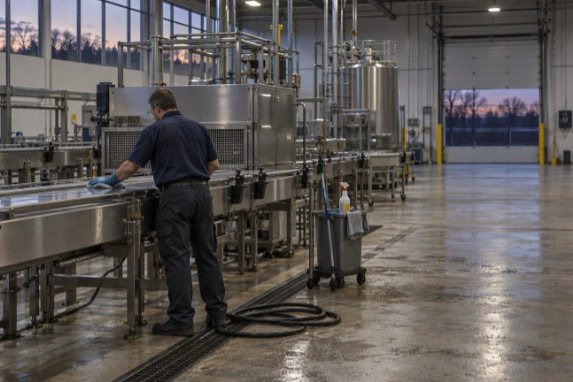
One simple exercise exposes several systems at once. Select a recent, non-sensitive shipment and ask the supplier to trace it backward from shipping record to finished lot, inspection result, production order and material lot, using redacted documents where necessary. For a meaningful award, finish with a plant visit or credible third-party audit. Documents establish the baseline; the floor shows whether the plant lives by them.
No. It confirms authorization to operate under the program; it does not prove current inventory reconciliation, product capability, quality performance, capacity or lane reliability. Treat it as one verified input, not the award decision.
No. Preferential treatment depends on the product’s applicable rule of origin and supporting records. The manufacturing location and the origin determination are related, but they are not interchangeable.
Buyers can validate certificates, review redacted quality and traceability records, test the landed-cost model, interview the proposed operations team and run a document-trace exercise remotely. The visit should then focus on discrepancies and high-risk processes rather than repeating the sales presentation.
The purpose of qualification is not to eliminate uncertainty; it is to find out which assumptions are supported before switching costs and production pressure make them expensive to challenge. Award the work when the plant, the records and the commercial model agree—and record the exceptions that still need controls.
About the Author:
Corey contributes research and editorial work to AMMEX, an independent information resource covering Mexico export manufacturing, customs compliance and U.S.–Mexico cross-border logistics. AMMEX is operated by Heberey LLC and is not affiliated with Mexican authorities or industry associations.
Forging the Next 250 Years: Powering the Next Era of American Manufacturing
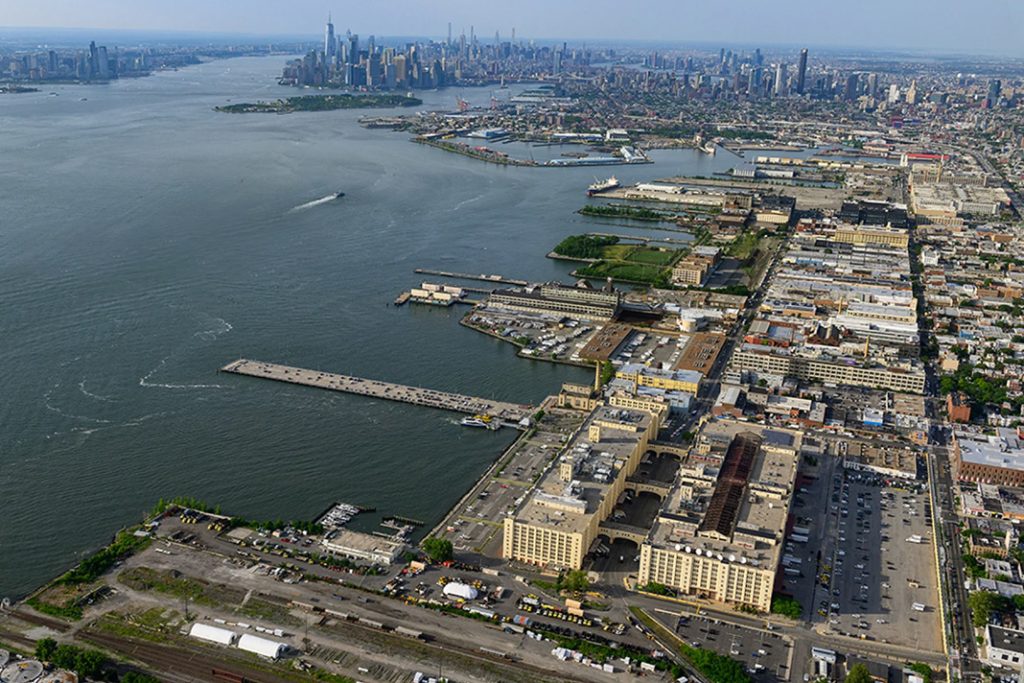
Brooklyn Army Terminal (BAT) began as a World War II-era military supply base. Today it is New York City’s largest publicly owned industrial campus, with 59 waterfront acres, more than 4 million square feet and over 100 businesses. In this episode of Industry Insights, Bridget Chansakul, Vice President of Leasing & Portfolio Management at NYCEDC, explains what space is available and what’s planned for the 250,000+ square feet of new industrial space in Building A. She also covers how the ferry, parking and on-site childcare help tenants hire and keep workers, along with workforce partnerships, City incentives for manufacturers and where BAT is headed next.
Get In Touch
Google news and SEO compliant, Industry Today’s state-of-the-art digital media platform offers bespoke media campaigns that target key decision makers and buyers to achieve your marketing and promotional goals.

Contribute
Showcase your brand and promote your business to our highly targeted audience. We offer detailed Google Analytics with measurable ROI to assure success. Submit your content for review by our Editorial team who will contact you to discuss the project further.
About Us
Reach Your Targeted Audience and Grow Your Business. Learn more About Industry Today.
Contact Us

© 2026 Industry today. All Rights reserved.