Manufacturing companies are rapidly adopting Industry 4.0 technologies, but that modernization is expanding their attack surface faster than their defenses can keep up.
By Kyle Wewe
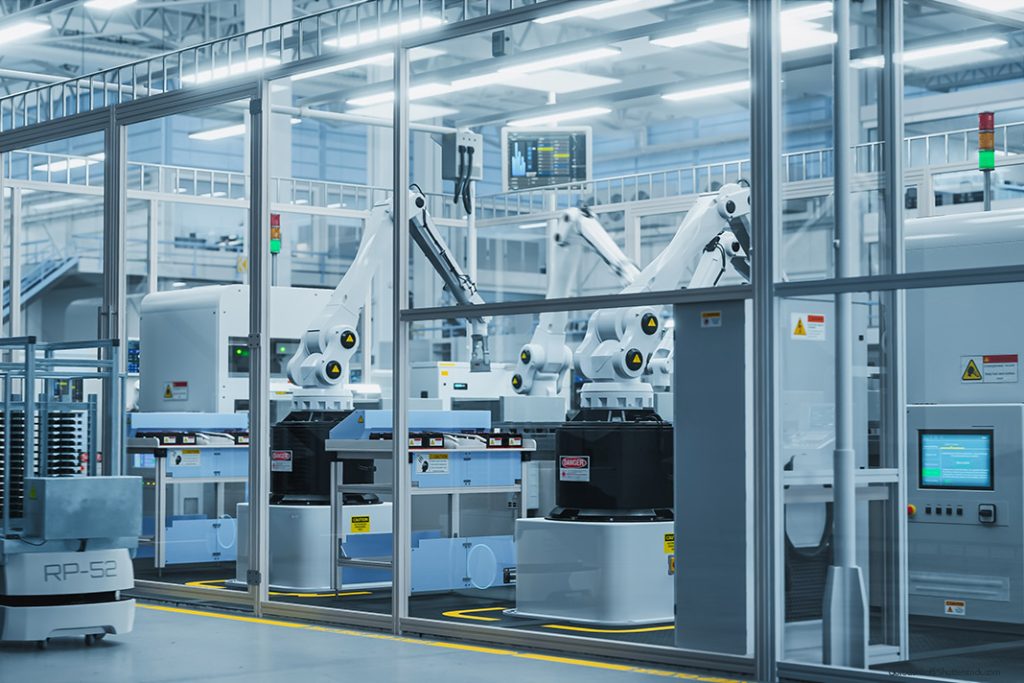
U.S. manufacturers are modernizing faster than at any point in recent memory. Robotics, AI-powered predictive maintenance, Industrial IoT, and cloud platforms are moving from pilot programs to standard operations. While the productivity gains are impressive, they also increase risk.
The Integris 2026 Manufacturing Technology and Cybersecurity Report, based on surveys of 411 U.S. manufacturing executives and 600 consumers, reveals a sector caught between the competitive pressure to digitize and the security complexity that digitization creates. Sixty percent of manufacturers reported a significant email-based breach in the past twelve months. Forty-nine percent reported a mobile device breach. The industry is modernizing faster than it can secure what it builds.

Manufacturers have deployed security tools widely, with 84% running cybersecurity awareness training programs and more than half (56%) using secure email gateways. Breaches are persisting anyway, because cloud environments, remote access, IoT endpoints, and third-party integrations are multiplying faster than traditional defenses can cover them. A single misconfigured cloud storage bucket or unpatched IoT sensor can serve as an entry point. Incremental security tools can’t resolve a structural vulnerability.
The business case for modernization remains strong. Manufacturers that have deployed smart factory technologies report operational efficiency gains, improved product quality, and better supply chain visibility. Forty-four percent use AI and machine learning for predictive maintenance. Forty-five percent have smart energy management systems in place. Cloud infrastructure now underpins most of it, with 88% relying on managed IT services for cloud operations. Protecting these requires deliberate investment.
Fifty-seven percent of manufacturers already apply AI to vulnerability management by using it to scan networks, identify risks, and prioritize threats. It’s also complicating operations. Thirty-six percent of executives cite AI implementation as a top challenge, raising questions about governance, workflow integration, and internal expertise. Manufacturers that approach AI deployment with a clear framework for who manages it, how it integrates with existing systems, and what happens when something goes wrong will overcome those implementation hurdles.
Eighty-five percent of consumers in the survey said they worry about cybersecurity risks at manufacturers. Sixty percent said a data breach would reduce their trust in a manufacturer, and an equal share said they would stop buying from a company that failed to protect their data. Twenty-five percent have already changed their buying behavior due to security concerns. Data security now ranks above brand reputation as a purchase factor.

When asked what drives cloud ROI, manufacturers ranked operational efficiency first (60%) and agility second (55%). Cost reduction ranked third, at 47%. When selecting a technology partner, cost ranked last at 25%, while security led at 50%. Manufacturers are making investment decisions based on capability, resilience, and speed. The conversation has changed.
“As customers grow more concerned about breaches and new technologies increase vulnerabilities, manufacturers need to treat cybersecurity as a brand issue. Getting there means working with a technology partner that understands the compliance demands, operational complexity, and expanding attack surfaces of this sector. Gaining a competitive advantage is all about understanding the connection between security investment and market trust.”
—Kyle Wewe, Chief Revenue Officer, Integris
There’s a mismatch between investment and outcomes. Most manufacturers have implemented training programs and purchased security tools, but breaches are happening anyway. The reason is that today’s manufacturing environment is made up of a web of cloud services, mobile endpoints, vendor integrations, and IoT sensors, each of which expands what attackers can target.
Smaller manufacturers face a particularly difficult version of this challenge. Industrial IoT adoption ranges from 34% at firms with fewer than 100 employees to 75% at firms with 4,500 or more. Larger manufacturers have resources to invest in both modernization and the security infrastructure to protect it. Smaller firms face the same market pressure to modernize with fewer resources to manage the risk that comes with it.
Compliance is adding pressure on top of this. Defense contractors and their suppliers are navigating Cybersecurity Maturity Model Certification (CMMC) requirements, which formalize cybersecurity controls across the supply chain. More than half of the manufacturers surveyed said they need help with security controls, and 45% cited incident response support as a priority. These aren’t areas where general-purpose IT vendors typically excel.
The manufacturers making the most progress have moved from checking regulatory boxes to a risk management mindset that focuses on understanding and reducing the actual attack surface. They communicate transparently with customers about how data is protected. They work with technology partners who understand ERP systems, Industrial IoT protocols, and the specific risk profile of a manufacturing environment.
Security training and email gateways address known threat patterns. Modern manufacturing environments create new attack surfaces through cloud adoption, remote access, IoT devices, and third-party integrations that traditional defenses weren’t designed for. The attack surface is growing faster than point solutions can address.
The ideal starting point is a clear-eyed assessment of the actual attack surface. It’s important to know what tools are in place and where new connection points have introduced gaps. Many manufacturers are also finding that their current technology partners lack manufacturing-specific expertise in areas like Industrial IoT and CMMC compliance, which is a sign it’s time to re-evaluate the partnership.
AI is already being used extensively in vulnerability management for automated scanning, threat prioritization, and predictive analytics. The challenge is a lack of governance. Manufacturers can capture the security and operational benefits of AI by deploying it with clear frameworks for oversight, integration, and accountability.
Manufacturers are right to pursue the opportunities offered by smart factories. The competitive pressure to modernize won’t ease, and the productivity gains from AI, automation, and connected infrastructure are proving out. Slowing adoption isn’t the answer. Instead, the focus should be on building security into the modernization strategy from the start. It should be treated as a market-facing capability guided by technology partners who understand how manufacturing actually works.
About the Author:
As Chief Revenue Officer at Integris, Kyle Wewe is responsible for leading all revenue-generating functions across the organization, including sales and business development.
His extensive experience across vertical, including healthcare, retail, public sector, and finance lend him a unique perspective that will help to propel Integris through its next phase of evolution, while remaining committed to delivering a world-class customer experience.

Forging the Next 250 Years: Powering the Next Era of American Manufacturing
As manufacturers offer more customization than ever before, managing product complexity has become a critical challenge. Tune in with Dan Joe Barry, Vice President of Product Marketing at Configit, who explores how companies are tackling the growing number of product configurations across engineering, sales, manufacturing, and service. He explains how Configuration Lifecycle Management (CLM) helps organizations maintain a single source of truth for configuration data. The result: fewer errors, faster quoting, and the ability to deliver customized products at scale.
Get In Touch
Google news and SEO compliant, Industry Today’s state-of-the-art digital media platform offers bespoke media campaigns that target key decision makers and buyers to achieve your marketing and promotional goals.

Contribute
Showcase your brand and promote your business to our highly targeted audience. We offer detailed Google Analytics with measurable ROI to assure success. Submit your content for review by our Editorial team who will contact you to discuss the project further.
About Us
Reach Your Targeted Audience and Grow Your Business. Learn more About Industry Today.
Contact Us

© 2026 Industry today. All Rights reserved.