Air knife systems help cut energy costs, reduce noise, and boost efficiency by replacing traditional compressed air in industrial facilities.
Compressed air has been a default drying and blowoff solution in manufacturing for decades. It is familiar, it is already piped into most facilities, and it works well enough to get by. The problem is that well enough carries a cost that most plant managers never fully calculate.
Compressed air systems are among the largest consumers of electricity in industrial facilities. Depending on the operation, compressed air can account for 20 to 30 percent of a plant’s total energy spend. Much of that energy is wasted before the air even reaches the application: through leaks, pressure drops, heat losses, and the fundamental inefficiency of converting electricity into compressed air and then back into kinetic force.
Air knife systems combine a centrifugal blower with a precision-engineered knife to deliver a continuous, high-velocity sheet of laminar airflow across a product surface. Unlike compressed air, which generates turbulent, high-pressure blasts from discrete nozzle points, an air knife produces an even, controlled curtain that covers the entire product width uniformly. For manufacturers evaluating the technology, a practical overview of air knife systems illustrates the range of configurations available for different production line requirements.
The key engineering principle is impact velocity at the point of contact. A well-designed system maintains high velocity across the full width of the product and at the required working distance, which is where compressed air nozzles consistently fall short. Compressed air at 80 PSI from a flat jet nozzle loses roughly 99.5 percent of its static pressure by the time it is 6 inches from the nozzle tip. An industrial blower system operating at 2.5 PSI still retains more than four times the impact pressure at the same distance.
That physics gap is what drives the efficiency and performance difference in real production environments.
The numbers from actual production installations illustrate why the switch makes financial sense.
At a major steel processing facility running a temper mill pass line, the existing compressed air system used 93 nozzles across three chevron headers, operating at 80 PSI, and required 468 horsepower to dry 72-inch-wide steel strip moving at 4,600 feet per minute. When the facility evaluated a centrifugal blower and air knife installation, the engineering analysis projected a reduction of 336 horsepower on that single line alone.
At an energy rate of /bin/sh.06 per kilowatt-hour, that 336 HP reduction translates to approximately 31,400 in annual energy savings on one line, not counting the reduction in compressed air system maintenance. For a facility running multiple lines, the cumulative impact is substantial.
Beyond energy, the facility was also losing one to two steel coils per month to rust and wet surface defects caused by inconsistent compressed air coverage. After the blower and air knife installation, coil rejection rates dropped to near zero.
The efficiency advantage is most pronounced in applications with these characteristics:
Common industries where the transition is well-established include metal finishing and plating, automotive parts drying after rinse stages, food and beverage container blowoff before labeling or filling, wire and cable production, and building materials manufacturing.
Not all air knife systems are equivalent. The blower and knife need to be matched as an engineered system for the specific application, rather than assembled from off-the-shelf components. Key variables include product width, line speed, working distance, required airflow velocity, and whether the application involves moisture removal, debris clearance, or both.
Attack angle and knife gap adjustment also matter in ways that generic equipment does not address. For applications like coating control, where the goal is to smooth a liquid film rather than strip it entirely, the angle of the airflow relative to the product surface directly determines the quality of the result.
Manufacturers evaluating options should request application-specific engineering from the supplier rather than a catalog recommendation. The difference between a correctly sized system and a generic one often determines whether the equipment meets production requirements or creates new problems.
The return on investment calculation for switching from compressed air generally accounts for four categories of savings: direct energy reduction, reduced compressed air system maintenance, improved process yield through fewer defects or rejects, and in some cases, reduced water or chemical usage in wash-and-dry sequences.
Energy savings alone often produce payback in under two years, and in high-horsepower installations the payback can come within the first year of operation. For plant engineers building a capital equipment case, those numbers tend to clear internal hurdles without difficulty.
For manufacturers still running compressed air on drying and blowoff applications, the question is not really whether a blower-based system would improve performance and cut costs. The engineering evidence is well-established. The question is how to size and specify the right system for the application and the production environment it needs to serve.

Forging the Next 250 Years: Powering the Next Era of American Manufacturing
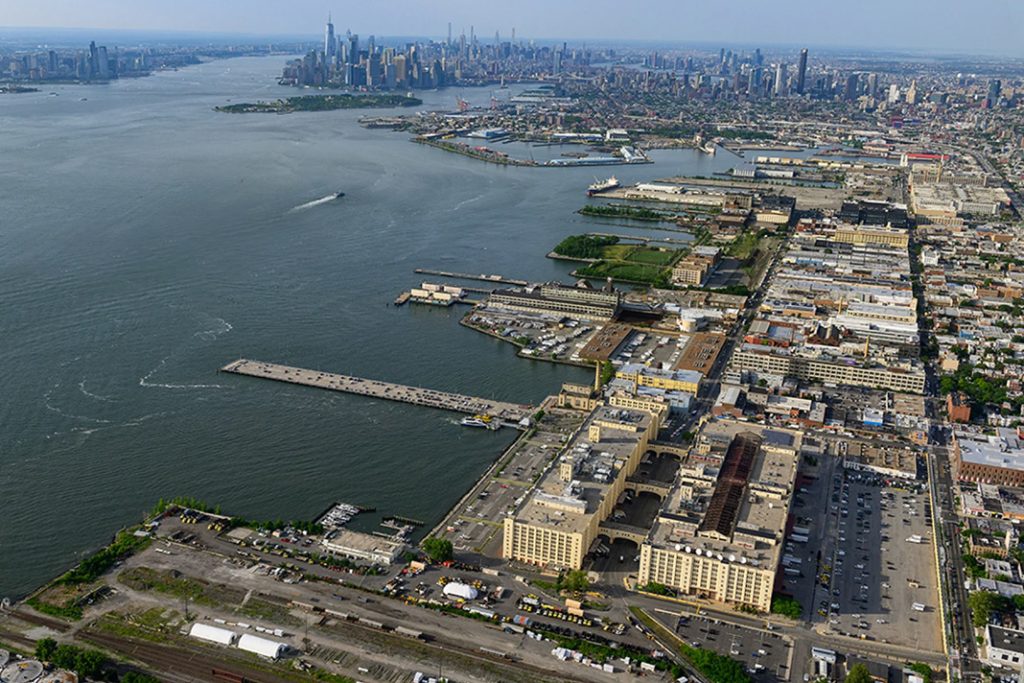
Brooklyn Army Terminal (BAT) began as a World War II-era military supply base. Today it is New York City’s largest publicly owned industrial campus, with 59 waterfront acres, more than 4 million square feet and over 100 businesses. In this episode of Industry Insights, Bridget Chansakul, Vice President of Leasing & Portfolio Management at NYCEDC, explains what space is available and what’s planned for the 250,000+ square feet of new industrial space in Building A. She also covers how the ferry, parking and on-site childcare help tenants hire and keep workers, along with workforce partnerships, City incentives for manufacturers and where BAT is headed next.
Get In Touch
Google news and SEO compliant, Industry Today’s state-of-the-art digital media platform offers bespoke media campaigns that target key decision makers and buyers to achieve your marketing and promotional goals.

Contribute
Showcase your brand and promote your business to our highly targeted audience. We offer detailed Google Analytics with measurable ROI to assure success. Submit your content for review by our Editorial team who will contact you to discuss the project further.
About Us
Reach Your Targeted Audience and Grow Your Business. Learn more About Industry Today.
Contact Us

© 2026 Industry today. All Rights reserved.