When contractor risk hits, organizations take the fall. Here’s how to get ahead of it with smarter, predictive oversight.
by Josh Ortega
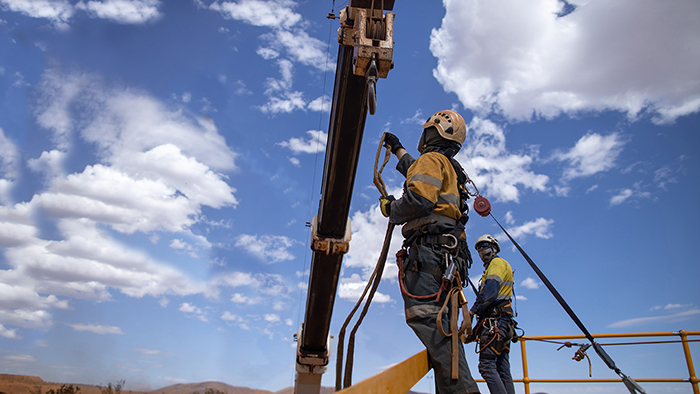
The line between organizations and their contractors has never been more blurred. In today’s interconnected business environment, the actions of third-party contractors actively shape an organization’s reputation and resilience. At the same time, regulators, investors, and the public increasingly make little distinction between what happens inside a company’s direct workforce and what happens across its extended supply chain. But the facts are quite clear: when a contractor fails, the consequences land squarely with the hiring organization.
This reality is a stark departure from how contractor relationships have historically been viewed, and it also represents a fundamental shift in how contractor oversight must be approached. The question then becomes how organizations can transform contractor oversight from an unpredictable liability into a controlled variable that strengthens long-term resilience.
Decades of experience across high-hazard industries, from mining and construction to chemical and oil and gas, have shown how fragmented contractor management creates inefficiencies and, more critically, safety gaps. Historically, each operator developed its own safety orientation and onboarding requirements, forcing contractors to complete repetitive training just to work across different sites.
Industry-wide standardization initiatives emerged to address this challenge, ultimately training more than 1.5 million workers and reducing redundancy. But standardized training was only the first step. What organizations are facing today is a broader accountability shift, where responsibility extends beyond direct employees to every contractor operating under an organization’s name.
For example, when a contractor triggers an incident the hiring organization is exposed to reputational damage, regulatory scrutiny, and potential legal consequences. In these cases, the traditional “arm’s-length” relationship with contractors simply doesn’t hold up anymore. This raises a critical question: how should organizations measure and manage contractor risk in this new reality?
Contractor evaluation has traditionally relied on lagging indicators such as incident rates, near misses, and historical safety performance. While these metrics offer useful context, they are fundamentally backward-looking. They describe what has already happened, not what is likely to happen next. In many cases, they signal that risk has already materialized.
To make matters more complicated, lagging indicators also fail to capture important nuance. A contractor with a clean record may simply lack sufficient operating history to reveal weaknesses in its safety systems. In contrast, larger contractors with more employees and projects may report higher incident counts despite having robust safety cultures and controls. Traditional metrics struggle to account for scale, exposure, and context.
The future of contractor risk management lies in predictive analytics and leading indicators. Forward-looking organizations are shifting focus to factors like written safety policies, training quality, leadership commitment, and operational discipline. By assessing these inputs, organizations can forecast future performance rather than react to past failures, enabling more meaningful comparisons across contractors and providing early warning signals before issues emerge on site.

Working across multiple continents highlights stark differences in how regions approach safety and contractor oversight. In the United States, the model has traditionally been compliance-driven, with regulations specifying prescriptive requirements and penalties tied to non-compliance. The emphasis often falls on meeting minimum standards and classifying incidents after they occur.
By contrast, the United Kingdom and European Union tend to take a more risk-based view of safety oversight. Instead of focusing primarily on whether organizations are meeting prescriptive requirements, the expectation is that companies are continuously thinking about where hazards could emerge, evaluating those risks in a meaningful way, and showing that they are actively protecting workers through an ongoing duty of care. The result is a system that leans much more heavily on proactive controls rather than relying on checklist-style compliance.
Canada occupies a middle ground, blending regulatory requirements with stronger expectations around proactive risk mitigation. Organizations operating under these mature regulatory regimes often develop more sophisticated safety management systems than those focused solely on compliance.
Taking a close look at these issues through a global lens matters because contractor risk does not stop at national borders. Supply chains are increasingly international, and best practices developed in one regulatory environment can inform stronger approaches elsewhere. Organizations that adopt the highest standards, regardless of where they operate, are better positioned to manage complexity and uncertainty. Doing so requires tools and systems capable of operating at modern supply-chain scale.
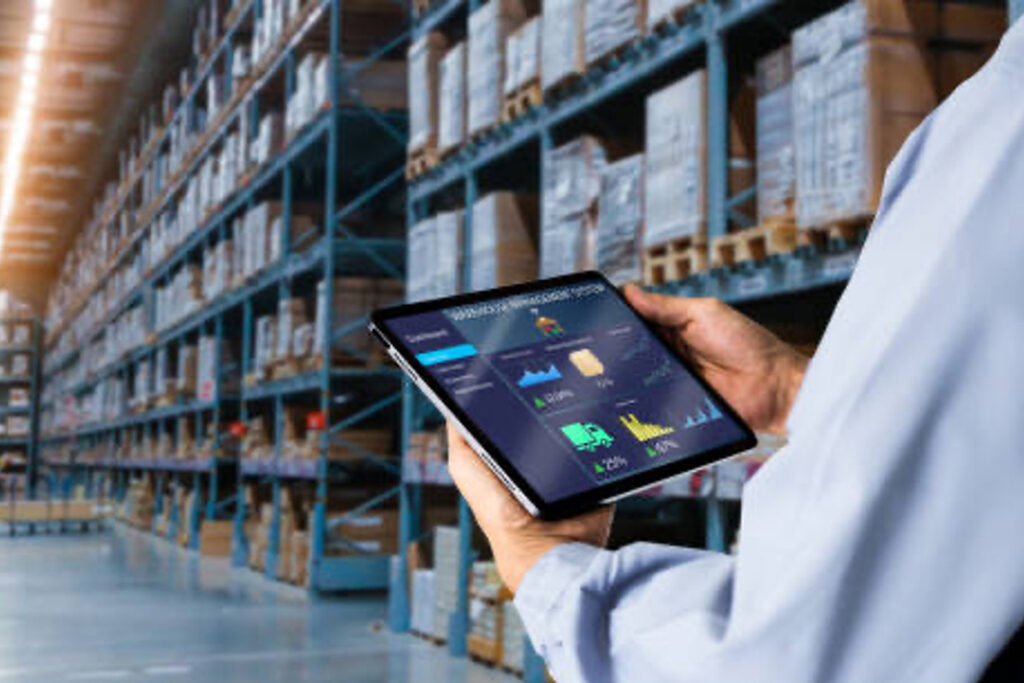
It’s no secret that the scale and complexity of modern contractor networks make manual oversight impractical. Legacy “systems” like paper-based processes and spreadsheet tracking simply cannot keep pace with today’s volumes, making technology an essential enabler of effective contractor management. The key is using this technology to enhance (not replace) human judgement by providing real-time insights that enable better decision-making at scale.
The adoption of artificial intelligence and predictive analytics can process large datasets to identify patterns and risk factors that would otherwise go unnoticed. These tools analyze thousands of historical work scenarios to determine which variables contribute to safe or unsafe outcomes, then apply those insights to new contractors and projects.
Emerging technologies are also reshaping real-time worksite monitoring. Wearable devices can track worker fatigue, environmental conditions, and proximity to hazards, while connected equipment can alert supervisors to elevated risk in real time. Recently, technological advancements like augmented reality, computer vision, and AI-enabled drones extend these capabilities by identifying unsafe conditions or behaviors across large or remote sites.
Crucially, these tools are most effective when used to augment (not replace) human judgment. Technology provides visibility and insight at scale, but decision-making still depends on leadership, culture, and accountability. In many cases, the challenge is integration: scaling proven technologies and embedding them into everyday operations.
Despite advances in analytics and technology, contractor safety remains fundamentally human. In fact, mental health and psychosocial wellbeing are increasingly recognized as critical components of safety performance, particularly in high-hazard, labor-intensive industries.
It’s well known that fatigue, stress, and burnout all contribute to unsafe behavior, yet these issues have historically been under-addressed. Long shifts, rotational work, and extended time away from family compound stress for both employees and contractors.
Whether it’s due to cultural barriers, stigma, or longstanding norms in these male-dominated environments, open discussion continues to be difficult, which is especially troubling as rates of substance abuse and suicide remain high in some sectors.
However, the news is not all bleak. Progressive organizations are investing in leadership training, employee assistance programs, resilience initiatives, and more realistic approaches to scheduling and workload management.
Treating third-party risk as first-party accountability may initially feel like an added burden, but it can become a powerful differentiator. Organizations that excel at contractor oversight benefit from fewer incidents, faster project mobilization, stronger regulatory relationships, and enhanced credibility with customers and investors.
The shift from reactive to proactive management is key. Rather than disqualifying contractors based on risk scores alone, leading organizations use predictive insights to identify gaps early and work collaboratively with contractors to address them, strengthening capability across the supply chain while reducing the likelihood of costly failures.
Effective contractor oversight also improves operational efficiency. Streamlined prequalification processes reduce delays between contract award and mobilization, while continuous monitoring provides real-time visibility into performance. In these cases, when issues arise, organizations can respond before they escalate into incidents or stoppages.
Ultimately, contractor oversight is a reflection of organizational values and priorities. Contractors operate as extensions of the enterprise, and their performance shapes how organizations are judged. By elevating contractor management to a strategic priority, organizations move beyond risk reduction and build durable resilience.
The path forward requires organizations to prioritize this sustained cultural commitment, investment in enabling technologies, and disciplined process improvement.
Forward-thinking organizations will operate under as if there is no third-party risk. There is only organizational risk, and how effectively it is managed.

About the Author:
Josh Ortega is VP Global HSE & Sustainability at Veriforce.
Josh formerly served as the Chairman of SafelandUSA and an Executive board member for the National STEPS Network. Before joining Veriforce as Vice President of SSP, Josh was with BHP for 18 years. During his time with BHP, Josh worked in operations, human resources, health, safety, environment, and community, primarily focused on contractor management. Josh’s extensive experience in oil and gas production, drilling, completions, well interventions, and construction across the United States provides a robust platform to help industry partners enhance safety and bring workers home safe.

Forging the Next 250 Years: Powering the Next Era of American Manufacturing
As manufacturers offer more customization than ever before, managing product complexity has become a critical challenge. Tune in with Dan Joe Barry, Vice President of Product Marketing at Configit, who explores how companies are tackling the growing number of product configurations across engineering, sales, manufacturing, and service. He explains how Configuration Lifecycle Management (CLM) helps organizations maintain a single source of truth for configuration data. The result: fewer errors, faster quoting, and the ability to deliver customized products at scale.
Get In Touch
Google news and SEO compliant, Industry Today’s state-of-the-art digital media platform offers bespoke media campaigns that target key decision makers and buyers to achieve your marketing and promotional goals.

Contribute
Showcase your brand and promote your business to our highly targeted audience. We offer detailed Google Analytics with measurable ROI to assure success. Submit your content for review by our Editorial team who will contact you to discuss the project further.
About Us
Reach Your Targeted Audience and Grow Your Business. Learn more About Industry Today.
Contact Us

© 2026 Industry today. All Rights reserved.