Innovate and build revenue by securing critical connections first. Proactive Industrial Identity Security is the foundation of factory modernization.
By: Anusha Iyer, Founder and CEO, Corsha
Manufacturers today are pursuing ambitious operational goals, focusing their efforts on increasing output, improving efficiency, and enabling more flexible production models that can adapt to rapidly changing demand. To realize these measurable business outcomes, organizations are connecting their production systems to analytics platforms, AI tools, cloud environments, and supply chain networks. However, unlocking this potential requires more than simply plugging new technologies into legacy infrastructure. To truly innovate, protect margins, and build revenue growth, manufacturers must secure the critical digital connections that power their operations from the very beginning.
In order to achieve true modernization, security cannot be an afterthought; it must be the foundational enabler. To succeed in modernizing manufacturing safely and securely, organizations must prioritize Industrial Identity Security at the onset of their digital journey.
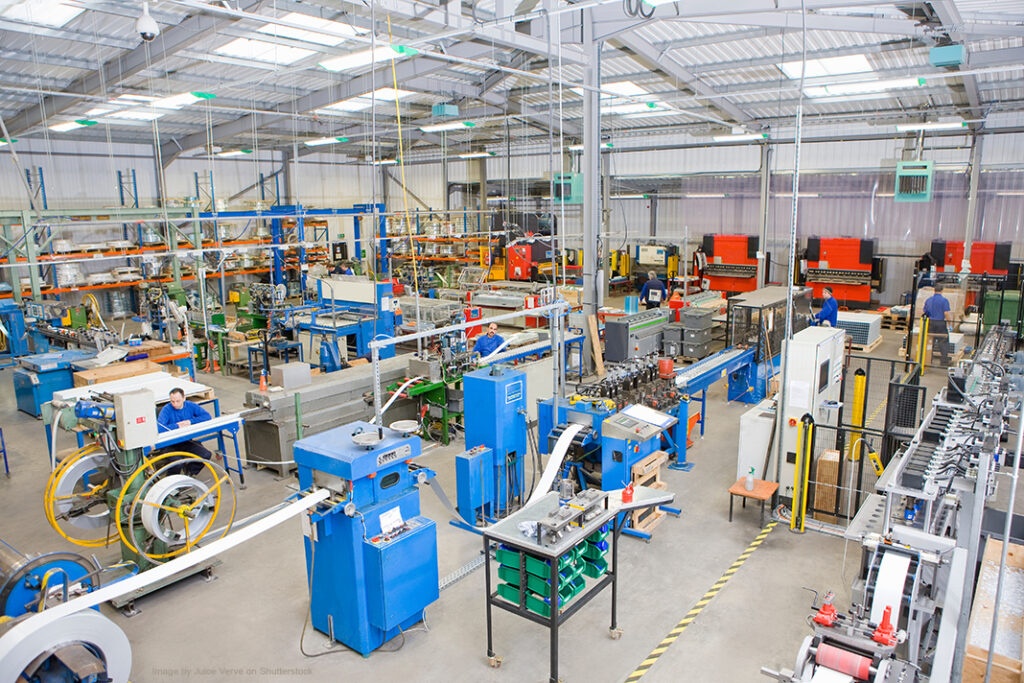
Historically, the factory floor has been a closed ecosystem. Information once trapped within individual machines and isolated control systems is now being integrated into much broader business processes. This shift is unlocking data that has long remained dormant within production environments. Today, this data allows teams to optimize operations, improve decision-making, and better align daily production with fast-moving, high-level business objectives.
Connecting enterprise applications to industrial operations data enables massive operational potential, but it also fundamentally alters the risk profile of a facility. As these environments evolve into highly connected ecosystems, the distance between a digital connection anomaly and a physical production halt shrinks to zero. In this landscape, maintaining safety and security while modernizing is no longer optional; it is a strict prerequisite for accelerating revenue growth and increasing the margins that modernization was intended to create.
Modernization completely depends on the ability to connect equipment and systems across the factory floor and beyond. Machines are now linked to applications, production systems continuously feed data into enterprise platforms, and external suppliers and distributors are increasingly integrated into daily operational workflows. What was once a collection of largely independent systems has evolved into a fully connected environment where data moves continuously between machines, applications, and business systems. Sharing data seamlessly up and down the supply chain is vital, a concept heavily reinforced in Industry Today’s insights on turning transparency into your competitive advantage.
While this connectivity enables manufacturers to optimize production and respond more quickly to changes in demand, it also dramatically increases the importance of how these connections are established and controlled. The modern factory is now part of a broader, interconnected operation that spans production, IT, and the supply chain. Maintaining stable and secure connections across this web plays a growing and critical role in keeping operations running as expected.
If manufacturers attempt to bolt on new capabilities—such as converging IT and OT or adding AI accelerators to strengthen cyber resilience across the factory floor—without a secure foundation, they introduce operational fragility. Performance suddenly depends entirely on how systems behave once they are connected. When systems do not operate as expected, the negative impact is immediately reflected in production outcomes, leading to reduced throughput, inconsistent quality, or unplanned downtime.
These major disruptions often emerge from seemingly minor issues in how systems are connected or how data moves between them. A connection might behave differently than intended, a system might process an unexpected input, or a change in one area might create unintended ripple effects elsewhere. As more systems are connected, these situations become increasingly difficult to anticipate and manage. Without defining what systems should and can talk to what other systems, when, and how, it becomes vastly harder to maintain safe, stable, and reliable industrial operations at scale. This is the foundation of identity security that can guarantee access between two systems simply and reliably.
Each new connection in an industrial network introduces a ripple effect of often complex dependencies between machines and systems. Today’s data revolution demands that industrial machines, cloud applications, and AI platforms must work together in a perfectly coordinated way, challenging how new technologies can be added alongside existing legacy controllers.
This creates a highly dynamic environment where maintaining consistency requires significant attention. When digital dependencies are undocumented or unmanaged, they quietly turn into “silent risks” that cause unpredictable outages and make restarting a production line after an outage nearly impossible. The difficulty compounds because systems evolve at different speeds; modern automation technologies like robotics, AI, and augmented reality (AR) must be integrated safely but quickly to stay ahead of competition, while legacy infrastructure must be protected to continue to operate without disruption.
This is where the paradigm must shift. Instead of treating OT security as a reactive measure to monitor for anomalous behavior after systems are connected, leaders must view it as the foundational requirement that enables knowing what’s on your network and making safe and secure connections from the start.
To manage this growing complexity, forward-thinking manufacturers are adopting a practical approach that ensures system connections are consistent, reliable, and secure, while remaining easy to manage. This proactive framework is known as Industrial Identity Security, and it serves as the essential foundation for modernization at scale.
Industrial Identity Security provides a consistent structure for how machines and systems securely connect and interact, regardless of their age or their vendor. Unlike traditional security methods like static firewalls and switches that require tedious, manual, one-off configurations, Industrial Identity Security focuses on access control to guarantee that each identity is defined, verifiable, and industrial operations are secure by default.
By establishing identity first, manufacturers can guarantee that whether a machine is twenty years old or five days old, its connections are secured, its behavior remains perfectly predictable, and its network access remains constrained to exactly what is required for production. In practice, having this framework in place makes it significantly easier to bring new systems online without disrupting existing operations. Production systems, applications, and platforms can be connected much more quickly, while still behaving in ways that are expected, safe, and aligned with how the factory actually runs.
A highly useful way to conceptualize this is through the lens of physical quality control on the production line. Quality control ensures that each physical part fits correctly and performs exactly as expected before it ever becomes part of the final product. In the exact same way, an industrial identity approach ensures that each digital system can be identified and its connection fits securely into the broader environment.
For example, by securing identity early, you ensure that plugging in a new analytics package only allows it to see data from one specific production line, or that optical sensors can only speak to specific machines on that single line. The result is a much more reliable and resilient foundation for connecting new systems and technologies with existing infrastructure. This is the very definition of building stronger systems and smarter factories that are secure by design. As connectivity continues to expand across the industry, this predictability becomes increasingly important to maintaining peak performance across the factory floor.
As manufacturers continue to expand connectivity across their environments, the ability to integrate systems smoothly is the ultimate deciding factor in gaining operational advantage. Organizations that can connect systems in a consistent, predictable, and secure way inherently have a competitive advantage because they can safely introduce new capabilities without creating instability.
Unlike inventory management, network segmentation, or firewalls, Industrial Identity Security strategies tell you what, how, and why two systems connect – and if they should in the first place. By always knowing what is on their industrial networks and continuously verifying access control, OT teams are freed to focus on improving production and optimizing processes. Over time, this proactive posture leads to constantly improving operations and a rock-solid foundation for ongoing innovation.
Manufacturing will only continue to become more connected as organizations pursue greater efficiency, flexibility, and responsiveness to market demand. The ability to securely connect new and old systems across the factory floor and throughout the extended supply chain is central to achieving these vital goals.
For modern manufacturers, it is no longer just about connecting new technology and systems. It is about connecting them in a secure, deliberate way that keeps operations running smoothly, ensuring that manufacturers can modernize with total confidence, increase their output, improve their efficiency, and respond faster to changing demand.
About the Author:
Anusha Iyer, Founder and CEO of Corsha, is a seasoned technologist and executive with over 20 years of hands-on experience in securing OT Systems in manufacturing for commercial and government use, including Food & Beverage, Energy, Building Systems, Robotics, and emerging Physical AI (where AI powers the analysis and movements of physical equipment like robots). She understands the unique complexities of manufacturing requirements to modernize, prevent downtime, ensure safety and security for these production systems and has worked with hundreds of different technologies and integrations. When she was working in the government, she could not find the technology she needed to secure these manufacturing and industrial systems, so she left and founded Corsha to solve the OT security problem.
Read more from the author:
Secrets Management: The Weak Link of API Security | DEVOPSdigest, 5/22/23
API Secrets: Where the Bearer Model Breaks Down | Dark Reading, 11/30/22

Forging the Next 250 Years: Powering the Next Era of American Manufacturing
As manufacturers offer more customization than ever before, managing product complexity has become a critical challenge. Tune in with Dan Joe Barry, Vice President of Product Marketing at Configit, who explores how companies are tackling the growing number of product configurations across engineering, sales, manufacturing, and service. He explains how Configuration Lifecycle Management (CLM) helps organizations maintain a single source of truth for configuration data. The result: fewer errors, faster quoting, and the ability to deliver customized products at scale.
Get In Touch
Google news and SEO compliant, Industry Today’s state-of-the-art digital media platform offers bespoke media campaigns that target key decision makers and buyers to achieve your marketing and promotional goals.

Contribute
Showcase your brand and promote your business to our highly targeted audience. We offer detailed Google Analytics with measurable ROI to assure success. Submit your content for review by our Editorial team who will contact you to discuss the project further.
About Us
Reach Your Targeted Audience and Grow Your Business. Learn more About Industry Today.
Contact Us

© 2026 Industry today. All Rights reserved.