As retirement rises, manufacturers risk losing more than workers. Institutional knowledge is disappearing – technology can help preserve it.
By Aaron Lober, VP of Marketing and Manufacturing Intelligence Lead at CADDi
Hiring issues take the heat for many of manufacturing’s greatest problems. Eighty percent of manufacturing executives say the skilled labor shortage is their biggest challenge today. But once leaders take a closer look under the hood, a more critical challenge than low headcounts begins to emerge. Institutional knowledge is disappearing right before our eyes.
Seasoned manufacturing professionals are retiring. The practical experience that keeps production running is becoming less and less available as shrinking teams need it most. Leaders can try to fill the roughly 433,000 open manufacturing jobs recorded at the end of 2025, but increasing headcount alone won’t fill this growing gap. We need transferable know-how – and we need it fast.
To overcome the knowledge crisis, businesses must go beyond hiring. It’s time to digitize the storage and transfer of tribal information for better resilience.
Manufacturing today is under rising pressure. Tariffs are unpredictable, cost volatility remains high, and many teams are running lean as production expectations increase.
In January, the ISM Manufacturing Index returned to expansion at 52.6, signaling that the sector had moved back into growth after more than a year of contraction. However, the employment component remained in contraction at 48.1, suggesting manufacturers are still cautious about rebuilding their workforce. On the other hand, those that’ve decided to grow their teams are struggling to do so with 1.9 million manufacturing jobs expected to go unfilled in the next few years. As a result, organizations are operating with smaller headcounts and asking existing employees, who are often less experienced than those who left, to carry more responsibility.
Another complexity is that the nature of the work itself is changing. Manufacturers now need workers with both traditional trade knowledge and digital fluency with new hires expected to navigate automation systems, production data, and increasingly complex workflows from day one. Yet most organizations haven’t built the training infrastructure to match that reality. Only 20% of manufacturers report making significant investments in upskilling. Just 8% of employees say their company actively supports the reskilling needed to keep up with new technologies.
To add fuel to the fire, the industry is losing many of its veterans with no way to store what they’ve learned over the years. Seventy-three percent of senior manufacturing leaders expect to retire within the next decade, taking with them the practical knowledge that was never fully documented to outlive them.
Without their institutional knowledge answers become inaccessible. Every urgent decision gets harder, slower, and more expensive. As a result, people start to default to “good enough” assumptions and the impacts are felt immediately.
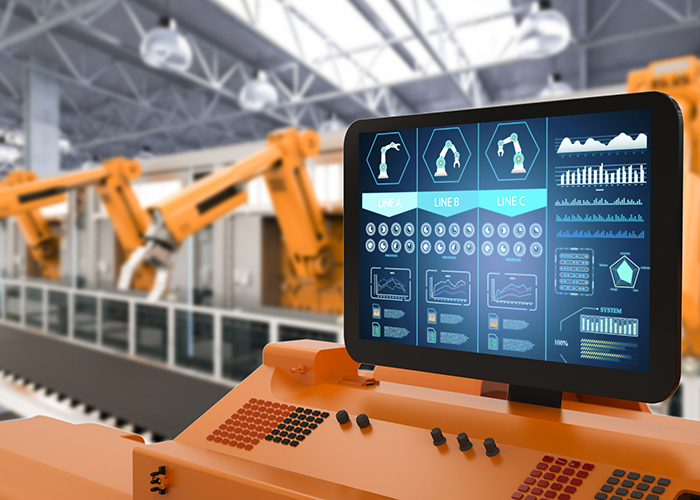
For many manufacturers, the knowledge crisis creates wasted time on administrative execution. Teams spend an hour a day searching for drawings, part histories, supplier records, and past decisions that should be easy to find. The information exists, but it is scattered across disconnected systems, spreadsheets, file folders, and the memories of a few experienced employees.
The impact builds quickly. Work bottlenecks around a handful of “go-to” people. New hires take longer to ramp. Teams repeat work that has already been done because finding the answer takes longer than starting over.
In practice, that can be as simple as not knowing which revision is current, why a design change was made, or how a similar issue was handled last time. On the floor, it means defects take longer to troubleshoot, rework builds up faster, and small problems turn into bigger delays because the context behind past decisions is hard to access.
Most manufacturers try to manage this with the tools they already have: shared drives, PLM folders, ERP notes, internal wikis, and stricter naming conventions. The intent is understandable. But those systems still depend on people knowing what to search for, where to look, and how the company has documented information over time.
This is where the real gap exists. Manufacturers need a way to connect drawings, revisions, and downstream outcomes into a usable record of what happened, what changed, and why. That starts with making past work easier to find and use in the moment it matters.
For most organizations, the answers are already there in drawings, revisions, quotes, supplier records, inspection results, and scattered notes. The problem is that this knowledge is fragmented across systems and formats, which forces teams to rely on memory, workarounds, and a small number of tenured folks to fill in the gaps.
Modern manufacturing platforms are helping close that gap by unifying these sources and making them easier to search in plain language with Artificial Intelligence (AI). Instead of digging through ERP fields or scanned PDFs, AI enables teams to search across drawings and related records in one place, even when they do not know the part number or where the file should live. In practice, that gives newer employees faster access to the context behind prior decisions and makes it easier for experienced teams to build on work that has already been done.
That matters because in a complex labor market, manufacturers can no longer depend on processes that only work when the most senior person is nearby. They need systems that make design intent, sourcing history, and past learnings easier to carry into the next decision. When engineers can quickly find similar designs instead of recreating them, and when teams can trace what changed and why, productivity stops depending so heavily on individual memory.
The labor market will stay volatile, but manufacturers can remain resilient. The teams that implement AI-powered systems that democratize knowledge will move faster with smaller, less experienced teams. The next generation of leaders will be the ones to digitize their career’s most important learnings and end the knowledge crisis.

About the Author
Aaron Lober is Vice President of Marketing at CADDi, where he leads U.S. marketing strategy focused on accelerating digital transformation in manufacturing. He brings 15+ years of experience launching and scaling products across multiple industries, including building and managing portfolios exceeding $100 million. Before joining CADDi, Lober served as Head of Marketing at Blameless. Prior to that, he spent several years at Procore, where he helped guide the company through its path to IPO and led major product launches, including Procore’s first data and analytics offering, Procore Analytics, and Procore Estimating.

Forging the Next 250 Years: Powering the Next Era of American Manufacturing
As manufacturers offer more customization than ever before, managing product complexity has become a critical challenge. Tune in with Dan Joe Barry, Vice President of Product Marketing at Configit, who explores how companies are tackling the growing number of product configurations across engineering, sales, manufacturing, and service. He explains how Configuration Lifecycle Management (CLM) helps organizations maintain a single source of truth for configuration data. The result: fewer errors, faster quoting, and the ability to deliver customized products at scale.
Get In Touch
Google news and SEO compliant, Industry Today’s state-of-the-art digital media platform offers bespoke media campaigns that target key decision makers and buyers to achieve your marketing and promotional goals.

Contribute
Showcase your brand and promote your business to our highly targeted audience. We offer detailed Google Analytics with measurable ROI to assure success. Submit your content for review by our Editorial team who will contact you to discuss the project further.
About Us
Reach Your Targeted Audience and Grow Your Business. Learn more About Industry Today.
Contact Us

© 2026 Industry today. All Rights reserved.