Supply chain disruptions can be costly. Effective insurance strategies help businesses strengthen resilience and recovery.
By Kevin Nolan
Supply chain disruption continues to be a critical driver of business interruption risk as global operations grow more interconnected and vulnerable to unexpected events. Understanding supply chain dependencies can help minimize the financial impact of business interruption.
“The same rigor with which leadership runs a business should be applied to understanding your insurance program and how it interplays across various countries and geographies.”
– Kevin Nolan, head of multinational at The Hartford
Whether it’s a natural disaster, transportation issue or supplier failure, it is crucial for businesses to have a robust plan to protect them from unexpected circumstances that could lead to business disruptions and create financial risk.
There are a variety of steps a business can take to help safeguard revenue and plan for continuous operations in the face of disruption. For savvy players, it is important to understand and map out the unique supply chain – from components to raw materials – for each stage of operation and to understand suppliers and dependencies.
Although global expansion can create substantial economic opportunity, it is not without its risks. Companies that operate globally must have backup plans and inventory in case there is an interruption.
Knowing the business operations, processes and having a contingency plan are critical. All too often, companies have a piecemeal perspective of their risk as opposed to understanding the complex interplay between the operations and the balance sheet.
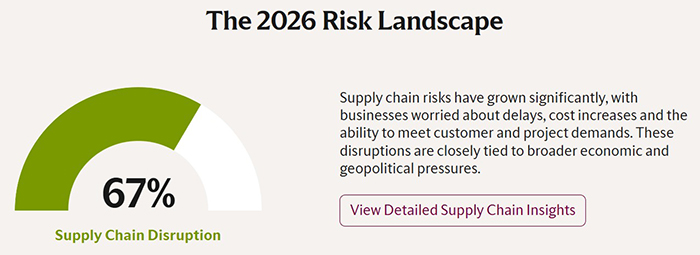
The global supply chain continues to face instability, which places additional risk on businesses operating on an international scale.
In the last few years, significant vulnerabilities with ‘just-in-time’ manufacturing came to light, highlighting society’s dependence on reliable – yet expensive – air, land, sea and freight shipping. Long supply chains that require the movement of materials and components across the globe leave companies vulnerable, especially because trade restrictions can fluctuate.
The Panama Canal bottleneck in 2023 is an example of this. A severe drought caused water levels to drop in the critical shipping canal, forcing vessels to wait in line for an opportunity to pass through. According to the World Economic Forum, just in time inventory schedules were disrupted worldwide as goods missed planned arrival times, highlighting the fragility of lean supply lines, even from severe weather events.
As a result, companies today are tasked with shortening extended supply chains to reduce vulnerabilities. A way to do that is to find clusters of countries where low-cost manufacturing can happen within a tighter radius.
The process can be challenging because as this shift is happening, countries are scrambling to bring ecosystems together. The growing manufacturing demands in Mexico, India, Poland, and Vietnam are some examples to note.
Dwight D. Eisenhower said it best, “Plans are worthless, but planning is everything.” For a company with a multi-country supply chain, it’s the thorough understanding of your processes and dependencies – and having backup plans along the way – that could help reduce risk.
Here are key considerations to defend against business interruption:
Companies go through extraordinary efforts to expand globally, yet all too often they overlook a new strategy for insurance. The same rigor with which leadership runs a business should be applied to understanding your insurance program and how it interplays across various countries and geographies.
Companies should be wary of buying insurance in individual countries. Global operations can benefit from an insurer who can take a comprehensive view of a business. A carrier must be able to offer a program structure that adequately addresses and responds to the active dynamic of your operations and the people and products in motion around the world. It is important to be certain that the insurance program can respond to a loss in the country where it occurs – and in any other country that then experiences a negative financial impact because of that loss occurrence.
To do this, underwriters need to see a detailed plan that breaks down all the activities of each operation, from sourcing to packaging and distribution. This level of detail allows the insurer to perform an accurate forensic review of the operations and determine the potential extent of the loss as well as the payments that are necessary at each step of the process. These steps help make the company operational as quickly as possible following a loss event.
Operating outside the United States can be complicated due to language barriers, local laws, customs and norms that differ from country to country. Companies with any level of global exposure can benefit from specialized multinational insurance that helps protect them from risk and offers a dedicated claims team when needed.

About the Author:
Kevin Nolan is Head of Multinational at The Hartford. In this role, he leads a team focused on delivering coordinated global insurance programs that address clients’ needs outside the United States.

Forging the Next 250 Years: Powering the Next Era of American Manufacturing
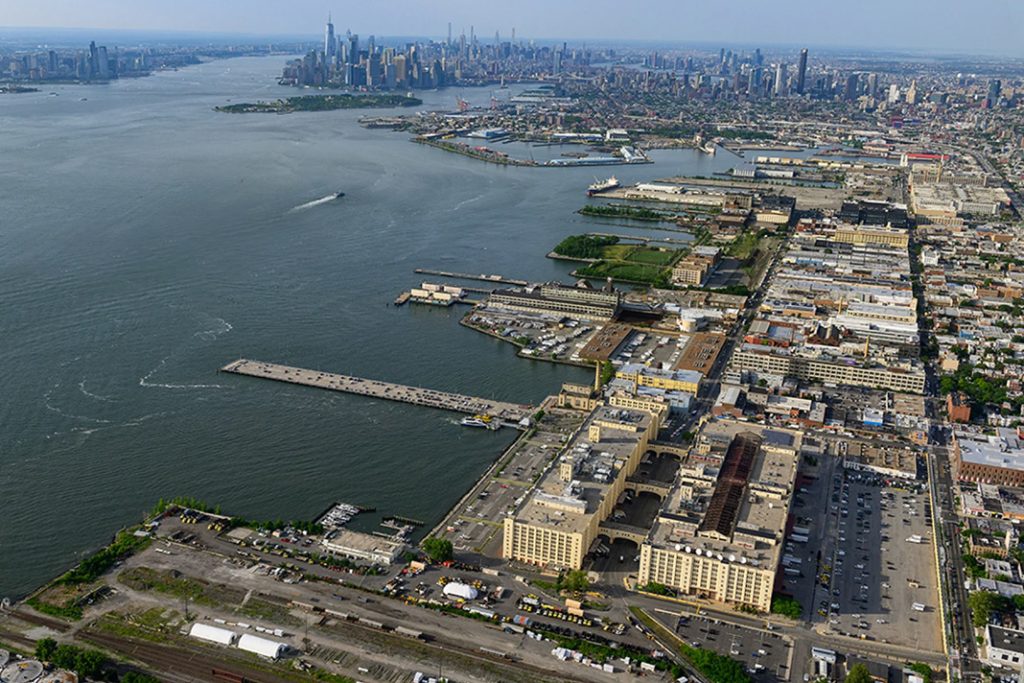
Brooklyn Army Terminal (BAT) began as a World War II-era military supply base. Today it is New York City’s largest publicly owned industrial campus, with 59 waterfront acres, more than 4 million square feet and over 100 businesses. In this episode of Industry Insights, Bridget Chansakul, Vice President of Leasing & Portfolio Management at NYCEDC, explains what space is available and what’s planned for the 250,000+ square feet of new industrial space in Building A. She also covers how the ferry, parking and on-site childcare help tenants hire and keep workers, along with workforce partnerships, City incentives for manufacturers and where BAT is headed next.
Get In Touch
Google news and SEO compliant, Industry Today’s state-of-the-art digital media platform offers bespoke media campaigns that target key decision makers and buyers to achieve your marketing and promotional goals.

Contribute
Showcase your brand and promote your business to our highly targeted audience. We offer detailed Google Analytics with measurable ROI to assure success. Submit your content for review by our Editorial team who will contact you to discuss the project further.
About Us
Reach Your Targeted Audience and Grow Your Business. Learn more About Industry Today.
Contact Us

© 2026 Industry today. All Rights reserved.