A guide to the best five firms who build credible, place-driven brand experiences that hold up under scrutiny.
Most brands underestimate how much physical space shapes the way people feel about them. The best firms for environmental branding understand that a wall, a corridor, or a transit hub is never just infrastructure. It’s a story. After reviewing portfolios, client outcomes, and design philosophies across the field, one thing becomes clear: greenwashing risk, visual clutter, and cookie-cutter wayfinding systems are the real enemies here. This guide covers five firms that actually know how to build credible, place-driven brand experiences that hold up under scrutiny.
Publicly available sources were the foundation here, including official company websites, design industry directories, and published case studies. Every firm on this list had to show a real track record in environmental branding before making the cut. Only those with proven, documented work in this space were considered.
→ See the full research breakdown
Picking the right firm in this space is a bigger decision than most brand managers expect. Environmental branding lives at the crossroads of physical design, narrative strategy, and material choices, and getting any one of those wrong creates real problems.
Avoiding greenwashing while still telling a compelling environmental story takes specific skills that not every design firm carries. The same goes for standing out in an environmental marketplace that keeps getting more crowded every year.
Firms with deep experience in this niche know how to build brand identities that survive third-party scrutiny. That kind of credibility directly shapes brand trust and perceived authenticity scores among eco-conscious consumers. It also increases visibility within environmental media and, after a thoughtful rebrand, tends to improve Net Promoter Scores in measurable ways. The right partner changes outcomes, not just aesthetics.
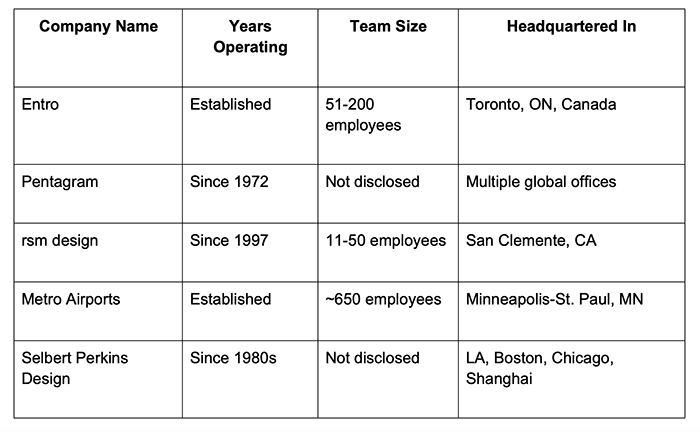
Note: All data in this table is sourced from review platforms and the official websites of the listed companies.
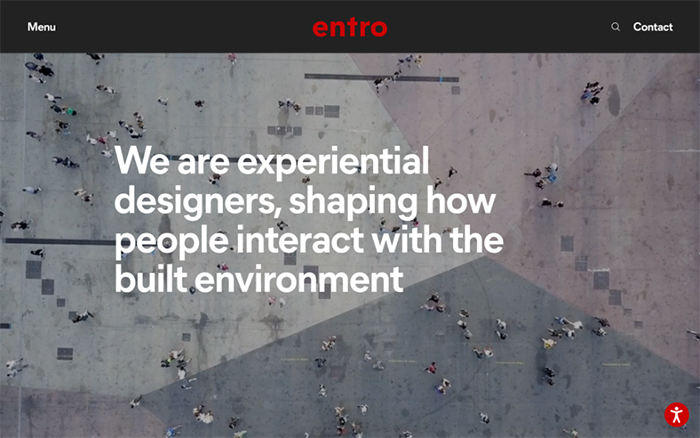
Entro Communications works at the crossroads of placemaking, wayfinding, and experiential graphics, serving hospitals, transit hubs, universities, and urban spaces. Their team brings together strategy and visual storytelling to make physical environments feel intentional rather than generic. Clients looking for work that ties a space’s identity to its surrounding community will find that the environmental graphic design by Entro team approaches each project as a distinct problem, not a templated one. Projects like the Niagara Falls Exchange reflect that thinking clearly.
Entro solves a common problem in this space: physical environments that look designed but don’t actually communicate anything meaningful about the brand behind them. Their work across complex civic and public spaces shows they can handle the kind of multi-stakeholder environments where most firms stumble.
Public portfolio evidence and project documentation suggest Entro delivers consistently on sophisticated work. From what the available case studies show, clients value their ability to manage large project teams while keeping the experiential vision intact from concept through installation. That kind of follow-through is genuinely rare in this field.
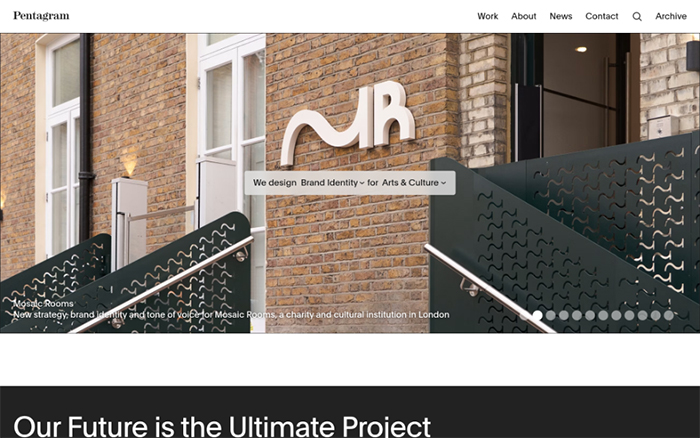
Pentagram is the world’s largest independent design consultancy, operating since 1972 across brand identity, strategy, digital experiences, motion graphics, and industrial design. They work with everything from arts organizations to global commercial brands, covering more than 13 design disciplines under one roof. Honestly, the breadth is hard to match. Their storytelling-through-design philosophy sets them apart, especially for organizations that need a brand system coherent enough to hold up across wildly different contexts and channels.
Pentagram’s combination of heritage credentials and active engagement with social impact and environmental-focused projects gives them unusual range for clients who need environmental branding backed by serious narrative depth. Their experience working with prestigious organizations also means they understand the kind of scrutiny that eco-conscious brands increasingly face from both regulators and consumers.
Pentagram’s reputation within the design industry is exceptionally well-documented through awards, publications, and decades of high-profile work. Clients tend to choose them when the stakes are high and the brand vision needs to be airtight, not just visually appealing. That level of trust takes a long time to build (think 50-plus years of consistent delivery).

RSM Design has been operating since 1997, running four offices across San Clemente, Dallas, Los Angeles, and New York. They focus on environmental graphic design, placemaking, wayfinding, and public art, with a creative team rooted in architecture and the built environment. Their certified Women Business Enterprise status adds another layer of credibility. Award-winning work from SEGD Global Design Awards and AIGA backs up the reputation, and their portfolio of landmark projects shows they can operate at genuine civic scale.
The firm’s architectural foundation is what separates them from purely graphic-focused competitors. Designing for physical environments without understanding spatial relationships is where many firms fall short, and RSM’s architecture-first perspective translates into wayfinding and placemaking work that actually fits the built space rather than being tacked on after the fact.
Industry recognition from both SEGD and AIGA carries real weight in this field. RSM Design’s reputation is built on high-profile collaborations with major developers and organizations, suggesting clients trust them with projects where the margin for error is low. That kind of consistent recognition (not cheap to earn) signals a firm that delivers under pressure.
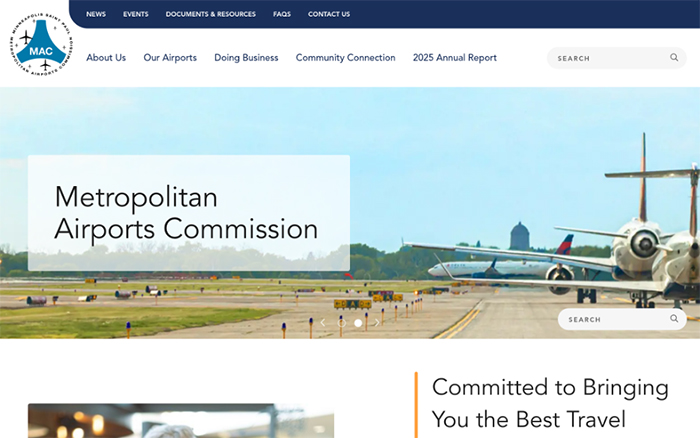
The Metropolitan Airports Commission owns and operates Minneapolis-St. Paul International Airport along with six reliever airports in the Twin Cities region. With a team of around 650 people, they manage airport operations, retail and food concessions, real estate, and active community engagement programs. Their communications approach, including annual reports and public relations work, reflects a serious brand management function operating inside a large public organization. Their emphasis on award-winning service delivery shows that branding is baked into operations, not treated as an afterthought.
Managing brand consistency across a major international airport and six additional facilities, while keeping community trust intact, is one of the harder branding challenges in the public sector. Their long-term commitment to environmental responsibility and transparent stakeholder communication shows what responsible, large-scale environmental brand management actually looks like.
As a public organization, Metro Airports operates in a high-scrutiny environment where every service decision reflects on the brand. Their consistent recognition for service quality and active community engagement suggests a well-run communications function that takes brand reputation seriously. That’s the kind of operational discipline most private organizations spend years trying to build.
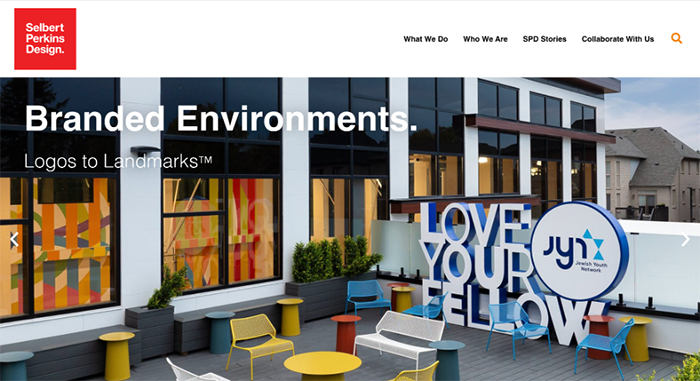
Selbert Perkins Design has been shaping physical brand experiences for over 40 years, running studios in Los Angeles, Boston, Chicago, and Shanghai. They work across aviation, rail, healthcare, retail, and hospitality, handling branding, signage, wayfinding, public art, and environmental graphics. Their 25-year involvement with the iconic LAX Gateway Columns alone tells you something about how deep client relationships run here. As a certified Woman-Owned Business Enterprise, they bring a values-driven perspective to a field that increasingly needs it.
SPD’s multi-decade portfolio shows a firm that knows how to turn a physical space into a brand statement that people actually remember, which is the main challenge in environmental branding. Their cross-sector depth, from airport terminals to healthcare campuses, means they can adapt brand thinking to very different audience needs without losing visual coherence.
SPD’s work on landmark projects like the LAX Gateway Columns gives them documented, visible proof of long-term client trust. Organizations that work with them once tend to stay engaged for years, and that kind of client retention (rare in any design discipline) says more than any award citation ever could.
Building this list started with a broad sweep of the environmental branding and wayfinding design field, pulling from multiple sources before any firm was considered for inclusion.
The longlist was assembled by searching design industry directories, professional association databases, and published case study archives. Publicly available project portfolios, firm profile pages, and recognition lists from organizations active in the environmental graphics and placemaking space were all used to identify candidates with relevant work. The goal at this stage was coverage, not filtering, so the net was cast wide before any evaluation began.
Once the longlist was in place, firms without verifiable project documentation were removed. Review patterns across design industry platforms and client-facing publications were analyzed to identify which candidates had consistent, documented output rather than one-off recognition. Firms where public evidence of ongoing work in environmental branding was thin or inconsistent did not advance past this stage.
Every firm’s self-described capabilities were cross-checked against what their published portfolios, press coverage, and third-party mentions actually supported. Where a firm claimed skills in a specific sector (healthcare wayfinding, transit placemaking, civic environmental design), that claim had to be backed by real, named projects or documented client engagements. Mismatches between stated positioning and visible output were flagged and weighed against each firm’s overall standing.
Design awards, mentions in architecture and environmental graphics publications, and evidence of contribution to the broader professional conversation were all factored in. Firms recognized by bodies like SEGD, AIGA, and comparable design organizations carried more weight here, because peer recognition in a specialized field reflects genuine standing rather than marketing claims. Long project histories and multi-year client relationships were also treated as authority signals, since they suggest the kind of results that bring clients back.
Each firm’s work had to show direct relevance to environmental branding, not just graphic design overall. Dedicated service pages covering wayfinding, placemaking, environmental graphics, or place branding were reviewed alongside any available case studies specific to those disciplines. Firms whose portfolios were dominated by unrelated work, regardless of their overall reputation, were deprioritized in favor of those with a clear, demonstrated focus on the physical brand experience.
Narrowing down the right partner in this space takes more than reviewing a portfolio. Here’s what actually matters when making the call.
Environmental branding done well turns physical space into a brand asset that earns trust over time. The firms on this list, from Entro’s place-branding depth to Pentagram’s global narrative range and RSM Design’s architectural grounding, each bring a distinct approach to a discipline that rewards specialization. As environmental expectations tighten and consumer scrutiny grows, the value of a firm that genuinely understands physical brand storytelling will only keep rising.

Forging the Next 250 Years: Powering the Next Era of American Manufacturing
As manufacturers offer more customization than ever before, managing product complexity has become a critical challenge. Tune in with Dan Joe Barry, Vice President of Product Marketing at Configit, who explores how companies are tackling the growing number of product configurations across engineering, sales, manufacturing, and service. He explains how Configuration Lifecycle Management (CLM) helps organizations maintain a single source of truth for configuration data. The result: fewer errors, faster quoting, and the ability to deliver customized products at scale.
Get In Touch
Google news and SEO compliant, Industry Today’s state-of-the-art digital media platform offers bespoke media campaigns that target key decision makers and buyers to achieve your marketing and promotional goals.

Contribute
Showcase your brand and promote your business to our highly targeted audience. We offer detailed Google Analytics with measurable ROI to assure success. Submit your content for review by our Editorial team who will contact you to discuss the project further.
About Us
Reach Your Targeted Audience and Grow Your Business. Learn more About Industry Today.
Contact Us

© 2026 Industry today. All Rights reserved.